
Changes to Hong Kong’s public transport subsidy scheme saved the government HK$69 million (US$8.8 million) in the first month, with fewer elderly and disabled commuters taking expensive long-haul routes for short trips, the welfare minister has said.
Secretary for Labour and Welfare Chris Sun Yuk-han said on Saturday that, following revisions to the concessionary fare scheme that took effect on April 3, the average government subsidy for trips costing more than HK$10 fell from HK$4.90 in March to HK$4.50 per journey in April.
“The reduction in government subsidies means that fewer people are taking long-distance rides than before,” Sun said.
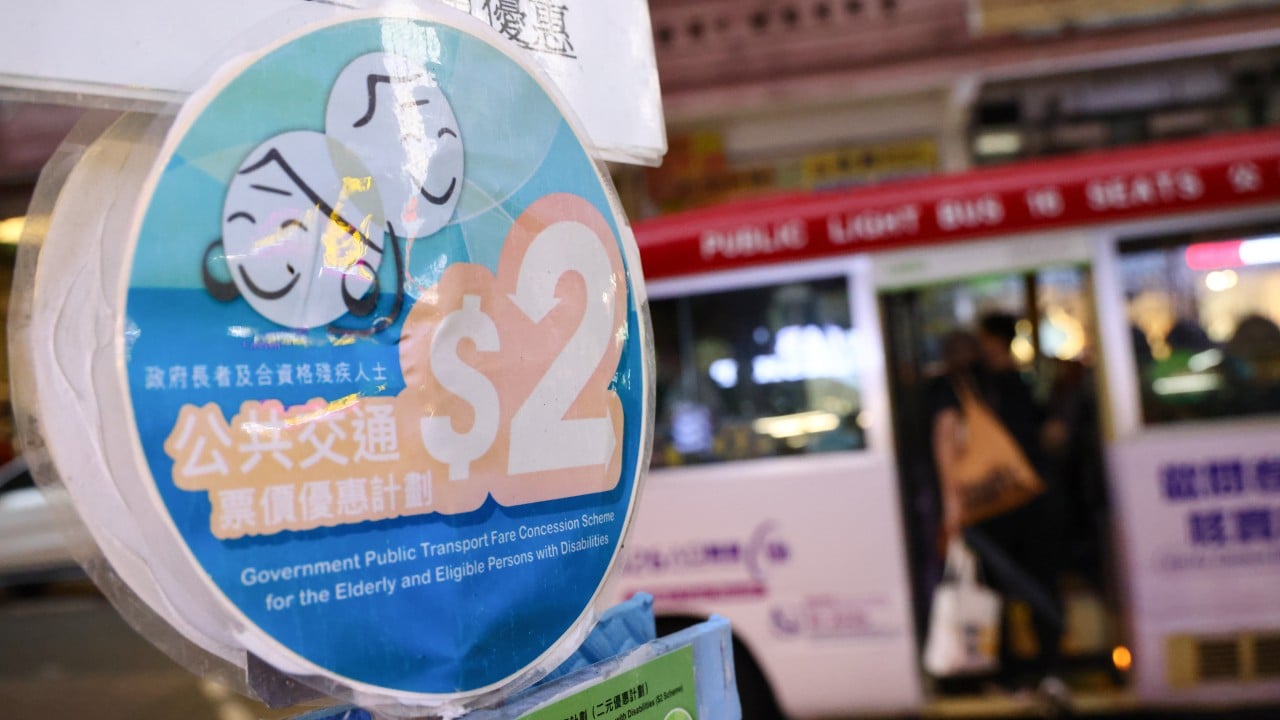
Under the new “HK$2 flat rate or 80 per cent discount” model, beneficiaries pay HK$2 for journeys with an adult fare of HK$10 or less, and 20 per cent of fares above that threshold.
The revamp is aimed at discouraging commuters from taking pricier long-haul routes for short journeys and is expected to save the government HK$550 million a year.
Sun revealed on Friday that authorities had decided not to implement the remaining part of the overhaul – a proposed cap of 240 subsidised trips per month that had been scheduled to be rolled out next year.
He cited a greater need for travel among some passengers with disabilities as well as an estimated cost of about HK$30 million for system updates and testing to introduce the cap, which would outweigh annual savings of several hundred thousand Hong Kong dollars in public funds.
An average of only about 450 people took more than 240 trips a month under the scheme between May 2025 and April this year, out of about 2.7 million beneficiaries.
Sun defended the decision on Saturday, saying that authorities had needed to decide whether to allocate resources for the system update this month.
He said it was only possible to make a more accurate prediction of how much of an update the system needed before the actual work began.
“Most people think it’s only one or two trips, but people should know that, for example, with buses, there are many transfer arrangements. In reality, when operating throughout Hong Kong, a simple trip limit arrangement involves many complex system conversions,” he said.
“There are also about 18,000 Octopus card machines. To ensure their smooth operation, a lot of testing and calculations are needed. The overall cost can be calculated relatively clearly at about HK$30 million.”
Sun added: “This decision is based on facts and is a better decision made in response to the latest situation.”
Financial Secretary Paul Chan Mo-po announced the revamp of the scheme in his budget speech last year, in a bid to reduce spending amid concerns over the scheme’s ballooning costs and the city’s growing ageing population.
In the 2025-26 financial year, the government reimbursed HK$4.8 billion to public transport operators under the scheme, a fourfold increase from HK$1.2 billion in 2019-20.