
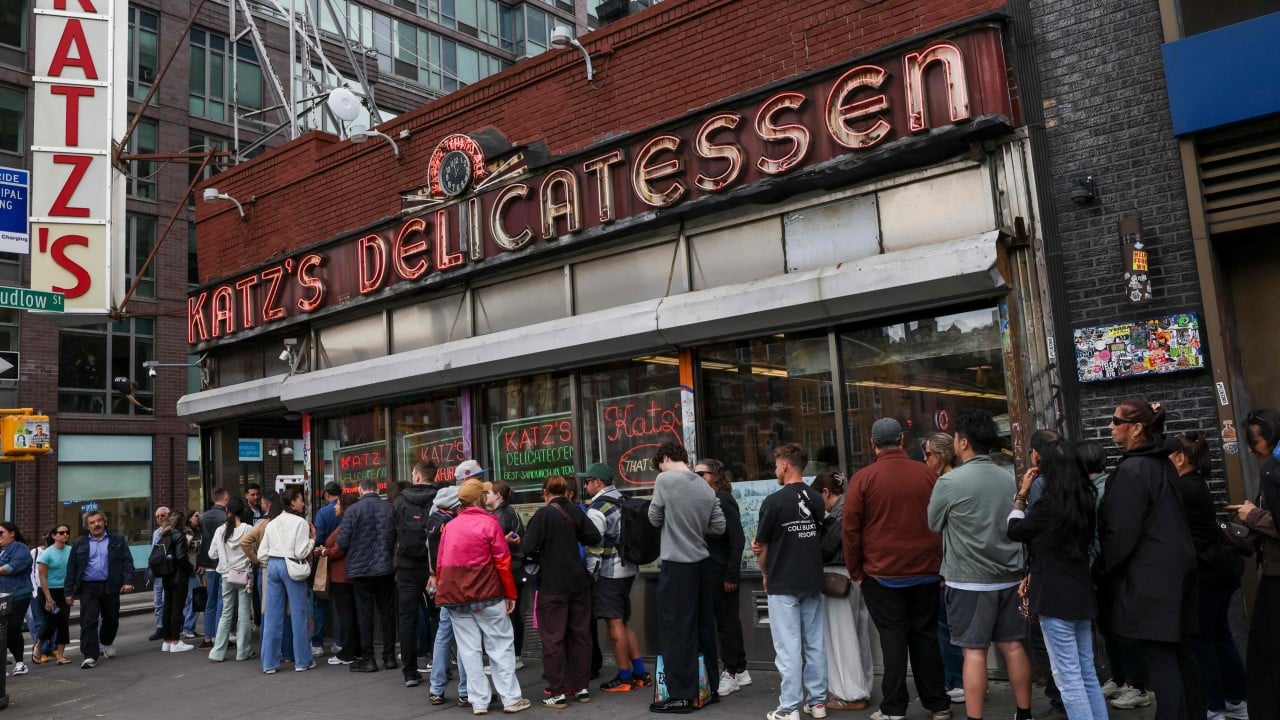
In front of L’industrie Pizzeria, as at many other New York restaurants and shops, customers queue up behind barriers – in this case, all to grab a prized pizza slice.
Not everyone in America’s biggest city finds standing in line to be a chore. The power of social media trends means that for some, waiting for hours is an attraction in itself.
“It’s gotten pretty crazy in the city recently,” said food influencer Ali Chilton, who has 168,000 followers on Instagram.
“Some would blame me for the lines at some of those places,” the 31-year-old said, citing a craze for hot chocolates at dessert shop Glace after a video she posted in 2023 racked up tens of millions of views.
People can queue overnight in New York if needed, as happened last year when punters sought to bag free tickets for a play starring Lupita Nyong’o and Peter Dinklage in Central Park.
Isabella Downes, who lately waited 40 minutes outside a Manhattan deli, said she was drawn to the idea of “participating in something trendy and fun”.
She was queuing to try out Dot Cakes, small frosted cakes with multicoloured hundreds and thousands that went viral and sell for US$11 apiece.
In a “polarising” world, she said, “being collectively together over one thing, and it’s usually a pretty happy and excited environment, that can be really nice too”.
For the impatient, a new tool has recently become available: the website Damn Lines estimates waiting times in real time using cameras installed in nearby homes, in exchange for payment.
Paid to queue
Or you can hire a queue sitter to wait in your place.
One firm, Same Ole Line Dudes, says its workers are in at least two separate queues on any given day.
They charge clients US$25 an hour for the privilege of sparing them the boredom of waiting. At courts, where media outlets often use queue sitters to get a seat for high-profile cases, the rate rises to US$50 an hour.
Robert Samuel, the company’s founder, said that customers include businesses who may hire sitters to create a queue – enticing others to join it.
“I can’t say the name, but we’ve had a few companies that have hired my line sitters as posers to wait outside their establishments,” he said.
Roberto Casati, a French-Italian philosopher, pointed to a deeper sense of meaning for people who join long queues like those in New York.
“A social ritual is being created around the line,” said Casati, a research director at the French National Centre for Scientific Research.
These moments become “shareable,” “Instagrammable” experiences – and therefore more “acceptable” than waiting at the supermarket.
Samuel Abrams, a professor at Sarah Lawrence College in New York state, said that queuing was about “status”.
“To wait at the right place signals taste, knowledge, and stamina,” he wrote in a piece for specialist website NewGeography.com.
The phenomenon can, however, create tensions.
In 2024, the hugely popular bagel chain Apollo ended up in court with the owner of a building over its long queues blocking neighbouring tenants’ entrances.