
As South Koreans brace for another sweltering summer, a grim joke has taken hold in casual conversation: “This will be the coolest summer for the rest of our lives.” For many young people, that line is no longer dark humour but a blunt summary of how the climate crisis feels – relentless, immediate and deeply personal.
Among South Korea’s young generations, a wave of what experts call “climate anxiety” is reshaping their daily lives, from how they exercise and shop to whether they plan to marry or have children.
Rather than taking to the streets with placards in protest, many are turning their unease into what they describe as “liveable” eco-friendly lifestyles woven into ordinary routines.
A 2024 study by the Korea Institute for Health and Social Affairs found that more than 90 per cent of adults feel anxious about the climate crisis. Young adults in their twenties recorded the highest scores among all age groups.
Researchers also noted a “functional” side to this anxiety: the more worried people were, the more likely they were to adopt eco-friendly behaviours, rather than disengage.
Those behaviours are increasingly visible.
Over the past years, “plogging” – a portmanteau of the Swedish phrase for “picking up” and the English word “jogging” – has evolved from a novel import into one of South Korea’s hippest outdoor activities.
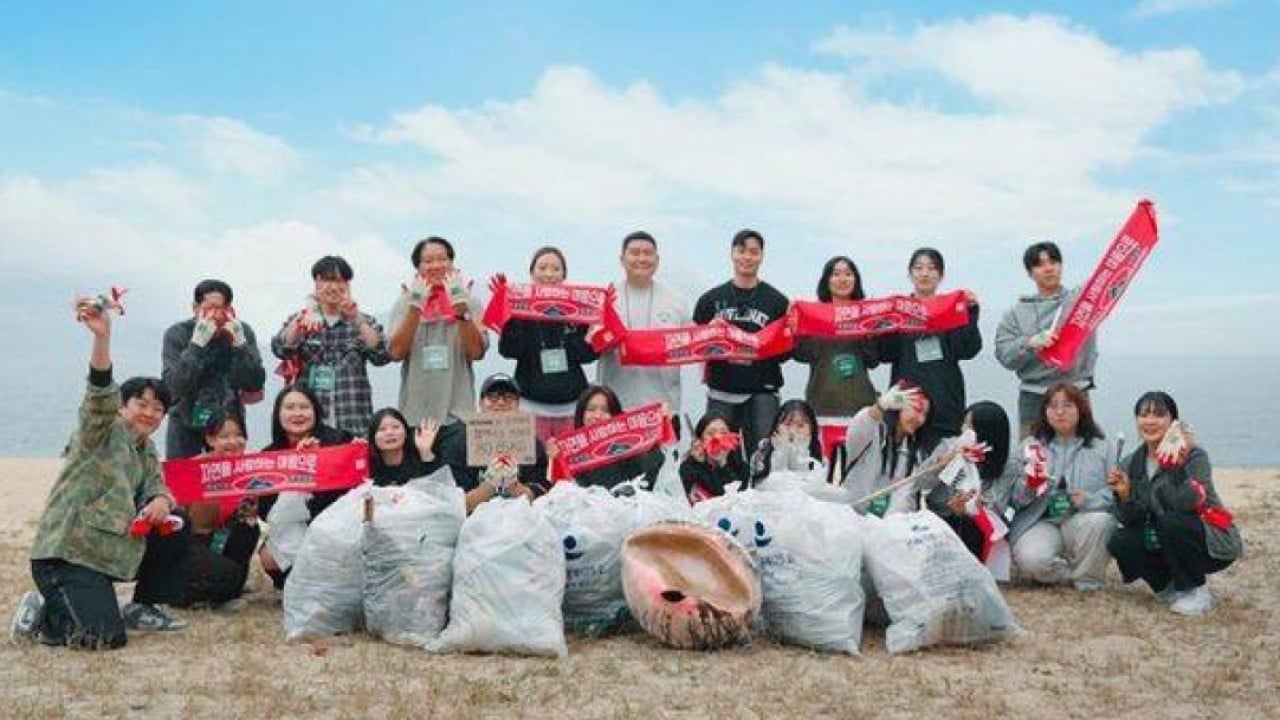
Young South Koreans jog or hike while collecting trash in reusable bags, then share photos of their haul on social media under hashtags.
“I see plogging as a fun culture, not a sacrifice or activism,” said Kim Ji-eun, 26, who joined a weekend plogging crew she found on Instagram. “I hope it becomes a natural hobby, not a special decision to help the environment.”
These crews typically meet on Saturday mornings, walk or run together while picking up litter, then finish with a picnic or lunch in the newly cleaned space. The format – light exercise, casual socialising and a tidy before-and-after shot – fits neatly into the generation’s preference for short, shareable experiences with visible impact.
In the mountains, the trend has merged with a separate hiking boom among young office workers burned out by long hours and screen-heavy jobs.
Clean-up hikes, sometimes branded as “mountain plogging”, invite participants to tackle city-adjacent peaks with outdoor brands such as The North Face, Black Yak and K2 handing out “clean packs” that include reusable trash sacks, gloves and tongs, positioning themselves as partners in grass roots environment action.
For participants, the appeal is physical as well as ethical. The basic plogging motion – repeatedly bending down to pick up trash and standing back up – mirrors a squat, adding lower-body strength training to the aerobic benefits of hiking.
“With plogging, my legs burn more, and it feels good to see the trash bags filling up,” said Park, 32, an outdoor enthusiast in Seoul who joined a clean-up event on Mount Bulam on Arbor Day. “It’s satisfying and heartbreaking at the same time. I love mountains, so I hope there are more of these events.”
For many young South Koreans, these scenes align with a broader trend often summed up by the buzzword “climate sensibility,” a 2025 consumer trend keyword that described designing one’s entire lifestyle with climate in mind.
Another popular term, “MZeco”, refers to millennial-Generation Z consumers who treat environmental values as a non-negotiable part of their identity and believe both companies and individuals share responsibility for solving the climate issues.
This has helped move plogging into the cultural and political mainstream.
Fashion retailers, global brands and local governments stage clean-up runs as part of their environmental, social and governance drives. Ahead of a flagship store opening in central Seoul, Uniqlo invited employees, influencers and citizens to join a plogging event around the shopping district of Myeongdong.
During the recent election season, several local candidates swapped loudspeakers and campaign trucks for trash bags, walking through neighbourhoods to pick up litter while listening to voters’ complaints.
This article was first published by The Korea Times