
US President Donald Trump’s drive to reassert US supremacy in Latin America has already squeezed China’s interests in Cuba, Panama and Venezuela. Now, Nicaragua could be shaping up as the next economic battleground between the two powers, a scholar has warned.
The American leader has yet to target Nicaragua since returning to office, but that could change if China revives an ambitious project to build a canal cutting across the country to connect the Pacific Ocean and Caribbean Sea, said Zhang Junhua, a senior associate at the European Institute for Asian Studies, in a position paper.
The waterway has been in limbo for years, but Trump’s assertive foreign policy – which has seen him pressure a string of Latin American governments in recent months – could push Beijing to upsize its role in the project, Zhang suggested in the paper published on Thursday.
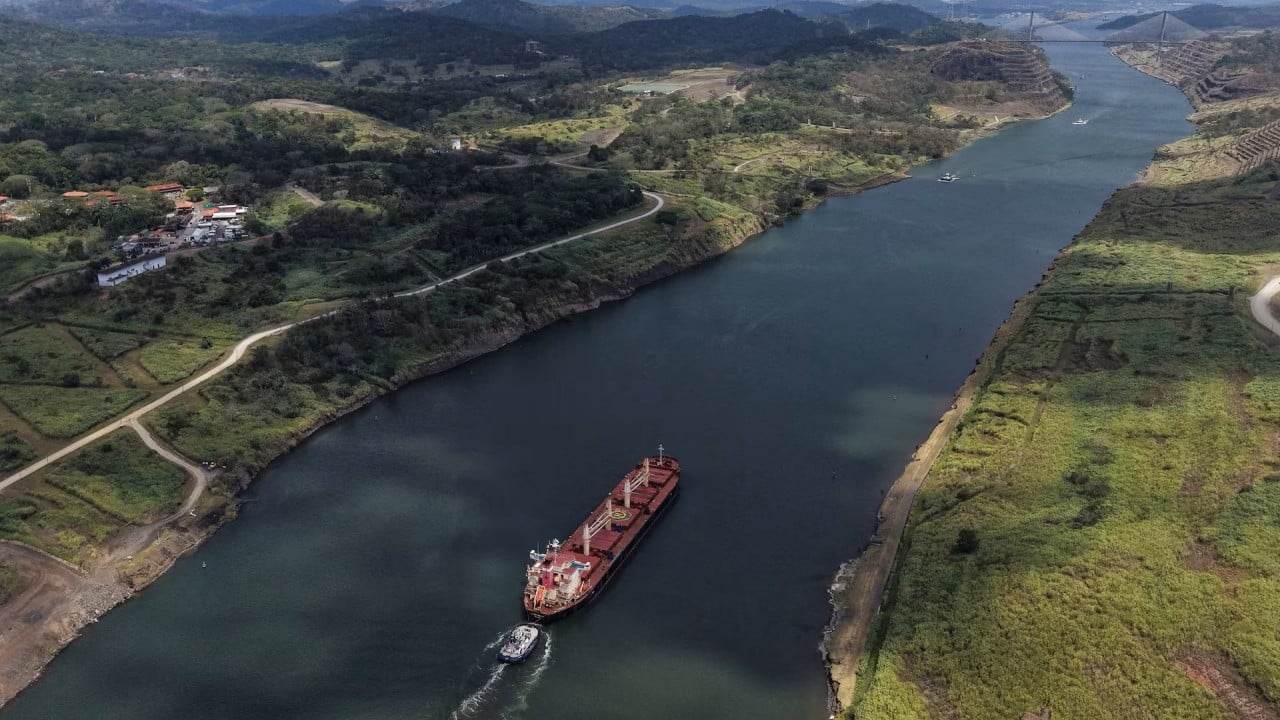
China has recently “intensified” its efforts to find alternatives to the Panama Canal, Zhang noted. The waterway was previously owned by a subsidiary of the Hong Kong firm CK Hutchison, but in January ownership passed to a pair of European shipping companies after months of pressure from Trump.
The ruling from Panama’s supreme court is far from the only setback China has faced in Latin America. In January, Beijing also condemned the US capture of then-Venezuelan leader Nicolas Maduro, which paved the way for Washington to increase its influence over the country’s vast oil industry.
More recently, China accused Washington of “inventing allegations” to justify its sanctions against Cuba – a Chinese ally since 1960 – and its blockade of the island. Now, Washington is “likely” to target other countries in the region where China is looking to build infrastructure, such as Nicaragua, Chile and Peru, Zhang said.
“Nicaragua could potentially come under US influence in the future,” he said.
Beijing is already responding to the US pressure campaign. Since the Panama Canal ruling, China has “accelerated” its other infrastructure projects in Latin America, including the US$1.3 billion deep water Port of Chancay in Peru, according to Zhang.
A push in Nicaragua also makes sense, he suggested. Like Panama, part of Nicaragua is narrow enough to support a transoceanic canal. “Nicaragua has established strong ties with China, which has the technical expertise and financial resources necessary to construct the Nicaragua Canal,” Zhang noted.
Hong Kong’s New People Group originally signed an agreement to build the Nicaragua Canal in 2013, which saw Nicaragua grant the company a 50-year concession. But the firm later went bankrupt, and the government eventually revoked the concession in 2024.
Since then, Nicaragua has picked a new 445km (276.5-mile) route for the canal and brought in China CAMC Engineering – a state-owned Chinese enterprise – as a partner. However, the project still faces engineering obstacles and environmental problems, Zhang said.
“Despite these challenges, from Beijing’s perspective, the Nicaragua Canal represents an excellent opportunity for expansion,” he said. “For this reason, the Chinese government has quietly begun experimenting in the canal region.”