
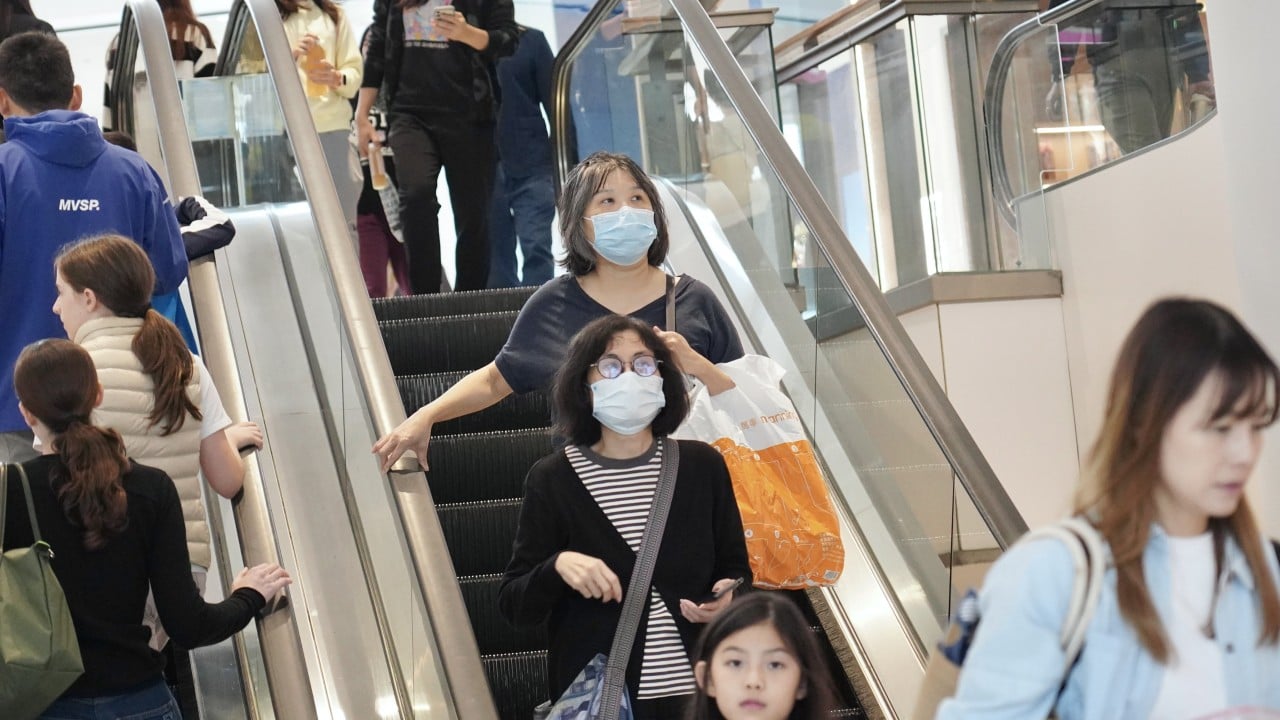
Hong Kong is experiencing a rise in seasonal influenza cases, particularly among children and the elderly, as waning vaccine protection weakens community immunity, a leading infectious disease expert has warned.
Professor Ivan Hung Fan-ngai, chair professor of infectious diseases at the University of Hong Kong, issued the warning on Saturday and urged high-risk groups who have not received a seasonal flu jab to get vaccinated.
The remarks came a day after health authorities said an influenza B infection had left a 17-year-old boy with chronic illnesses suffering from severe pneumonia and shock. The teenager, who was not vaccinated, is in a critical condition.
Hung told a radio programme that flu infections had rebounded since January, when cases had previously declined.
“There has indeed been an upwards trend recently in the number of flu infections for both Influenza A and B. For example, at Queen Mary Hospital, we’ve witnessed more flu infections among the elderly and children,” he said. “But we need to wait and see to decide if the trend is another influenza peak.”
He attributed the rise to weakened community immunity as vaccine protection declined over time.
“The seasonal influenza vaccination scheme has been under way for about half a year, and the immunity of most vaccinated individuals has begun to decline. As the number of infection cases has decreased over the past few months, their antibody levels also dropped,” Hung said.
Health authorities said influenza activity in Hong Kong had risen in recent weeks but remained below the baseline level. Over the four days from May 31, they recorded 20 influenza-like illness outbreaks in schools and institutions, affecting 84 people.
Hung advised high-risk individuals, including the elderly and those with chronic diseases who have not yet received the influenza vaccine, to get vaccinated to boost their immunity.
He added that they should maintain good personal hygiene, wash their hands frequently, and wear a mask if they feel unwell but still need to go out.
On the Ebola outbreak in Central Africa, Hung said sporadic outbreaks occur in Central and West Africa every one to two years.
“Because locals have a habit of eating bushmeat, there is a chance of contracting the virus by consuming it undercooked,” he said.
He emphasised that Ebola has a low transmission rate, with each patient infecting at most one to two people, and that it spreads only through close contact.
“Hong Kong has no direct flights to the region, the risk of infection is low and Hong Kong residents do not need to worry too much,” he said, urging people to avoid travelling there if possible.
On the Centre for Health Protection’s latest statement that Covid-19 has become endemic in Hong Kong, Hung said the public need not be too concerned, as the proportion of severe cases has declined with each successive wave and the virus is becoming progressively weaker.
“The society does not need to worry too much about Covid-19, though high-risk individuals should still get vaccinated,” he said.