
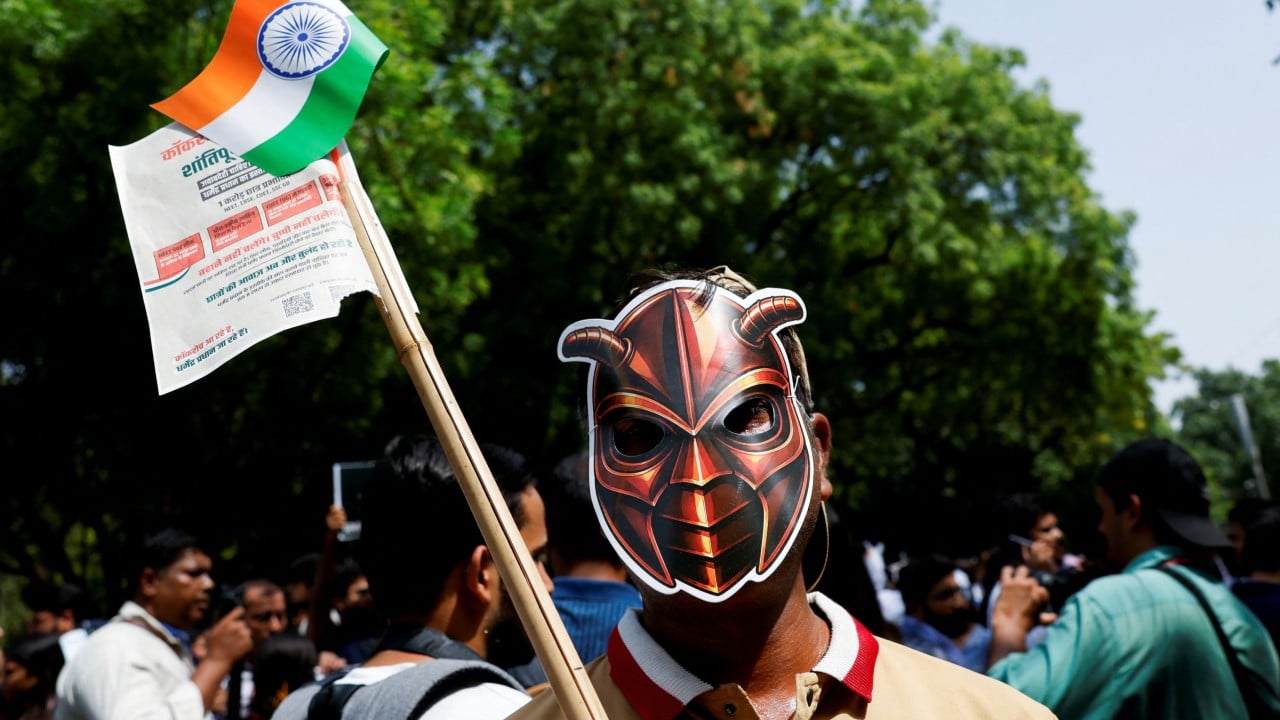
The founder of India’s viral Cockroach Janta Party (CJP) arrived in New Delhi on Saturday to lead a protest against Prime Minister Narendra Modi’s government, taking the country’s largest online youth movement to the streets for the first time.
Abhijeet Dipke, 30, who has lived in the United States for the past two years, had said his family and friends feared he could be arrested on his return to India.
Dozens of police officers gathered near Jantar Mantar in central Delhi on Saturday, barricading some of the surrounding roads as protesters shouted slogans demanding the resignation of Education Minister Dharmendra Pradhan.
Modi’s government has blocked the movement’s X account in the country, a move CJP has challenged in a Delhi court. Senior cabinet minister Kiren Rijiju has accused the group of seeking followers from arch-enemy Pakistan and the “anti-India gang”.
CJP, which has amassed roughly 22 million Instagram followers since launching in mid-May, is the largest online expression of dissent against the Hindu nationalist Modi’s 12-year-old rule, fuelled by persistently high youth unemployment and recurring leaks of examination papers that threaten to derail the careers of millions of students.
Political analysts say the group’s popularity has begun to dent Modi’s image despite his party’s recent victories in key state elections, even as wider frustration grows over rising fuel prices and gas shortages brought by the Iran war.
Police used loudspeakers to direct people to Saturday’s designated protest site.
“This is a peaceful movement for the youth of the nation,” CJP spokesman Ashutosh Ranka said. Dipke was “ready for a long and big day in India’s politics”, Ranka said.
India has nearly 400 million people aged 15 to 29, and generating non-farm jobs for them remains one of its biggest challenges despite rapid growth. The urban youth jobless rate was nearly 14 per cent in April. Many educated young people are also stuck in low-paid or insecure jobs that do not match their skills, economists say.
It remains unclear how many people will participate. But the protest will be an early test of whether the movement can channel its online popularity into a broader grass roots support.
CJP emerged only three weeks ago to become an unlikely outlet for discontent among supporters who proudly call themselves “cockroaches”.
India’s Chief Justice Surya Kant likened critics and some unemployed youth to cockroaches during a May hearing, sparking backlash among frustrated young Indians.
Dipke, a political communications strategist and Boston University student, used the insult as inspiration for a parody political party.
Videos and memes lampooning unemployment, corruption and political dysfunction have drawn millions of views online. Parody CJP accounts also have adopted the cockroach as a political symbol and use memes, mock campaign slogans and satirical commentary.
The movement’s tongue-in-cheek messaging blends self-deprecating humour with political criticism. Supporters jokingly describe themselves as unemployed, perpetually online and shut out of meaningful influence.
Beneath the humour lies a broader criticism of Modi’s government, as CJP supporters argue that ordinary Indians, particularly young people, have been left with fewer opportunities.
CJP organisers used social media this week to rally supporters for Saturday’s march, demanding Pradhan’s resignation. The demand grew out of an exam irregularity controversy in May that quickly became a broader outlet for frustration over India’s education system and limited job opportunities.
Participants were encouraged to bring India’s national flag and a book, which organisers said symbolised right to education and equal opportunity for all. Organisers also urged demonstrators to remain peaceful and avoid any confrontation with police.
“Time to turn this tiny joke into a revolution,” the official CJP account on X posted on Friday.
Additional reporting by Associated Press