
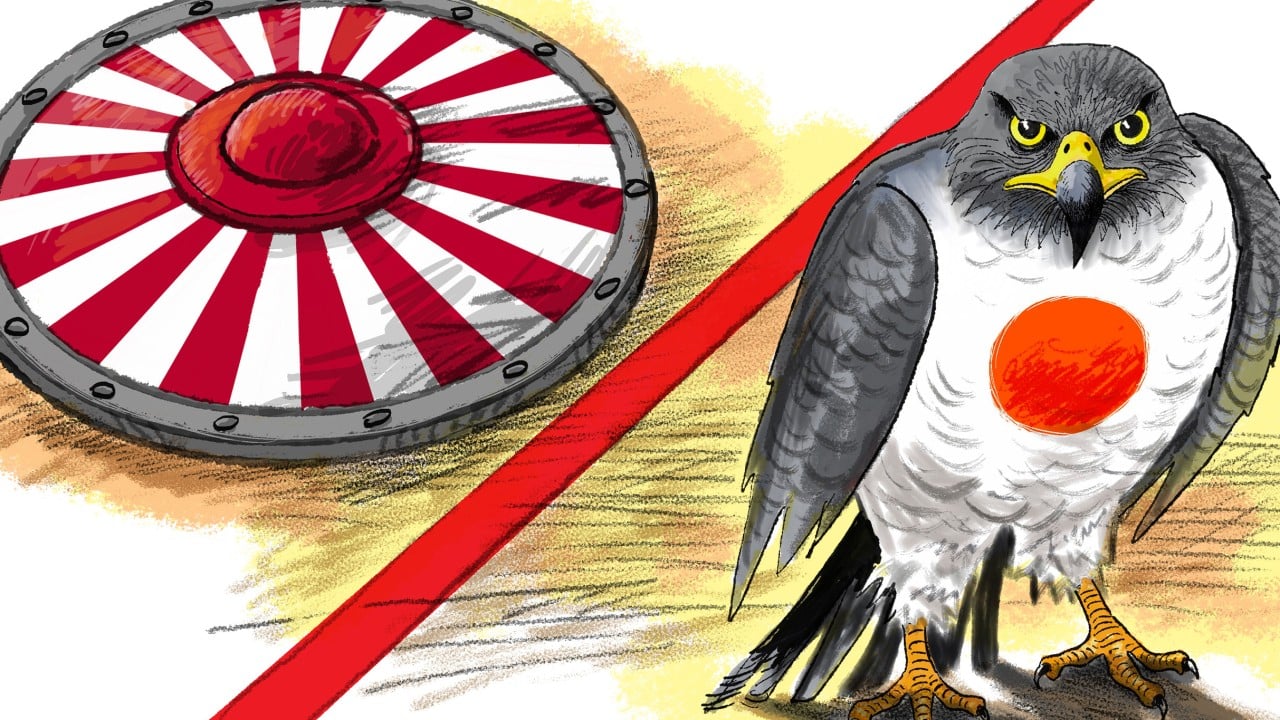
Global attention is fixated on Japan’s strategic shift under Prime Minister Sanae Takaichi. From the strengthened US-Japan alliance to the tense stand-off with China, from advocating for constitutional reinterpretation to allowing weapons exports and deploying counterstrike capabilities – these moves have been dissected in capitals worldwide.
But the real, and more decisive, story is unfolding on Japan’s home front. The domestic dynamic driving this change is often a footnote, yet it is the engine. Understanding it is crucial, especially for Beijing, as it navigates an East Asia with a declining US hegemon and a rapidly remilitarising Japan.
On the surface, a contradiction exists. Pacifist and liberal opposition remains. Article 9 of the constitution retains deep emotional resonance. Protest voices persist. Yet Takaichi’s approval ratings are strong. This is the result of a long, deliberate project.
For decades, the conservative Liberal Democratic Party (LDP) has cultivated the soil through education reforms, curated historical narratives, orchestrated visits to Yasukuni Shrine and eroded pacifist taboos. The goal was generational change. My years in Japan showed me this first-hand. I reviewed textbooks whose language softened, reframing the war, with Japan portrayed as a historical actor akin to Western imperial powers, even a victim.
It worked. The new generation carries less wartime guilt. I have spoken with many Japanese peers who argue they should not bear their grandparents’ guilt. Their identity is shaped by contemporary anxieties: economic stagnation, a rising China and North Korean missiles. For many, nationalism is a pragmatic shield. A strong Japan is a safe Japan. This is Takaichi’s base.
This contrasts sharply with the Japan I knew decades ago. I remember elderly men, former soldiers, bowing to apologise for their actions in China. Their passing marks not just a demographic shift, but the closing of a chapter where the war was a lived experience, not a historical debate.
Against this backdrop of profound generational change, early foreign comparisons of Takaichi to a fleeting figure like Liz Truss were superficial. Some now invoke Margaret Thatcher. Both miss the mark. The true analogy is domestic: Takaichi stands firmly in the lineage of LDP hawks like Junichiro Koizumi and Shinzo Abe.
Her sending of offerings to Yasukuni, dogged focus on the China “threat” and relentless push for military normalisation form a coherent whole. This is not a revolution, but an acceleration of a long-gestating project. The shrine remains the perfect fault line: for Beijing, it glorifies war criminals; for Japan’s conservative base, it is a site of national mourning and perceived victimhood.
This disconnect forms a chasm that decades of diplomatic protest have failed to bridge. It is a nationalist posture honed over years, now meeting a more receptive public.
This domestic shift presents a unique challenge for Beijing. China’s responses have been predictable and hardline: military sanctions, diplomatic warnings, aggressive rhetoric. Some officials have even evoked the UN Charter’s “enemy state” clauses. This creates a perilous loop: Beijing’s actions reinforce the very domestic tendencies it seeks to deter.
This hardline playbook is domestically necessary but strategically insufficient abroad. In Japan, it feeds the narrative Takaichi and LDP hawks are selling: China is aggressive, revisionist and a threat. Every sharp rebuke from Beijing is showcased in Tokyo as proof of the necessity for more missiles, ships and alliances.
When China invokes the wartime past, it speaks a language of final judgment that alienates the younger Japanese public, making them feel perpetually branded with ancestral sins.
Beijing would be wise to realise the complicated internal process it triggers. A one-dimensional “wolf warrior” approach strengthens the very hawks it fears. It unifies Japanese opinion against a perceived external menace and allows Takaichi to frame remilitarisation as an unavoidable, defensive necessity.
The pacifist forces in Japan – embedded in grass-roots movements, opposition parties and influential media voices – remain a crucial part of the domestic equation. A Chinese strategy that acknowledged Japan’s complex internal debate could find more space for these voices. Calibrated diplomacy is harder than sanctions, but more strategic.
The path forward requires calibration from both sides. Tokyo must realise clearly the world of 1895 or 1937 is gone. Today’s China will never accept a fully remilitarised Japan posing a tangible offensive threat to its core security. Pushing that red line risks a dangerous and destabilising cycle of escalation.
The goal must be self-defence, not power projection. It must also understand that the historical narratives cultivated for domestic cohesion – the Yasukuni visits, textbook revisions, pursuit of nuclear weapons – are perceived in Beijing as proof of unrepentant revanchism, rendering trust impossible.
For Beijing, the task is to manage its response without accelerating the very trend it fears. It must separate legitimate self-defence concerns from historical grievances. Its rhetoric must aim to isolate Japanese hawks, not unite the nation behind them. This means discipline. It means engaging with Japan’s multifaceted society. It means crafting a message that speaks to the pacifist, the pragmatic businessman and the anxious citizen, not just the nationalist.
The stability of East Asia hangs in this balance. A Japan that misreads its strength and history. A China that misreads Japan’s internal dynamics. Either mistake could unravel decades of uneasy peace. The theatre is the Taiwan Strait and East China Sea. Yet the script is written at home – line by contested line, in the political arenas and public hearts of Japan itself. To ignore that domestic drama would be a profound strategic blunder.