
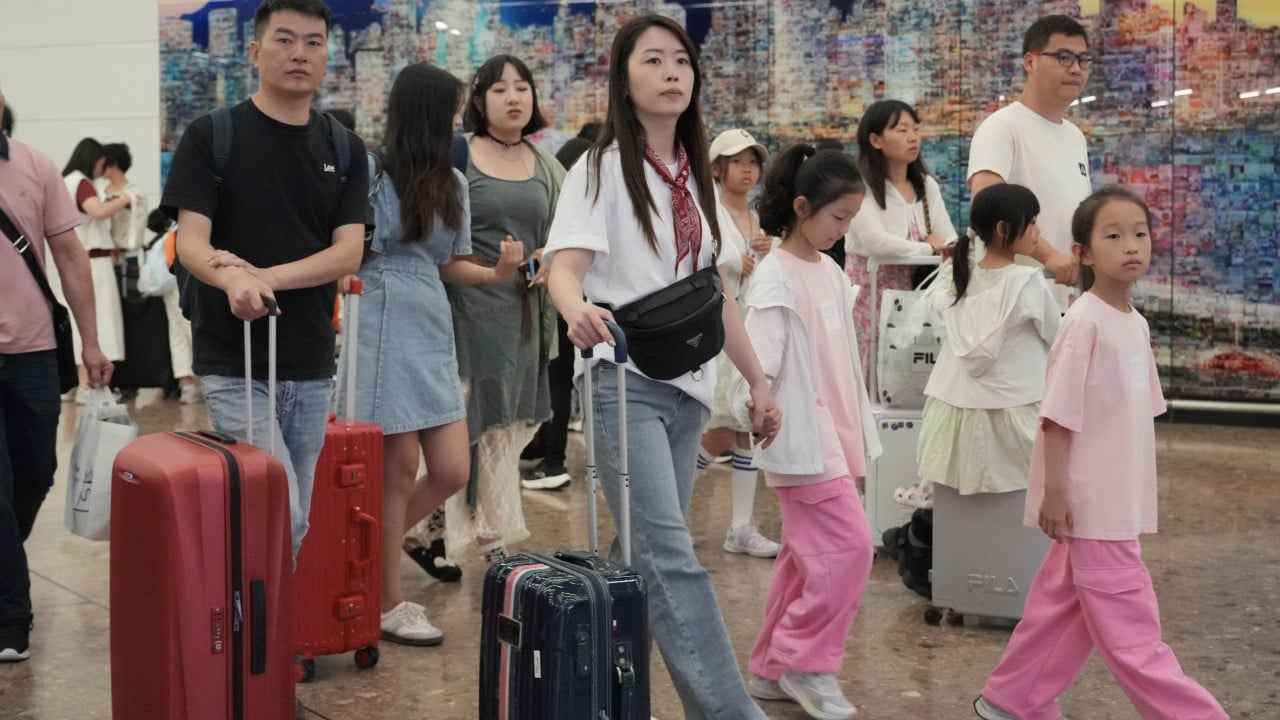
The number of inbound trips to Hong Kong by mainland Chinese visitors is expected to reach 980,000 for the coming Labour Day “golden week” holiday across the border, a 7 per cent increase from last year, with city authorities saying they will enforce environmental regulations around the clock at popular camping spots.
The estimate from the Immigration Department on Monday came as the government revealed it had stepped up measures for crowd control, transport and tourism in anticipation of a busier mainland holiday period from May 1 to 5.
Last year, Hong Kong recorded about 919,000 inbound trips by mainland visitors during the Labour Day break, according to official data.
Authorities said on Monday that they were preparing for higher passenger flows across land, sea and air control points, with additional manpower and transport capacity to be deployed during peak periods.
Chief Secretary Eric Chan Kwok-ki, who chaired an interdepartmental meeting on Monday, said the government would maintain close coordination with the travel sector and relevant organisations to ensure smooth operations during the holiday.
“The number of visitor arrivals is expected to increase … [and] the government will make good preparations for receiving visitors,” he said.
Meanwhile, the Travel Industry Authority and other sector leaders estimated that about 770 mainland tour groups would visit Hong Kong for the holiday.
“The [authority] has reminded travel agents receiving mainland inbound tour groups to stagger arrival times as far as possible, and will [coordinate] with relevant agencies such as tourist spots to adopt appropriate diversion measures to enable proper management of visitor flows and tour buses, with a view to offering visitors a pleasant travel experience,” the government said.
Authorities said additional counters and channels at boundary control points would be opened where necessary, while a joint command centre involving the police, Immigration Department and other agencies would monitor real-time conditions and coordinate responses.
Shuttle bus services at the Hong Kong-Zhuhai-Macau Bridge and Lok Ma Chau crossings will also run at higher frequencies during peak hours, while cross-boundary coach quotas will be increased to meet demand.
The Agriculture, Fisheries and Conservation Department will also deploy extra staff to popular campsites such as Ham Tin Wan, Sai Wan and Long Ke Wan in Sai Kung, to be stationed at the locations and conduct day-and-night patrols.
Staff will carry out enforcement actions against violations, while drones and CCTV systems will be used to monitor the campsites.
Police, meanwhile, will step up action against illegal acts by taxi drivers, including overcharging and refusing fares, while customs officers will increase inspections to combat unfair trade practices.
The government also reiterated its zero tolerance of coerced shopping, urging visitors to patronise licensed travel agents and report any irregularities through official channels.
The warning comes after the Travel Industry Authority said earlier this month that it had revoked the licence of Star Link Travel in connection with four suspected cases of coercing inbound mainland tourists to shop at certain stores.