
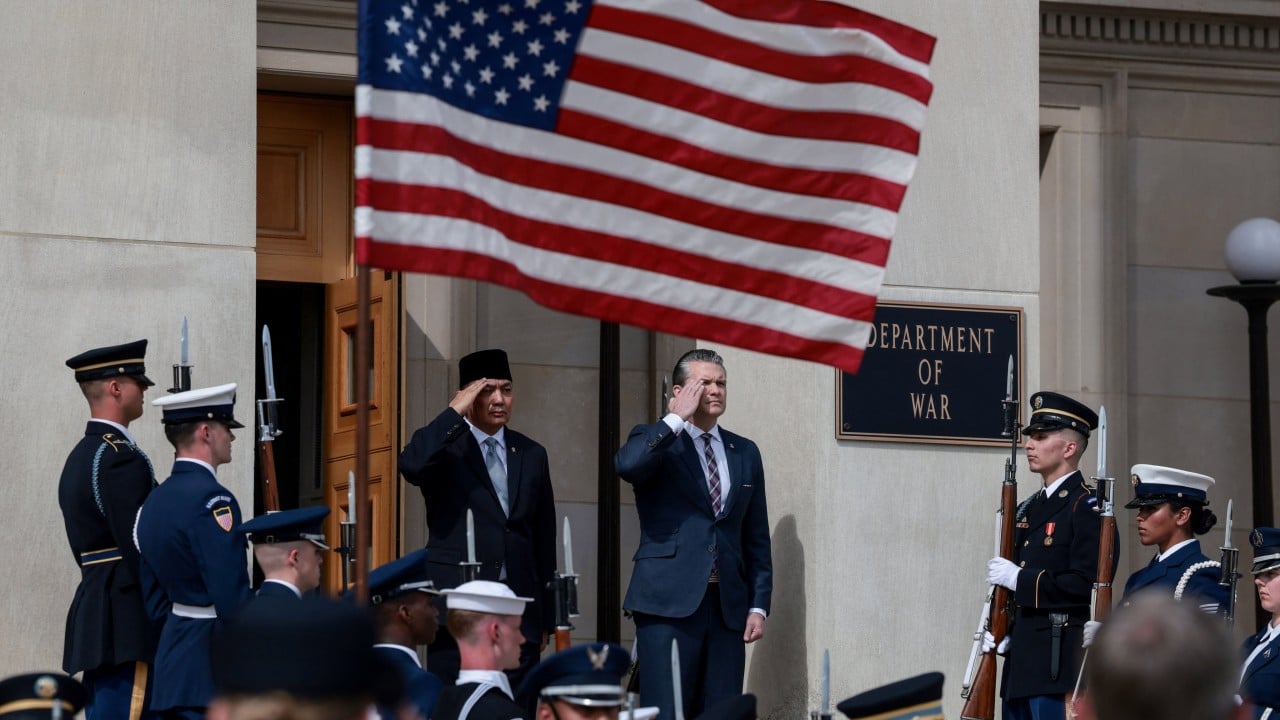
Indonesia says it is not choosing sides. That is true in diplomacy. It is less true on the map. The “major defence cooperation partnership” announced by Washington and Jakarta on April 13 is written in the safe language of official communiques: capacity building, education, exercises, cooperation. But the harder meaning lies beneath the phrasing.
The most important line in this new defence partnership is not the reassuring one about “peace and stability”. It is the one about “maritime, subsurface and autonomous systems”. Add the promise of maintenance, repair and overhaul support, as well as the commitment to expand joint special forces training, and the document reads less like ceremony than capability.
This is not just another diplomatic upgrade. It is the quiet architecture of military usefulness. As argued previously, strategic competition is no longer defined only by territory, but by control over the routes through which energy, trade and force must pass.
Indonesia has not suddenly become an American ally. Jakarta has stressed sovereignty and its long-standing “free and active” foreign policy, while a separate US proposal on military overflight access remains under review and, according to Indonesian officials, sits outside the published partnership. That caveat matters. But it does not reduce the significance of what has been agreed. In Asia, the most consequential shifts often arrive without treaty drama. They are built through habit, hardware and interoperability.
China has understood this logic for a long time. More than two decades ago, president Hu Jintao warned of what became known as the “Malacca dilemma”: the vulnerability created when a rising industrial power depends on fuel it must import by sea through a narrow passage it does not control. The numbers still speak loudly. China imported 11.6 million barrels of crude oil a day last year, over 90 per cent of which arrived by sea rather than pipeline. The Middle East accounted for roughly half of China’s crude and condensate import mix. The dilemma is not rhetorical. It is structural.
That is why Indonesia matters so much. The Strait of Malacca remains the world’s largest oil transit chokepoint. The US Energy Information Administration (EIA) estimates that 23.2 million barrels a day flowed through in the first half of 2025, roughly 29 per cent of the maritime oil trade. It is also the shortest sea route between Gulf suppliers and Asian buyers. Even when ships avoid it, they do not escape Indonesia’s relevance: the main alternatives are the Sunda and Lombok straits, both detours. This is not simply a question of geography. It is a question of leverage over dependence.
Beijing has tried to dilute that exposure. The EIA notes that China’s main crude import pipelines come from Russia, Kazakhstan and Myanmar. But those routes remain supplementary. When only a small minority of imports arrive by pipeline, the sea still decides the argument. China has not escaped the problem Hu identified. It has merely softened the edges.
Seen in that light, the new US-Indonesia pact becomes easier to read. Its value does not lie in a dramatic promise to close anything. It lies in peacetime preparation. A defence relationship built around maritime and undersea technologies, logistics support, professional military education and special forces ties enlarges what both sides can see, sustain and do together.
The dullest phrase in the whole document may be the most important: maintenance, repair and overhaul. Sensors matter but platforms that can stay available matter more. So do training relationships and defence alumni ties, because the human infrastructure of cooperation usually outlasts the politics of the moment.
It is also worth remembering this relationship is not being improvised from scratch. US Defence Secretary Pete Hegseth said the two militaries conducted more than 170 exercises together each year. The new pact does not create intimacy where none existed. It thickens an existing pattern and pushes it into more operationally useful terrain. That is why the agreement matters even if Indonesia never signs anything resembling a formal alliance. The regional balance is shaped not only by bases and flags but by whether partnerships can function under pressure.
This is the sharper way to read the announcement. Washington is not claiming ownership of a strait. It is investing in the systems, skills and relationships that would matter if access through Southeast Asia ever came under pressure. Indonesia, for its part, is still balancing. But balancing does not cancel consequence. A country can insist it is non-aligned and still become more important to one side’s strategic position. China named this vulnerability years ago. The new US-Indonesia partnership makes it harder to ignore.