
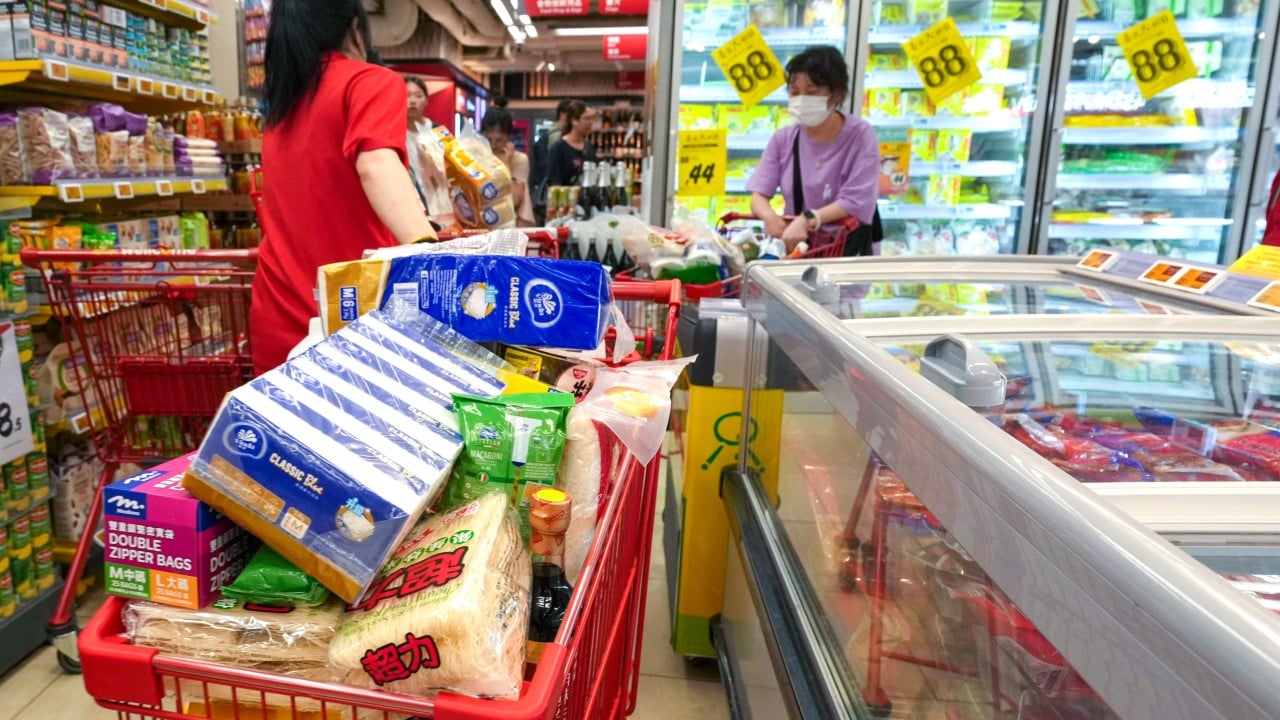
Hong Kong’s major retailers are using aggressive tactics such as direct sourcing and leveraging massive economies of scale to avoid raising prices despite surging logistics costs arising from the war in the Middle East.
But their resilience is being seriously tested for certain goods, with a leading cosmetics chain warning that shipping and airfreight costs have already surged by up to 15 per cent.
Sa Sa International chairman Simon Kwok Siu-ming told the South China Morning Post on Friday that since some beauty items were petroleum by-products, they would face further pressure for price increases if the situation worsened and affected fuel supplies.
“Fuel and transport-related costs have indeed risen, with shipping and airfreight fees already increasing by about 10 to 15 per cent,” Kwok said.
“Although the group’s products have not experienced shortages or any obvious delays, the unstable situation makes delivery timelines more difficult to control,” he said. “We are closely monitoring developments to manage our inventory in a more prudent and flexible manner to minimise the impact.”
The warnings follow weeks of geopolitical turmoil triggered by the start of the US-Israeli war on Iran in late February.
The strategic Strait of Hormuz – through which about 20 per cent of the world’s oil and liquefied natural gas usually passes – has been closed, reopened and closed again.
Yemen’s Tehran-aligned Houthi movement has threatened to besiege a second key Middle East waterway – the Bab el-Mandeb Strait – as Iran launched drone attacks against US Navy vessels in the Strait of Hormuz over the weekend after a diplomatic effort to end the war appeared to collapse.
The conflict has pushed the city’s diesel and petrol prices to the highest levels globally while cargo freight and shipping companies have reacted swiftly to the crisis by drastically raising surcharges.
Cathay Cargo quadrupled its long-haul fuel surcharge to HK$18.6 (US$2.37) per kg for the second half of April from December last year, while couriers FedEx and UPS pushed their surcharges to 45.5 and 47.5 per cent respectively.
DFI Retail Group, the city’s retail giant behind Wellcome, Mannings, 7-Eleven and Ikea, has deployed a range of measures to save costs and enhance its operations.
Darren Chan, DFI Retail Group’s managing director of food for Hong Kong and Macau, said Wellcome has expanded its sourcing network to more than 50 countries – doubling pre-Covid-19 levels – while increasing direct procurement from suppliers.
Wellcome, one of Hong Kong’s largest supermarket chains, has also partnered with mainland China’s grocery platform Dingdong Maicai and state-owned agribusiness conglomerate Cofco.
“Because of our scale, when you are a leader in the market, the price you negotiate and the volume you get [with suppliers] will be different,” Chan said.
By adding more sourcing options from over 50 countries, the company could find other options if a product’s price becomes unreasonable, he added.
The retail market “has entered a completely new competitive landscape”, according to Wellcome. “Under the combined effects of persistent inflation, the trend of consumers spending across the border, and intensified competition from mainland e-commerce platforms, the market ecosystem has undergone a significant transformation,” the chain said in a statement.
Elliot Lee, Ikea North Asia managing director, said the furniture giant had locked in fixed-price contracts to fend off immediate shocks and was optimising deliveries to cut costs.
“Our supply sources are on fixed prices for half a year … at least in the coming six months, I don’t see any significant pressure or increase in our product costs,” Lee said.
He said delivery costs had risen by roughly 5 to 10 per cent but “remained acceptable” with no need to increase fees for about 700 daily trips while the government’s diesel subsidy and halved tunnel fees for two months supported their small contractors, which was “a good thing”.
Ikea was also optimising deliveries by reducing empty truck space to tackle rising costs, he said.
Alex Liu, Mannings’ managing director for Hong Kong, Macau and China, said his team was strictly reviewing and rejecting unjustified requests for price increases from suppliers.
“If a supplier requests a price increase, we have a mechanism to review the reasons behind it, to see if it is due to rising material costs,” Liu said.
“We basically will not approve all price increase requests from suppliers,” he said, adding that the company would protect consumers by blocking any unjustified increases from being passed on.
Patrick Lui, 7-Eleven’s managing director for Hong Kong and Macau, said the convenience store chain was reducing utility costs to offset higher transport expenses.
“We use other measures to control overall transport costs,” Lui said. “We are looking at our processes from beginning to end to see what can be simplified or reduced.”
He added that the company was also exploring ways to keep air-conditioning temperatures stable at its stores to reduce carbon emissions and save costs.
The Consumer Council said in a statement that it was “committed to safeguarding consumer interests and promoting transparency in market practices through market surveillance and price monitoring of daily commodities over the years”.
The council’s Online Price Watch provides daily prices and discounts of around 2,600 products from online food stores, supermarkets and personal care stores to facilitate price comparisons for the public.
To enhance convenience and efficiency, the council will launch an app version of the price tracker later this year.
“While price fluctuations of daily necessities can be attributed to various factors, the council urges oil companies to uphold their social responsibility and consider consumers’ affordability when making pricing decisions,” the watchdog said.