
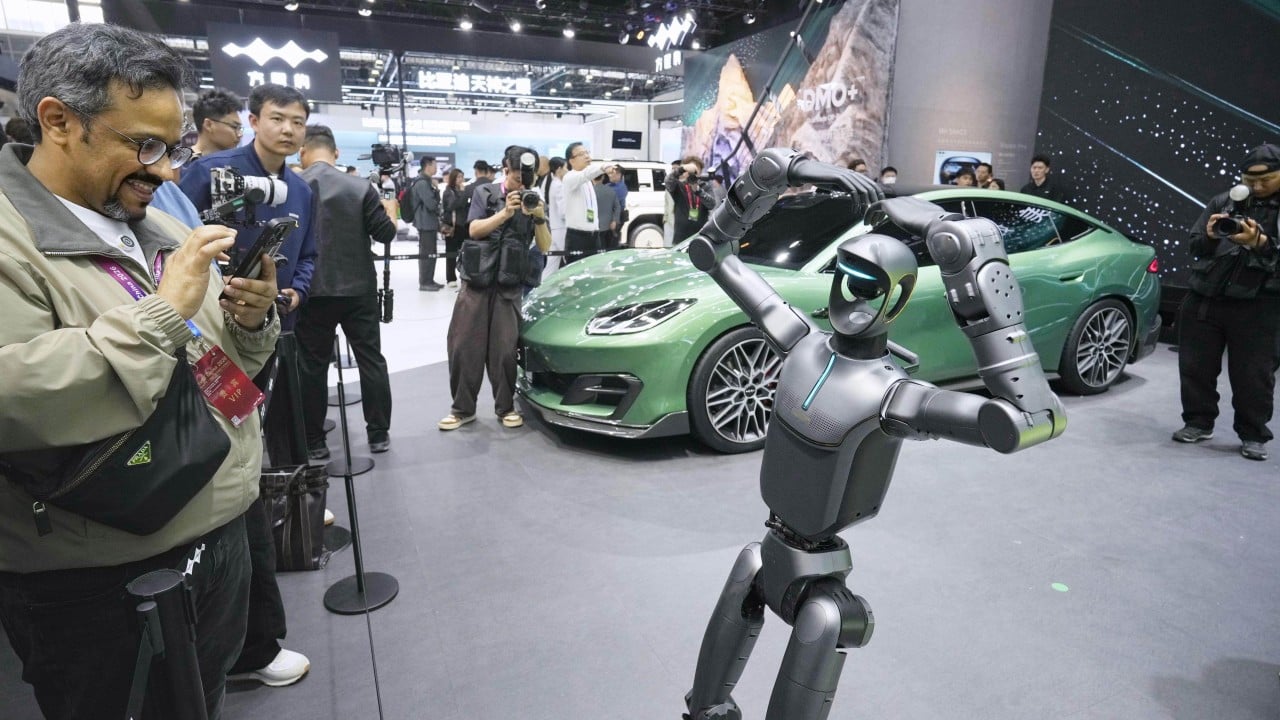
For German consumer Erik Böhme, a first visit to the Beijing auto show was an eye-opener – the world’s largest car exhibition showcased a vast array of electric vehicle (EV) brands, many already gaining traction in Europe.
“I think there will be more Chinese brands coming and being successful in Europe,” said Böhme, a freelance automotive consultant who spent two days at the event, which ran through May 3.
Böhme was among 250 foreign media, clients and social media influencers invited by Geely Automobile, China’s second-largest EV maker, to attend the show in Beijing. Around 50 of them came from Europe, the world’s third-largest car market.
Other Chinese carmakers, including Xpeng and Chery Automobile, also flew in hundreds – in some cases thousands – of overseas visitors, with Europeans making up a large share.
The push comes as Chinese EV makers pivot from a bruising domestic price war to overseas expansion, targeting higher margins, particularly in Europe, amid tightening regulations at home.
“Compared with the United States, Europe has been more open to the sale of Chinese vehicles,” said Dan Hearsch, global co-leader of the automotive and industrial practice at AlixPartners, pointing to higher trade barriers in the US.
Geely, which produces both petrol and electric vehicles, is targeting sales of at least 200,000 units in Europe this year – about 27 per cent of its full-year goal of 750,000 vehicles. Guangzhou-based Xpeng is also aiming to double its European sales after the region accounted for more than half of its exports last year.
BYD has not disclosed a regional sales target but plans to open multiple brand experience stores across Europe. Chery Automobile, known for exports to Russia and Mexico, officially opened its first overseas operations centre in Europe in April.
Suppliers are following suit. Advanced driver-assistance firm QCraft is targeting Germany as it looks to expand sales and better serve clients in the region.
Meanwhile, China’s mass-market EV leader is stepping up its push into the premium segment, with plans to launch its Denza Z all-electric sports car in Europe in July before bringing it back to China.
The pricing gap underscores the opportunity. In early April, BYD said it would launch the Denza Z9GT in Europe from €103,500 (US$121,050), nearly three times its domestic price.
The aggressive global push comes as sales at home soften following the rollback of government subsidies.
In the first quarter, BYD, Geely and Chery – China’s most profitable listed carmakers – all reported double-digit declines in net profit, as domestic weakness outweighed surging exports.
Even with stronger anti-involution measures and rising exports, any improvement in profitability was likely to be modest unless demand picks up significantly, said Gary Ng Cheuk-yan, senior economist at Natixis Corporate and Investment Bank.
Morgan Stanley last month raised its forecast for Chinese EV export growth by 50 percentage points to 88 per cent this year, citing the energy shock linked to Middle East conflicts that could help offset flat domestic demand.
HSBC Global Investment Research said in a March note that China was not only a global leader in technology, scale and cost, but was also becoming a comprehensive system provider across vehicles, batteries, charging and storage.
Chinese-made EVs accounted for 16 per cent of Europe’s market in the first two months of the year, up from 12.2 per cent in 2025, and 7.7 per cent in 2024, according to estimates from Cui Dongshu, secretary general of the China Passenger Car Association.
Hearsch of AlixPartners said Chinese brands could capture as much as 20 per cent of the European market within five to 10 years, though strong consumer loyalty to local brands and geopolitical tensions remained hurdles.
Winning over European buyers will not be easy. In an AlixPartners survey, more than one-third of respondents said they would avoid Chinese brands, citing concerns over quality, safety and dealer networks.
Still, price could prove decisive. If Chinese carmakers can maintain low production costs while ensuring quality, their vehicles could be up to 30 per cent cheaper than local rivals, Hearsch said.
“Whatever your identity politics are, your wallet is usually a big part of that,” he said.
Böhme, meanwhile, pointed to Europe’s ongoing energy crisis as a key factor shaping consumer behaviour. Price and technology, he said, would be decisive – adding that as a current Volvo owner, he could see himself choosing Geely’s Starry as his next car.