
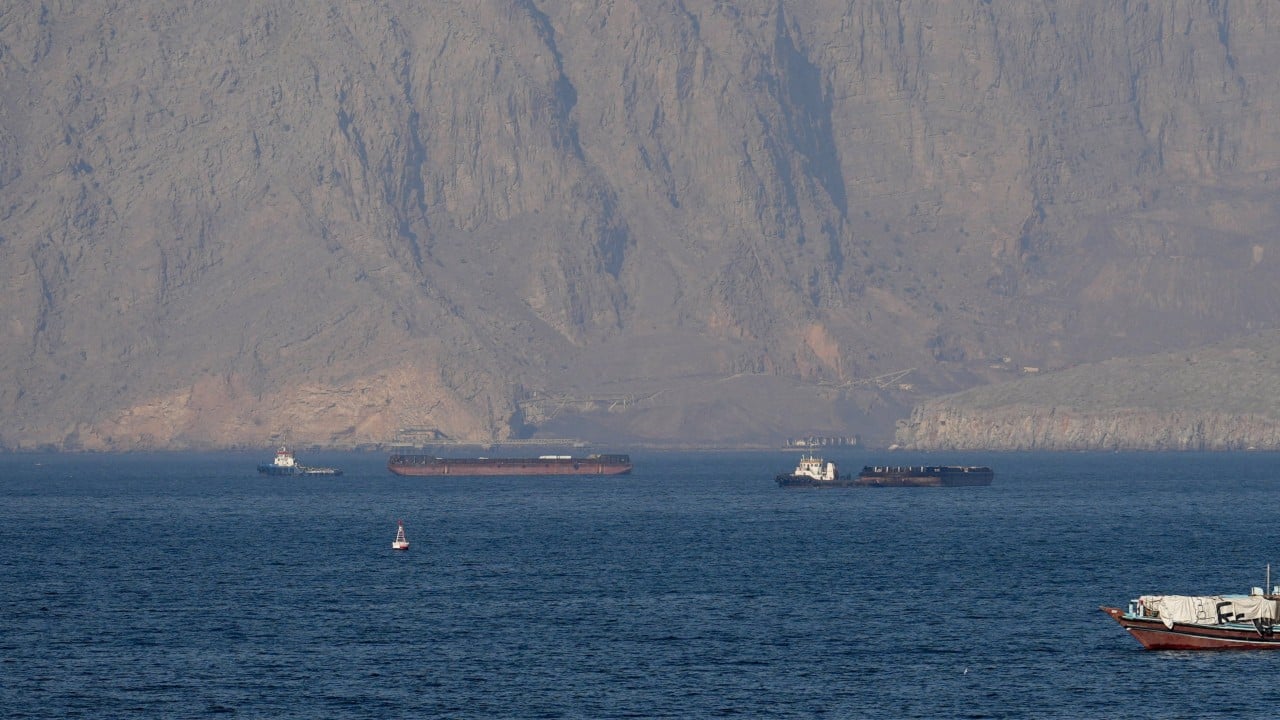
Iran’s firing on two Indian-flagged oil tankers in the Strait of Hormuz has raised fresh questions about how far Tehran can protect even friendly shipping as the conflict pushes closer to maritime chaos.
The attack, which took place on Saturday, has been especially awkward for Iran because New Delhi is not an adversary and still maintains working ties with Tehran, including renewed oil purchases in recent weeks under a temporary US sanctions waiver.
Analysts said the attack on Jag Arnav and Sanmar Herald was likely a case of mistaken identity rather than a deliberate move against India, but added that the episode showed how easily military pressure and confusion in the congested waterway could hit vessels not meant to be in the line of fire.
The attack came after Iran signalled that Hormuz was back under strict military control. Some merchant vessels received radio warnings on Saturday that no ships were allowed through the waterway, reversing Friday’s indications that traffic might resume.
The two Indian-flagged tankers were carrying crude oil, with one transporting 2 million barrels from Iraq.
No injuries were reported among the crew, but the Sanmar Herald sustained minor damage from the gunfire.
India summoned Iran’s ambassador in Delhi to register its “deep concern” over the attack.
The country’s top foreign ministry official asked the ambassador, Mohammad Fathali, to convey India’s views to Iranian authorities and to resume, at the earliest, the process of facilitating India-bound ships across the strait, according to a ministry statement released on Saturday.
Earlier, Fathali had said the strait would remain open for Indian ships without any charge, underscoring the relatively functional relationship between the two countries despite the wider crisis.
“I think this is a classic case of a mistaken identity, because, as you can imagine, the Strait of Hormuz is choc-a-bloc and there is a lot happening. The Iranian guards are, you know, under a lot of pressure, and they are reacting to overwhelming force used by their adversaries,” said Priyajit Debsarkar, a London-based author who writes on South Asia.
“They might have misjudged the situation by opening fire at Indian vessels.”
For Delhi, the episode has sharpened concern not only over the security of the waterway but also over how much protection a relatively functional relationship with Tehran can still offer when military tensions in the strait are high.
That matters acutely for India, which imports about 85 per cent of its oil requirement and remains heavily exposed to any prolonged disruption in the Gulf.
Iran-India ties are often described as strong and durable, shaped by long-standing links as well as practical cooperation in trade, energy and the development of Chabahar Port despite Western sanctions on Tehran.
“I think they [Iran] will be much more careful in the future. Given their relationship, I don’t think it will cause any major upheaval. As it happened in the middle of a highly fluid situation due to the war in Iran, I think both countries recognise this,” Debsarkar said.
The latest incident came as shipping traffic through Hormuz was already subject to stop-start signals while the United States and Iran jockeyed over positions on a negotiated settlement.
Over the weekend, the US attacked and seized an Iranian-flagged cargo vessel that it said had tried to evade its blockade of Iranian ports.
Iran vowed to respond, and Foreign Minister Abbas Araghchi told his Pakistani counterpart that American threats were “clear signs” of Washington’s disingenuousness.
Benchmark Brent oil prices jumped 5.7 per cent on Monday after a chaotic weekend with no sign of a clear settlement plan.
Pakistan, which has been acting as a mediator, is preparing to host a round of talks before a two-week ceasefire between Iran and the US expires on Wednesday.
“The opening of the Strait of Hormuz is of paramount importance because a lot of oil and gas, and trade to and from Europe and beyond, passes through it, so it is critical for India to see it reopened or to secure safe passage,” Debsarkar said.
With India having confirmed it would take part in a UK-France-led initiative to secure and reopen the Strait of Hormuz, Debsarkar said an alternative plan to the negotiations could be the way to go.
“It is tense, but I think India and Iran are trying to maintain cordial relations,” said Yashwant Deshmukh, an independent political commentator, who often shuttles between Dubai and India.
Deshmukh said the incident suggested either a lack of coordination between Iran’s civil and military leadership or a failure of control on the ground, rather than any deliberate attempt to escalate tensions with India.
According to media reports, the impact of the Strait of Hormuz blockade has trapped around 13 million barrels of oil supply and roughly 300 million cubic metres per day of liquefied natural gas inside the Gulf, forcing producers to shut in oil fields, refineries and LNG plants that have battered economies from Asia to Europe.
“I think India has been repeatedly underscoring the need for stabilising the Strait of Hormuz, and this is exactly the kind of thing that India had been warning against: that as the strait gets militarised, there are dangers for all kinds of miscalculations to emerge,” said Harsh Pant, a professor of international relations at King’s College London, referring to the attack on the Indian vessels.
Analysts say the stakes are high for India regarding a resolution to the Middle East conflict, amid concerns about the country’s energy needs.
“It is about the broader tightening of ‘deliverable supply’ into Asia,” said Priya Walia, vice-president of commodity markets-oil, Rystad Energy.
“The Strait of Hormuz shock has already turned supply from a policy variable into a logistics variable: the question is no longer only who has crude, but which barrels can still move, at what freight, insurance and political premium.”
Middle Eastern grades constituted about 55 to 60 per cent of India’s oil imports, while many of the alternatives were either more expensive or less compatible with Indian refineries, she said.