
The United States is planning to build an “economic security zone” in the Philippines to counter China’s dominance in critical technologies.
The 4,000-acre (1,619-hectare) hi-tech industrial hub will reportedly be the first of its kind in the world, operating under US common law despite being on Philippine soil.
Washington says it will be the first “AI-native investment acceleration hub” developed under the US-led Pax Silica initiative, a framework aimed at mobilising allied economies around shared industrial and security priorities.
In a statement on Thursday, the US State Department described the zone as “a purpose-built platform for allied manufacturing”, adding that it would support the “evolving needs of the allied network”.
It added that the zone would combine US expertise on contract law, regulation and dispute resolution with the Philippines’ “outstanding workforce and talent”, mineral endowments, energy resources “and strategic position at the crossroads of Indo-Pacific trade”.
Analysts say the hub could help the Philippines move up the global chip supply chain.
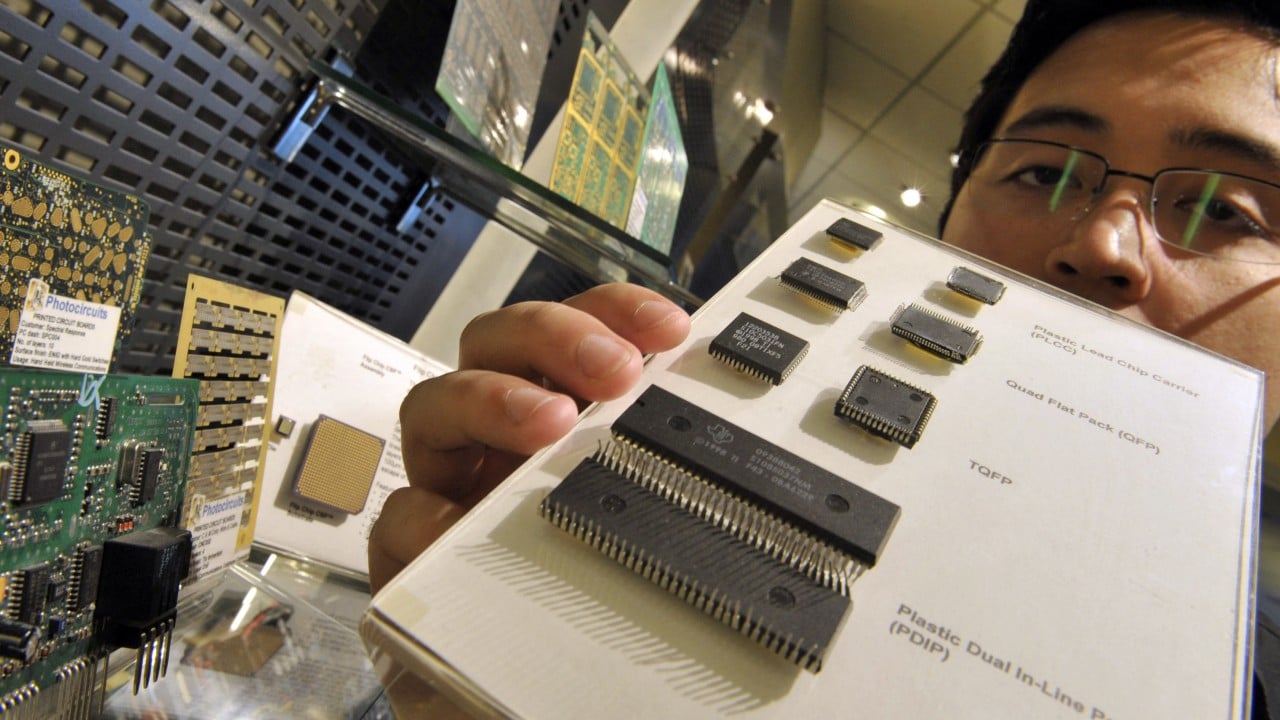
Semiconductors are already the country’s top export, but its role has been largely confined to the lower-value work of assembly, testing and packaging. The Philippine Department of Trade and Industry has set a target of US$110 billion in annual chip exports by 2030, contingent on breaking into higher-value activities such as advanced packaging, integrated circuit design and wafer fabrication.
“The hub can help move the country towards higher-value activities, supported by technology transfer, upskilling and improvements in infrastructure,” said Dindo Manhit, president of the Manila-based Stratbase Institute think tank, who added that the zone would accelerate growth in semiconductors, advanced manufacturing and logistics.
This is really a kick-starter project
Julio Amador, foreign policy researcher
Foreign policy researcher Julio Amador, a distinguished visiting fellow at Perry World House research centre in the US, said the project would help push forward the Luzon Economic Corridor, a joint project by the US, Japan and the Philippines linking three major ports and two international airports across four cities on Luzon Island that is projected to generate US$100 billion for the local economy.
“This is really a kick-starter project,” he said, adding that inbound US investments “will really propel the Luzon Economic Corridor”.
Manhit said the zone’s placement within the economic corridor would position it as a cornerstone of the whole project, adding that the US commitment could draw in other partners, particularly Japan, which is already central to the trilateral framework and among the Philippines’ most established infrastructure investors.
The zone would help create a “future-ready and resilient” economic corridor, predicted Chester Cabalza, founder of the International Development and Security Cooperation think tank, adding that the investment created opportunities “for world-class Filipinos to compete in the fifth industrial revolution”.
Manhit said the new zone had also allayed concerns that the US would deprioritise the Philippines while it waged war on Iran.
“This initiative reinforces that the Philippines remains a strategic priority,” he said, noting the country’s rare combination of semiconductor expertise, geostrategic location, abundant natural resources and a large, young workforce.
Michael Ricafort, chief economist at Rizal Commercial Banking Corporation, said the zone could simultaneously deepen the Philippines’ role in US critical-industry supply chains and reduce its exposure to tariff risks on electronics exports.
New foreign direct investment would help bring in the latest technology and generate jobs at a moment when the global artificial intelligence boom has sent semiconductor demand surging, he added.
Manhit said a multiplier effect would take hold once the initial infrastructure and anchor investments were in place, with suppliers and service providers clustering around the zone, expanding local economic activity and deepening integration into global supply chains.
Amador added that the hub reflected an evolution of the US-Philippine alliance.
“Economics is now surely part of the security perspectives of the two countries,” he said. “President Ferdinand Marcos Jnr said that economic security is national security, and this is the realisation of that.”