
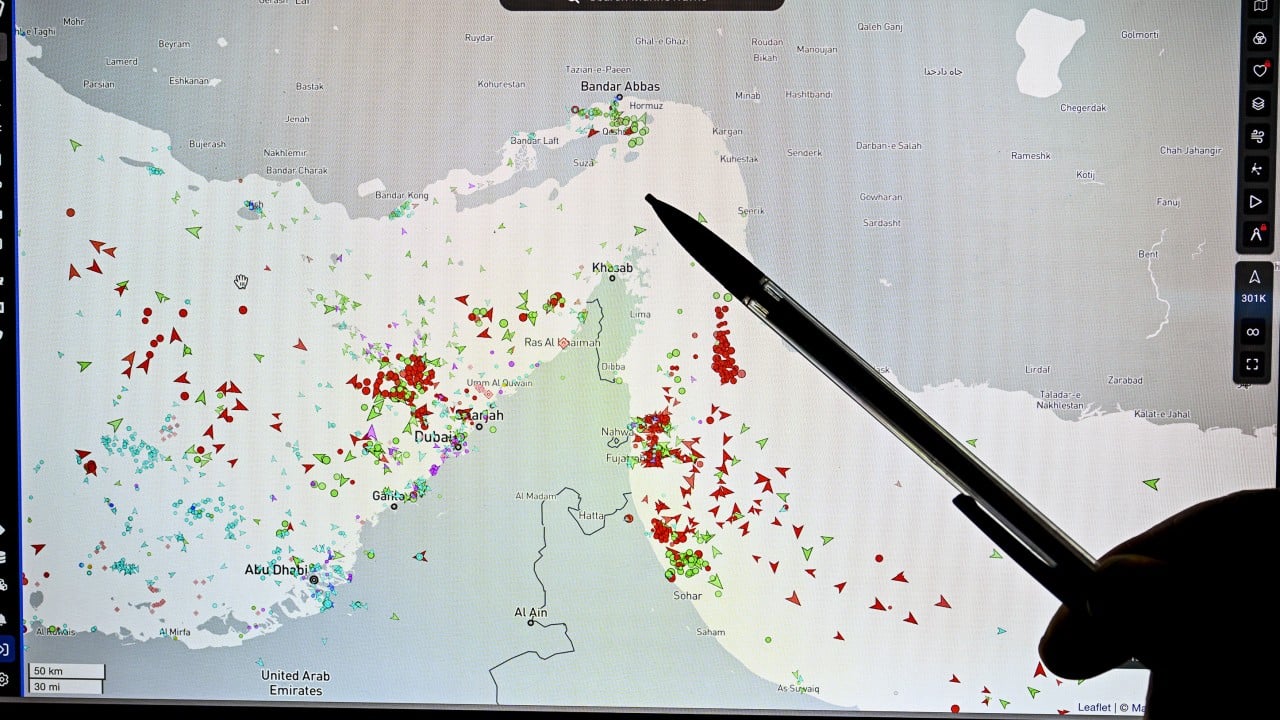
The chief of China’s top economic planner has outlined strategies and priorities to safeguard economic security, as Beijing reassesses its preparedness and vulnerabilities amid disruptions in the Strait of Hormuz during the US-Israeli war on Iran.
Zheng Shanjie, head of the National Development and Reform Commission (NDRC), warned external risks were mounting and said China had to reinforce its strategic reserves and response capabilities.
“The evolution of the international situation is profoundly affecting China as we enter a period where strategic opportunities coexist with risks and uncertainties,” Zheng wrote in an article published on Monday in Communist Party mouthpiece the People’s Daily.
Geopolitical conflicts were becoming more frequent and easier to ignite, he said, adding that hegemonic ambitions and power politics were on the rise.
“Resource-rich countries are tightening their mining policies, competition for energy and key minerals is rife and disruptions to shipping via the Strait of Hormuz further expose how fragile global industrial and supply chains are,” he said.
China has largely contained the fallout from the Iran war and the disruption in the strait, with the world’s second-largest economy beating market expectations to grow 5 per cent year on year in the first quarter.
Economic resilience has been bolstered by the country’s proactive oil stockpiling before the war, which has so far helped cushion the blow to businesses and livelihoods. But policymakers remain wary of potential spillover.
To shield China from future shocks and secure its energy needs, particularly oil imports, Zheng stressed the need for larger strategic reserves, better emergency preparedness and deeper cooperation with partners.
“We shall enhance the security and supply of food and energy, with priorities including mineral exploration and increased oil and gas reserves. While strengthening the role of coal and coal-fired power as the ultimate energy security backstop, we should expand oil and gas cooperation with Russia,” he said.
He added that China also had to ensure “the security of key industrial and supply chains as well as strategic corridors” – a reference to the Strait of Hormuz, a crucial trade chokepoint that handles a significant share of the country’s oil imports.
Zheng also pledged to improve early-warning and prevention systems for emerging risks while bolstering capacity to withstand external pressure.
“We must remain vigilant in times of peace and plan ahead. We shall strengthen monitoring and promptly tackle emerging and potential issues. We must better counter sanctions, interference, long-arm jurisdiction and extreme containment and suppression against China,” he said.
He also signalled plans to improve the systems for export controls and security reviews and reiterated Beijing’s resolve to protect citizens, businesses and interests overseas.
“We must adhere to the principle of ‘do not go to dangerous or chaotic places nor invest in risky industries’,” he said.
On the domestic front, Zheng said the NDRC would continue rolling out measures to spur consumption, safeguard employment and promote smooth economic circulation at home, while working to defuse local government debt risks and stabilise the property sector.
He also called for perseverance in efforts to break the West’s chokehold on certain critical technologies, such as cutting-edge chips, and to harness the power of artificial intelligence while managing its impact on jobs and governance.