
As ceasefires fail, peace talks stall and the Strait of Hormuz remains under a blockade, the deepening Middle East crisis has exposed the structural limitations of global security frameworks.
The US-Israel war on Iran since February has strained United Nations bodies and left Nato reeling over US President Donald Trump’s threats to leave the transatlantic security alliance.
With the risk of a protracted war looming, there is an often overlooked security grouping – whose member states include both Israel and Iran – that could present a different soft power approach to regional security.
While the Conference on Interaction and Confidence-Building Measures in Asia (Cica) lacks a mandate for direct intervention, its 28-member platform for security dialogue unites key Middle Eastern nations and major powers across Asia.
Members include the United Arab Emirates, Bahrain, Iraq, Jordan, Kuwait, Qatar, Palestine, Egypt, Kazakhstan, India, Russia and China.
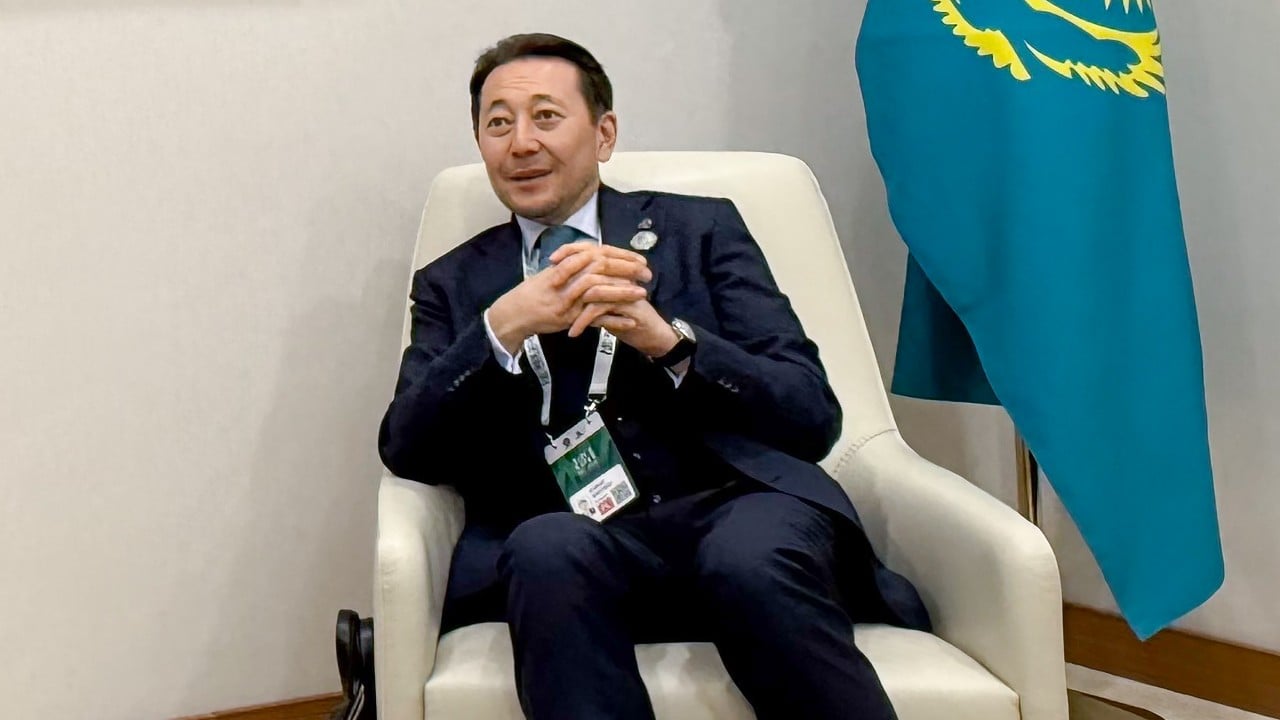
Kairat Sarybay, Cica’s secretary general, said that while member states held divergent views on particular issues, “they are still able to agree on some ideas where they can cooperate”.
In an interview held on the sidelines of the Regional Ecological Summit in Kazakhstan last month, Sarybay noted that global geopolitical rivalries and turbulence were affecting all multilateral organisations.
“The ongoing crisis in the Middle East is a significant test for the entire international community, including Cica,” Sarybay added in a statement to the South China Morning Post.
“However, this crisis underscores the very reason Cica was created. We are the unique multilateral platform where all key regional actors – including both Israel and Iran, as well as Palestine and other Arab states – are full, equal members.”
“Cica’s mandate is not coercive diplomacy or direct crisis intervention; our mandate is confidence-building. Our primary role is to ensure that even when bilateral relations break down entirely, a multilateral space for dialogue remains open,” he wrote.
Sarybay said in the interview that he commended the member states for keeping “the negotiation table open” and using the channels of communication through Cica.
He said China had supported Cica since its inception over three decades ago. He added that he valued Beijing’s “proactive position” within the organisation and its initiatives, including easing dialogue and normalising relations in the Middle East.
“The role of China as the new centre of international diplomacy is very much indispensable.”
The idea to convene a security-based platform in Asia was proposed by Kazakhstan’s first president, Nursultan Nazarbayev, in 1992 during a meeting of the United Nations General Assembly.
Member states of Cica cover nearly 90 per cent of Asia’s land mass, represent roughly half the world’s population and account for around half of the world’s gross domestic product (GDP), according to the organisation.
Cica’s observer states include the US, Ukraine, Japan and Saudi Arabia.
Sarybay said in the interview that any decisions made by the forum required consensus among the 28 member states. He noted that the smaller countries had equal veto power to major states such as China and Russia.
Cica’s main operational document, the Catalogue of Confidence-Building Measures, outlines spheres of cooperation for member states, encompassing 18 priority areas that fall under five broad categories: military-political, new challenges and threats, economic, environmental and the human dimension.
Across these categories, member states lead and take part in initiatives such as green projects or joint anti-drug or anti-terrorism measures to build trust.
Cica shares just one country in common with the 32-member Nato: Turkey.
Middle Eastern countries including Bahrain, Kuwait, Qatar and the United Arab Emirates are able to cooperate with Nato via the alliance’s Istanbul Cooperation Initiative, though they are not Nato members.
Nato allies and their Gulf partners met in March to discuss the security situation in the Middle East and the importance of increasing dialogue to strengthen cooperation.
Unlike the military and collective defence focus of Nato, which is centred around ensuring the security of nations in Europe and North America, Cica’s focus is on dialogue and cooperation on the Asian continent.
Sarybay said in the interview that Cica allowed member states to “project their soft power”, adding that it was “not at all” a bloc of a “military nature”.
“Regarding the wider region and critical arteries like the Strait of Hormuz, our focus is on implementing practical Confidence-Building Measures – addressing shared threats, securing economic supply chains and preventing total regional fragmentation,” Sarybay wrote in the statement.
“Cica provides architecture for de-escalation; the true test is the political will of the member states to utilise it.”
In the interview, Sarybay said Cica’s implementation of these measures was voluntary rather than mandatory, offering them flexibility.
“The geopolitical situation globally and some regional conflicts are affecting the multilateral structure, but Cica, due to the wise approach of its member states, continues to provide new ideas, continues to be a platform for dialogue, continues to be a good channel for communications,” he said.
Azerbaijan currently holds the Cica chairmanship. Its priorities as chair include increasing the international visibility and influence of the organisation and the adoption of a legally binding charter, according to Cica.
In the decades since Cica was proposed, it has developed all the features of an international organisation, including a secretariat and a “legal personality”, according to Sarybay.
He said Cica had a “well-matured structure” to allow dialogue, confidence-building and cooperation in spheres where members could agree.
The charter, which is currently under discussion by the members and is expected to be adopted at their October summit in Baku, will be the legal finalisation of Cica’s status as an intergovernmental organisation.
China is among the major contributors to Cica’s budget, and the legacy of Beijing’s 2014-2018 chairmanship includes the Think Tank Forum and Finance Summit, according to Sarybay.
He said China was generating ideas on how to peacefully coexist. He added that the Chinese approach to global security was aligned with the model accepted by Cica member states.
Sarybay praised China’s Global Security Initiative, proposed by Chinese President Xi Jinping in 2022, which identifies Cica as an important tool to implement global security ideas.
The China-led Shanghai Cooperation Organisation is listed among Cica’s partner organisations, as is the Economic Cooperation Organization. Cica’s observer organisations also include the United Nations, the Organization for Security and Cooperation in Europe and the League of Arab States.
“China’s participation is foundational to the balance of our continent; it offers a transformative vision that aligns with our efforts to build a more predictable and interconnected Asian space,” Sarybay wrote.
“China’s consistent emphasis on non-interference and consensus-based dialogue perfectly matches the ‘Asian way’ we cultivate at Cica. This approach ensures that cooperation is not a zero-sum game, but a synergetic process where every voice is heard regardless of economic weight.”
Sarybay said that the idea of transforming Cica into a full-fledged organisation “was born from the understanding of the new responsibility of Asia in global affairs.”
This includes economic development, technological breakthroughs, promoting peace and security and easing mediation to address regional or bilateral conflicts.
“Asia is pursuing a trajectory of resilient integration, proving that even in a fragmented world, purposeful cooperation remains our strongest asset. Cica serves as the primary platform for this vision,” Sarybay wrote.
“Across our 28 member states…a collective ‘Asian consciousness’ recognises that no nation can achieve security or prosperity in isolation.”
“Crucially, this integration is not about creating a strict, exclusive bloc,” he added.
Sarybay wrote that Cica’s framework allowed trust to be built from the ground up through practical cooperation on issues such as developing small and medium-sized enterprises, boosting tourism and environmental protection.
“This web of connectivity makes enduring cooperation far more attractive than divergence,” he wrote.
Sarybay said in the interview that the main challenges to the international order were the “violation of international law” and the “rise of unilateralism”.
He said that while international law and the global governance system were not perfect, they represented shared global objectives and should be preserved.
“In the days of geopolitical rivalry, when major powers disagree, we need the strong support of multilateralism. And by its nature, middle powers are the safeguard of the multilateral system,” Sarybay said.
Sarybay noted that the idea to convene Cica was offered by Kazakhstan – a trusted middle power.
The ecological summit, held in Kazakhstan’s capital of Astana in partnership with the UN, brought together Central Asian heads of state and representatives from countries around the world to coordinate solutions on environmental issues.
Sarybay said the environment was a common issue for all of humankind and would be impossible to address without international cooperation.
“Cica provides a good platform for cooperation to tackle the security challenges, including in the environmental sphere,” he said.
Sarybay said in his statement that Cica bridged the gap between Asian regional needs and the UN agenda.
The UN’s 2030 agenda for sustainable development is a global plan of action for “people, planet and prosperity”. It covers global issues such as combating climate change.
“We take the specific needs of Asian subregions – like the melting glaciers of Central Asia or the rising sea levels in Southeast Asia – and amplify them at the UN level,” Sarybay wrote.
“With our unmatched geographical coverage, Cica is uniquely positioned to play a practical role in Asia’s green transformation.”