
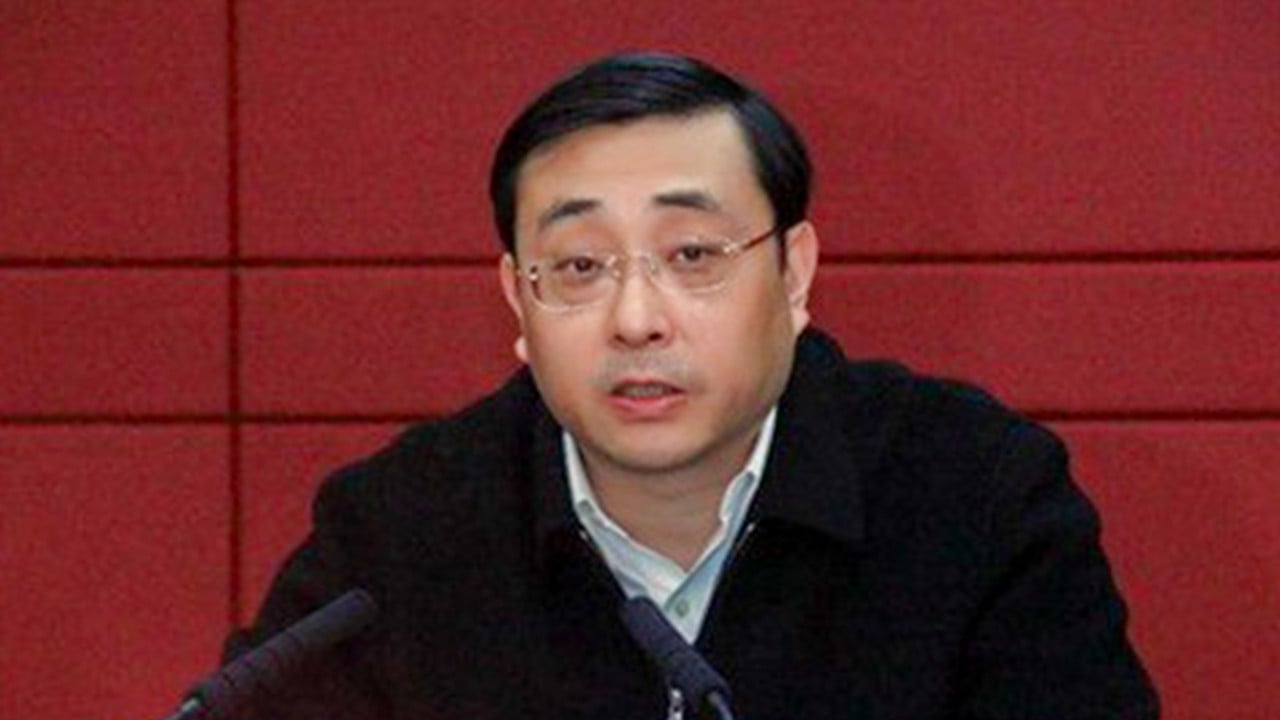
The Communist Party chief of Hefei – a growing tech hub and capital of China’s central Anhui province – has been placed under investigation, the country’s top corruption watchdog announced on Wednesday.
Fei Gaoyun, once widely recognised as a rising star in the “seventh-generation” of future national leaders, is the latest senior official to be snared in President Xi Jinping’s long-running anti-corruption campaign.
The 54-year-old’s career trajectory was typical of China’s emerging generation of leaders born in the 1970s. The next major leadership reshuffle is expected to take place at the national party congress in 2027.
Fei was born in the city of Huaian in eastern Jiangsu province in August 1971.
His educational background includes a degree in radio technology from the Yangzhou Institute of Technology and a master’s in public administration from Nanjing University.
His political career began in his home province, one of China’s economic powerhouses, where he worked in various roles within the Communist Youth League. He subsequently held various roles in county- and prefecture-level cities around Jiangsu.
His career was marked by an ability to navigate complex political crises. Following a major protest in 2012 against a proposed pipeline that would have dumped industrial waste into the sea, he was sent to the city of Qidong to restore order. His success in dealing with the unrest earned him a reputation for effectively handling “complex problems”, according to local official reports.
In 2018, Fei was appointed vice-governor of Jiangsu, overseeing economic development and public administration. Again, his efforts in this role were praised, especially his work to integrate the province’s Yangtze River Delta region with Shanghai, aligning with the national government’s strategy of regional cooperation.
His close ties to Shanghai’s economic clout helped to propel his career, positioning him as a potential future leader in China’s political hierarchy.
Despite his rapid rise, Fei’s record was tarnished by one of China’s deadliest recent industrial disasters. On March 21, 2019, a massive blast at a chemical plant in Yancheng killed 78 people and injured over 600.
In November 2019, the State Council, China’s cabinet, approved an investigation report that criticised Fei, which led to him being issued with a formal administrative demerit and a disciplinary warning.
The investigation found that Fei, who was responsible for overseeing workplace safety in his role as vice-governor, had “failed to effectively supervise and guide” safety protocols across the province.
While such a public reprimand would usually stall a political career, Fei managed to maintain his upwards trajectory. Just two years later, he became a member of the province’s party standing committee and the provincial political and legal affairs commission. Fei also got his first national role, when he was named an alternate member of the 20th Communist Party Central Committee in October 2022.
In late 2022, Fei became a member of the Anhui provincial party committee’s standing committee and later became the province’s executive vice-governor.
In April last year, he was appointed party secretary of Hefei, a city known for its burgeoning tech industry and strategic importance in China’s national development plans. The city has attracted global giants like Volkswagen while nurturing domestic artificial intelligence champions like iFlyTek and electric-vehicle maker Nio.
But his stint has proven to be brief. The Central Commission for Discipline Inspection said on Wednesday that Fei was suspected of “severe violations of discipline and law”, a euphemism for corruption.
Last year, corruption fighters at various levels punished more than 983,000 people, according to numbers released in January.
In the same year, they also detained 65 high-ranking officials.
Observers have said the anti-corruption campaign can now be seen as a foundation for the party’s long-term grip on power and ensuring central government control over local officials.