
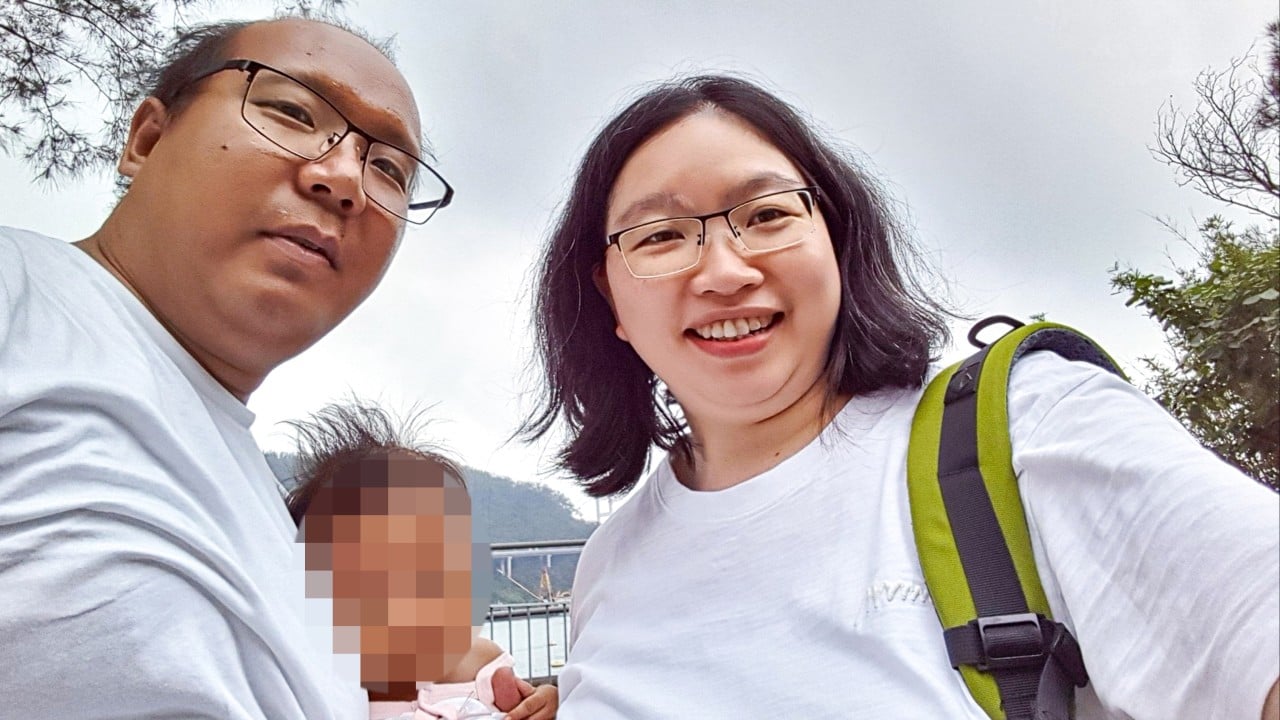
Baby Danny’s future remains uncertain despite having almost completed his birth registration in Hong Kong, as welfare authorities still had to assess the capability of his parents, who were earlier arrested for suspected child neglect and have a troubled parental history.
Danny’s welfare sparked public concern over the past week after Tsang Wai-bong and Kwan Pui-sin, who initially declined a DNA test for their home-born son’s birth registration on religious and privacy grounds. They only made a U-turn after their arrest on Tuesday.
The Immigration Department said on Friday night that it had obtained the DNA report and other relevant evidence, confirming that Danny was born in Hong Kong. It had contacted the parents to complete the birth registration procedures.
The parents went to the department’s headquarters on Saturday after meeting government social workers regarding the guardianship of their two-month-old son, Danny, who has been placed in a children’s shelter under a court order.
The Social Welfare Department said on Friday that its officers had met the parents and that authorities would organise multidisciplinary assessment meetings, submit court reports, and implement a welfare plan for Danny, including arranging for “suitable individuals” to ensure the boy was “properly taken care of in a safe environment”.
“[The meeting is intended] to further understand the family’s background and relationships, the baby boy’s health situation and care needs, and the parents’ living arrangement and parenting capacity,” the spokesman said.
Legislator Reverend Peter Koon Ho-ming said the meetings between the parents and social workers were likely to assess the pair’s fitness as parents.
“The Social Welfare Department will consider whether they have an appropriate living environment and whether they are financially capable of raising the child,” he said, adding that the department would explain the procedures to the parents.
Koon said the department could discuss the couple’s parenting philosophy, which differs from societal expectations on giving birth at hospitals and having their children vaccinated, and refer them to psychologists.
He added that their parenting history would also be a focus.
The couple’s first daughter died one month after birth at their home in Finland in 2019 due to a congenital infection.
The couple later relocated to Sweden, where authorities took over Lily’s care after arresting them for money laundering in 2023.
Whether Lily, who was also born at the couple’s Finland home in October 2021, could return to Hong Kong would depend on the Swedish authorities, he added.
Koon noted this would depend on whether the overseas authorities recognised the parents’ biological relationship with Lily and whether they were deemed fit parents.
The Immigration Department said it had informed Swedish authorities that the parents were willing to provide DNA results to prove their biological links.
The parents previously told the media that they had not arranged vaccinations for both their daughters due to their religion and concerns about side effects, and they had no plan to get Danny vaccinated. The parents declined to disclose their religion.
Home births are legal in Hong Kong, while childhood vaccinations are only recommended and not mandated. However, schools generally ask for vaccination records before student admission.
Before Danny’s birth registration row came to light, the pair initially advocated for the return of their younger daughter from Sweden, on their social media page, “Save Lily”.
Their page has been flooded with comments criticising their fitness as parents and accusing them of prioritising themselves over their children’s welfare.
The couple cited Swedish authorities as saying that Lily was found in her pyjamas in a dirty state and with badly damaged teeth, but they argued that the care order contradicted a police report, which suggested Lily stay with her parents.
According to their accounts, Lily remained under the care order, even though the Swedish Immigration Appeal Court ordered Lily to be returned to Hong Kong for a family reunion in September 2024.
In an interview with the South China Morning Post before their arrest in Hong Kong, the couple cited the Hong Kong Immigration Department as saying that Lily needed a Hong Kong passport to return, and that they would have to provide her birth certificate for the necessary procedures.
The couple explained that Lily could not register her birth at the Finnish government because her parents were Hong Kong residents, while the Swedish authorities wanted to place her in the custody of the foster family.
Lily’s situation remained unclear, with the social services department of Sweden’s Linkoping municipality declining to comment on her legal status in a reply to the SCMP on Thursday.
The department said a care order was assessed based on a collective picture of the child’s situation, such as lack of care, risks in the home environment or the child’s own behavioural issues leading to dangerous situations.
Care proceedings were only initiated when the situation was so serious that the child needed further protection, and when voluntary services were no longer sufficient to prevent the child’s health or development from being affected, it added.
The saga also prompted calls for a new set of rules in Hong Kong to ensure the health and safety of newborns delivered at home.
Social welfare sector lawmaker Grace Chan Man-yee said the incident revealed a “legal vacuum”, as the current law only regulates the actions of midwives or doctors and the registration of birth.
Under the law, registered midwives are not authorised to attend unassisted home births, while parents are required to register a birth within 42 days.
She suggested that parents be legally required to bring home-born babies for a medical check within a set time, as they were duty-bound to ensure the child had qualified medical help at and after birth.
Maple Lau Siu-kwan, director of the NGO Against Child Abuse, said children could recognise their carers as early as seven months old and separation from them could lead to anxiety.
But she said children could switch to a carer better able to meet their needs if they were not properly taken care of.
She added that the carer must be able to meet children’s needs at different stages of physical, mental health and social development.