
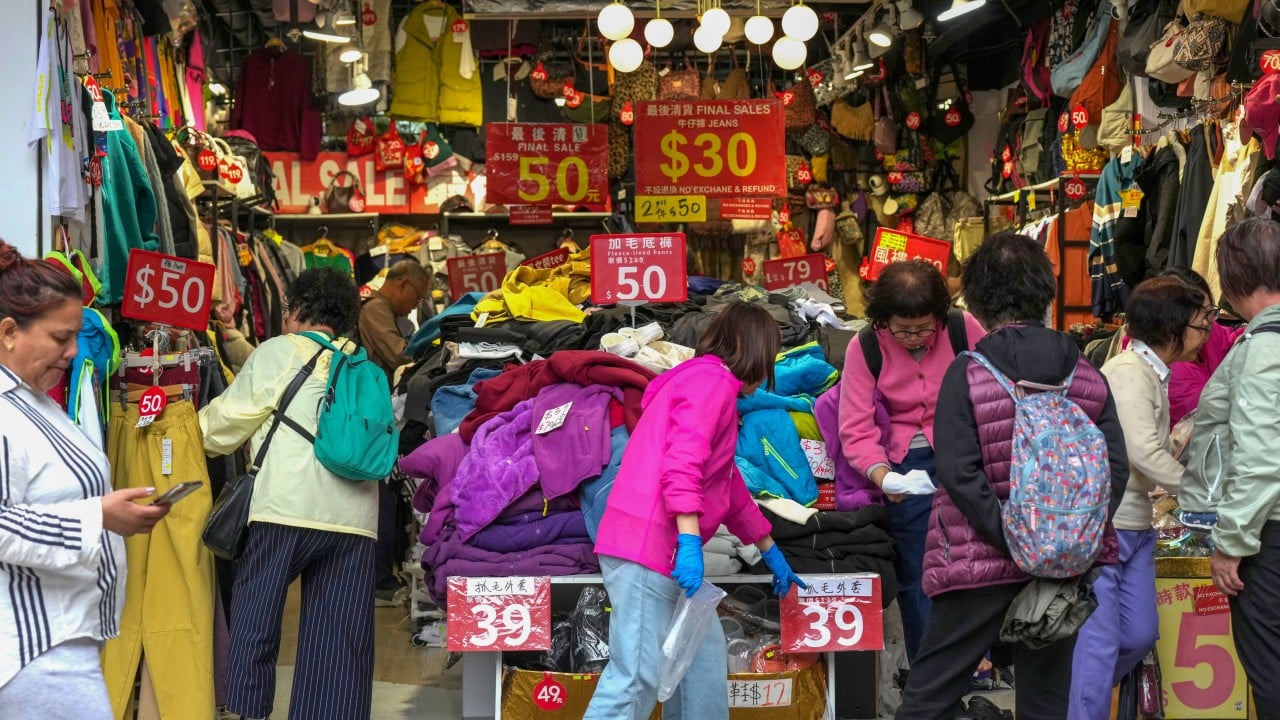
Hong Kong’s retail sales jumped by 12.8 per cent in March, bringing first-quarter growth to 9.8 per cent, driven by a spurt in sales of electric cars ahead of the withdrawal of tax breaks.
Provisional figures released by the Census and Statistics Department on Wednesday showed that retail sales reached HK$33.9 billion (US$4.32 billion) in March.
The March increase was largely fuelled by car sales as buyers raced to make deals before the first registration tax concessions for electric cars ended at the close of the month.
A government spokesman said retail sales continued to strengthen.
“Looking ahead, the near-term outlook for retail sales is broadly positive, underpinned by recovering local demand, sustained growth in inbound tourism, and a favourable macro-financial environment,” he said.
“The government will continue to monitor the downside risk arising from the evolving geopolitical tensions, for any potential implications for the consumer spending in the local market,” he said.
More than 14.3 million tourists came to Hong Kong in the first quarter, a 17 per cent increase from a year earlier, according to the government.
The retail sales was part of a macroeconomic indicator – private consumption expenditure – which jumped 5 per cent in real terms in the first quarter from a year ago and helped fuel the city’s economic growth.
Hong Kong’s gross domestic product (GDP) grew at the fastest rate in nearly five years in the first three months of this year, at 5.9 per cent year on year. It was the sharpest quarterly growth since the second quarter in 2021, when it rose at 7.6 per cent.
The Middle East war since late February has triggered a global fuel crisis, with Hong Kong’s fuel prices soaring to the highest in the world in the first quarter.
But the Airport Authority said on Wednesday that fewer than 5 per cent of Hong Kong flights have been cancelled in May and June combined, and about 1 per cent during the peak July travel period, despite the crisis.
“There is an ongoing divergence in consumption patterns, with better performance in jewellery and electronics versus slower growth in consumer staples,” said Gary Ng, the economist at Natixis.
“It likely reflects stronger demand from tourists, while local households remain cautious about day-to-day spending with options in cross-border purchases,” he said.