
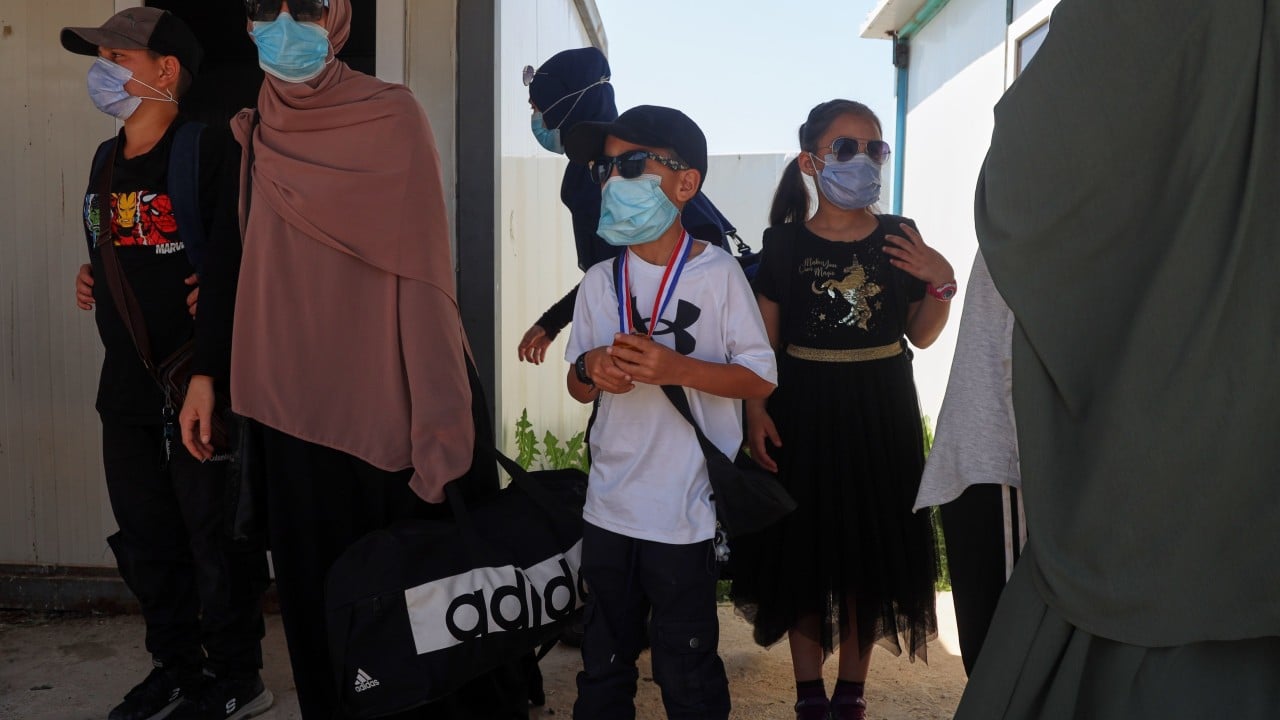
A group of 13 Australians related to alleged Islamic State (Isis) jihadists is returning home from Syria, Australian authorities said on Wednesday, warning some will face arrest.
The four women and nine children, who had been living in Roj camp in Syria, are expected to land in Sydney and Melbourne airports on Thursday, according to local media.
Home Affairs Minister Tony Burke said he received an alert on Wednesday morning when the group’s travel booking was made.
“The government is not assisting and will not assist these individuals,” he told a news conference. “They made an appalling, disgraceful decision. If any of these individuals find their way back to Australia, if they have committed crimes, they can expect to face the full force of the law, without exception.”
Police said they collected evidence in Syria as they investigated whether Australians had committed crimes under Australian law, including travelling to a prohibited area and engaging in slave trade.
“Some individuals will be arrested and charged,” Australian Federal Police Commissioner Krissy Barrett said.
She did not indicate when they would be arrested, and said others in the group would remain under investigation.
“Children who return in the cohort will be asked to undergo community integration programmes, therapeutic support, and countering violent extremism programmes,” she added.
The government was required to provide the group travel documents but has repeatedly said it was not helping repatriate them.
“These are people who have made what is a horrific choice to join a dangerous terrorist organisation and to place their children in an extraordinary situation,” Prime Minister Anthony Albanese told reporters.
‘Hard line’
Burke said the potential returnees had travelled “in support of one of the most horrific terrorist organisations we’ve seen in recent history or in our lifetimes”.
“There is a reason why the government has drawn a very hard line saying we will do nothing to assist. The government’s complete lack of support for these individuals is a direct reflection of the decisions that they made.”
However, there was little Canberra could do to prevent their return. “There are very serious limits on what can be done with respect to preventing a citizen of a country returning to their country,” he said.
A previous attempt to return 34 women and children to Australia from the same camp in February was turned back by Syrian authorities.
On that occasion, Australia’s government banned one of the women from returning. The woman, whom the government did not identify, had been issued with a temporary exclusion order which Australia can use to prevent high-risk citizens from returning for up to two years.
The orders were created by laws introduced in 2019 to prevent defeated Isis fighters from returning to Australia. There are no public reports of an order being issued before.
Such orders cannot be made against children younger than 14. But Australia has ruled out separating children from their mothers.
Burke said the order made in February that banned the woman’s return remained in place.
Former Isis fighters from multiple countries, along with their wives and children, were held in a network of camps and detention centres in northeast Syria after the militant group lost control of its territory in Syria in 2019. Though defeated, the group still has fighters that carry out attacks in Syria and Iraq.
Australia’s Human Rights Commission president Hugh de Kretser in March urged the government to support the return of the 34 living in the Roj camp, where they have been held for seven years, noting Australian citizens had previously returned from the camp in 2019, 2022 and last year.
Australia made it an offence, punishable by up to 10 years in prison, to travel to Raqqa between 2014 and 2017, an attempt to stop its citizens joining the militant group.
A woman who returned from Syria in 2022 was later charged by Australian police with entering a terrorist-controlled area.
Around 2,000 foreign national women and children remained living in Roj camp, displaced after the collapse of Isis in March 2019, Syrian officials said in March.
Additional reporting by Associated Press