
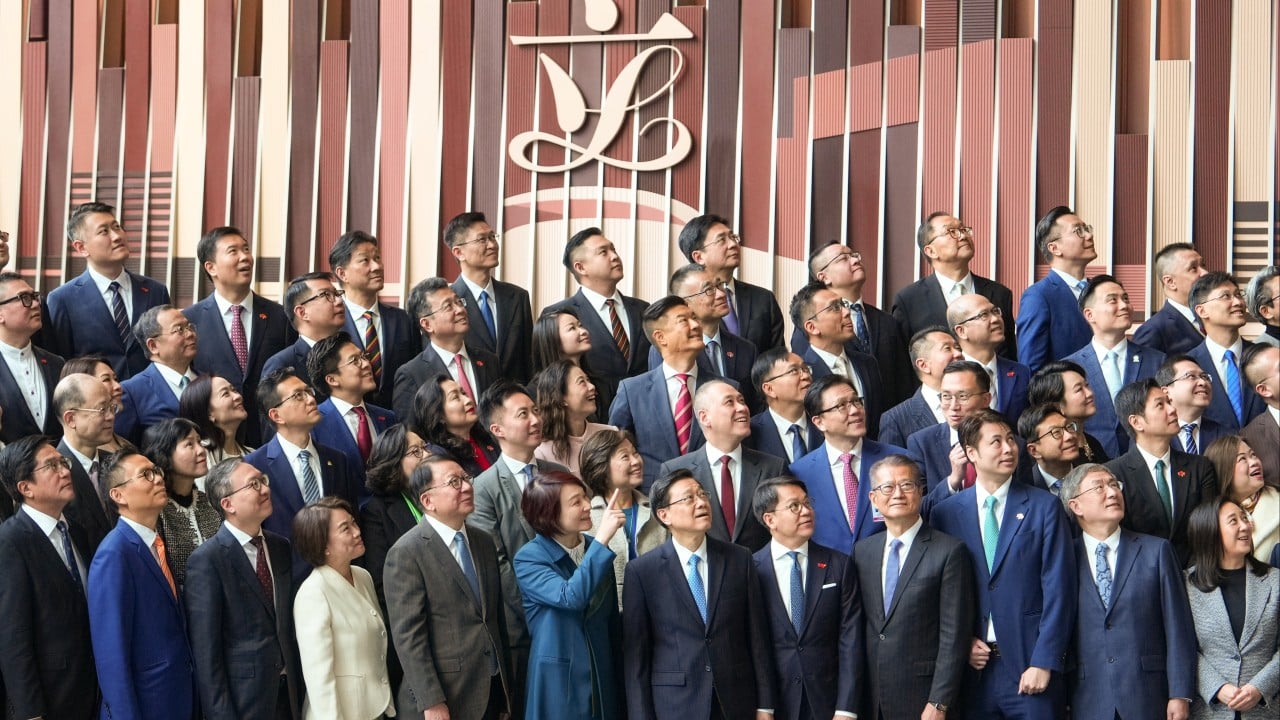
Hong Kong’s legislature is set to visit Beijing as a full body for the first time since the city’s handover to Chinese rule in 1997, with all 90 lawmakers expected to join the delegation as it seeks better alignment with the national 15th five-year plan.
Legislative Council president Starry Lee Wai-king announced on Wednesday that the trip would take place in July.
Lawmakers were informed that the seven-day visit to the capital would run from July 19 to 25, during the legislature’s summer recess, the South China Morning Post has learned.
“If we have the opportunity to visit Beijing, it would allow us to gain a first-hand understanding of the latest national developments, the specific arrangements under the 15th five-year plan, and the overall national strategies,” Lee said.
She said the visit would help legislators better support Hong Kong’s alignment with the national blueprint, which will guide the nation’s development from 2026 to 2030, and assist the government in formulating and implementing the city’s first five-year plan.
But Lee stopped short of revealing whether the delegation would meet state leaders, noting that further details would be released once finalised.
It would mark the first time the entire legislature visits Beijing since the 1997 handover.
The nation’s blueprint tasked Hong Kong to speed up the Northern Metropolis megaproject, while further integrating into the nation and serving in its role as an international financial hub, strengthening offshore renminbi business and supply chain services.
It also reaffirms Beijing’s commitment to consolidating Hong Kong’s status as a hub for finance, shipping, trade and aviation.
Chief Executive John Lee Ka-chiu earlier said the administration would publish a public consultation paper for Hong Kong’s first five-year plan within this quarter, with the blueprint set to be published later this year.
The city leader said the government had established a collaborative mechanism with Legco to help solicit public opinion.
The SCMP has learned that lawmakers have been divided into groups to gather opinions from key stakeholders and the public across various policy areas, and are required to submit their findings to the government.