
As Beijing increasingly sees the country as a chessboard, the central government is no longer simply asking every province to grow faster; it wants them to grow differently.
Reporting on the end of the 14th five-year plan and preparation for the 15th five-year plan frames provinces and cities as specialised implementation units, reflecting a territorial division of labour.
The central government wants provinces to find their rightful place in national development and act in accordance with their local conditions. In the official vocabulary, each locality should “leverage its strengths”, utilise its comparative advantage and contribute to the national economy from a differentiated position.
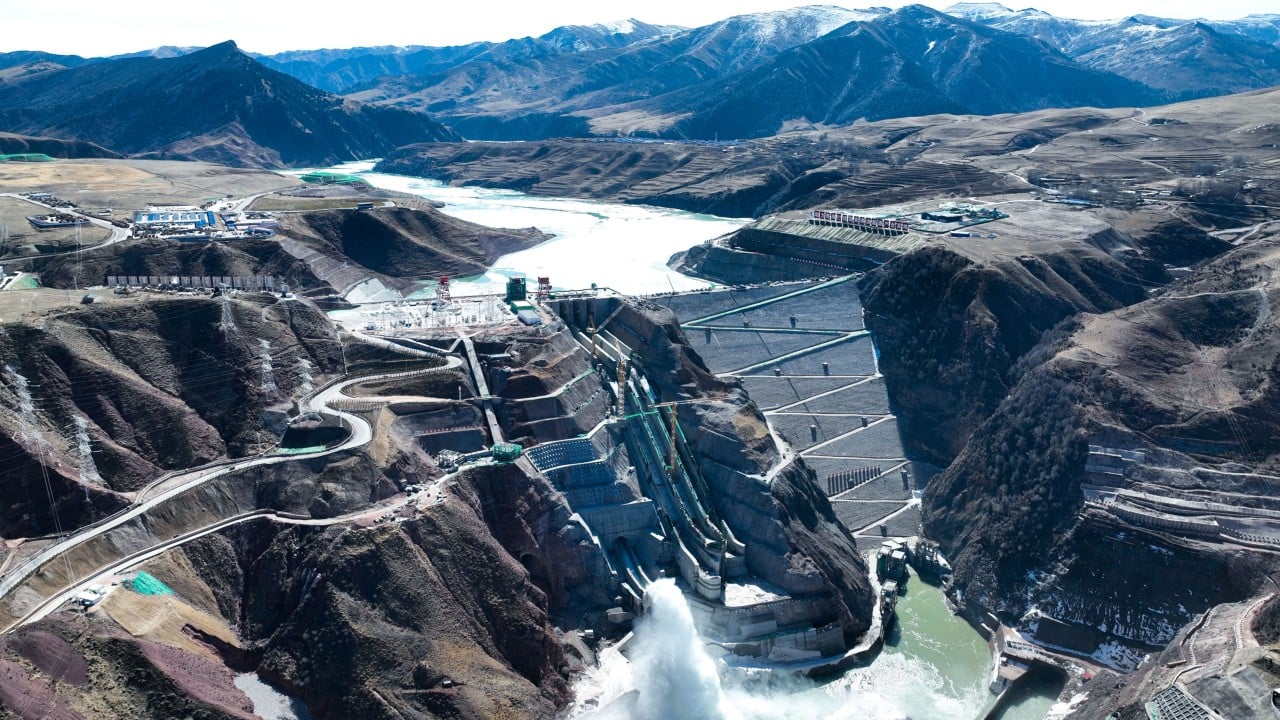
The examples are carefully chosen. Qinghai province is not being told to become another manufacturing base. Rather, its ecological constraint is intended to be its competitive advantage. Its cold climate and high-altitude environment are reframed as assets for green computing.
Ningxia Hui autonomous region’s renewable energy base could attract capital. Since installed renewable capacity already exceeds 60 per cent and is planned to exceed 65 per cent, Ningxia similarly offers a support system for green computing and the digital economy.
Nanjing, capital of Jiangsu province, has been assigned a different role. Its task is not to provide cheap land but to build a system that moves scientific results from the laboratory to the production line. The city is praised for its pilot test platforms, technology services and an 8.4 billion yuan (US$1.2 billion) support system for biomedicine technology transfer. In other words, Nanjing cadres are presented as brokers between universities, firms, laboratories, hospitals and capital.
This points to a broader transformation in the image of cadres. They are no longer presented solely as interpreters of central instructions, but are increasingly described as leading capital organisers, rather than Beijing. Provinces are tasked with raising funds and reinvesting them in new projects.
For the coastal city of Qingdao, this means ports, free-trade-zone reforms, logistics corridors and the Shanghai Cooperation Organisation demonstration zone. For Changchun, capital of Jilin province, it means seed funds, technology brokers and research-to-production frameworks. In Guizhou province, it means turning mineral resources into batteries, aluminium, new-energy vehicles and energy storage. In Tibet autonomous region and Qinghai, agriculture means cold chains, processing and market access.
This looks like an attempt to limit destructive horizontal competition through local protectionism, which could limit China’s efforts to build a common market. However, Beijing knows that if every province builds the same industries, the result will be duplication, waste, excess capacity and debt.
The new discourse says: compete, but stay in your lane and don’t copy each other. The central government wants to transform China’s old local growth tournament into a more disciplined system of competitive specialisation.
But this is where the tension begins. Messages praising differentiation also intensify competition, particularly over capital allocation. Slogans such as “Striving to lead” is not the language of calm coordination. It is the language of a campaign: strive to be first, fight the decisive battle and complete the plan.
In other words, localities must still show growth in investment, output, patents, standards, exports, tourist flows, computing scale, industrial clusters, technology contracts, employment and income. Even though Beijing wants provinces to specialise, local officials must show visible achievements.
This creates a contradiction at the heart of China’s planning system. The central government wants a national division of labour; cadres are thinking in terms of measurable performance. The central government says “avoid blind duplication”; localities hear “produce results” and interpret national priorities as opportunities to enter fashionable sectors.
When “new quality productive forces” becomes the call to action, every province wants to prove that it, too, can scale up in artificial intelligence, robotics, the low-altitude economy or advanced manufacturing.
Several scenarios could arise from this competition. First, there may be duplication of the regional integration project, the Yangtze River Economic Belt. That project was also framed as a coordinated strategy: upstream, midstream and downstream regions were supposed to play complementary roles in ecology, industry, logistics, innovation and opening up.
Yet cities and provinces along the river had their own ambitions. Many wanted ports, industrial estates, logistics hubs, manufacturing platforms and visible projects. Even with a functional map, local developmentalism did not disappear.
Second, provincial specialisation might simply reorganise, rather than eliminate, horizontal competition. If provinces like Qinghai, Shanxi and Yunnan or autonomous regions such as Ningxia and Inner Mongolia become indispensable suppliers of green electricity, computing power, coal, hydropower or strategic inputs, they will gain leverage over richer coastal provinces. The Yunnan-Guangdong relationship exemplifies this logic. Usually, Yunnan’s hydropower sector supports Guangdong’s manufacturing economy. But droughts in 2010 and recent years have impeded Yunnan’s ability to export power, forcing Guangdong to confront the vulnerability of its reliance on inland supply.
On the other hand, electricity prices are set through a hybrid model: framework volumes are shaped by interprovincial government agreements under national coordination, while market-based volumes are negotiated by power companies, grid firms, consumers and electricity retailers.
Beijing wants provinces to compete within designated roles, not across identical wish lists. Whether that works will become visible over the next five years. The 15th five-year plan will test whether provincial specialisation can reshape local incentives, funding practices and cadre appraisals.
If not, efforts to adapt national development to local conditions and identify a proper role for a locality within the national plan may result in another cycle of competition, albeit within a different framework.