
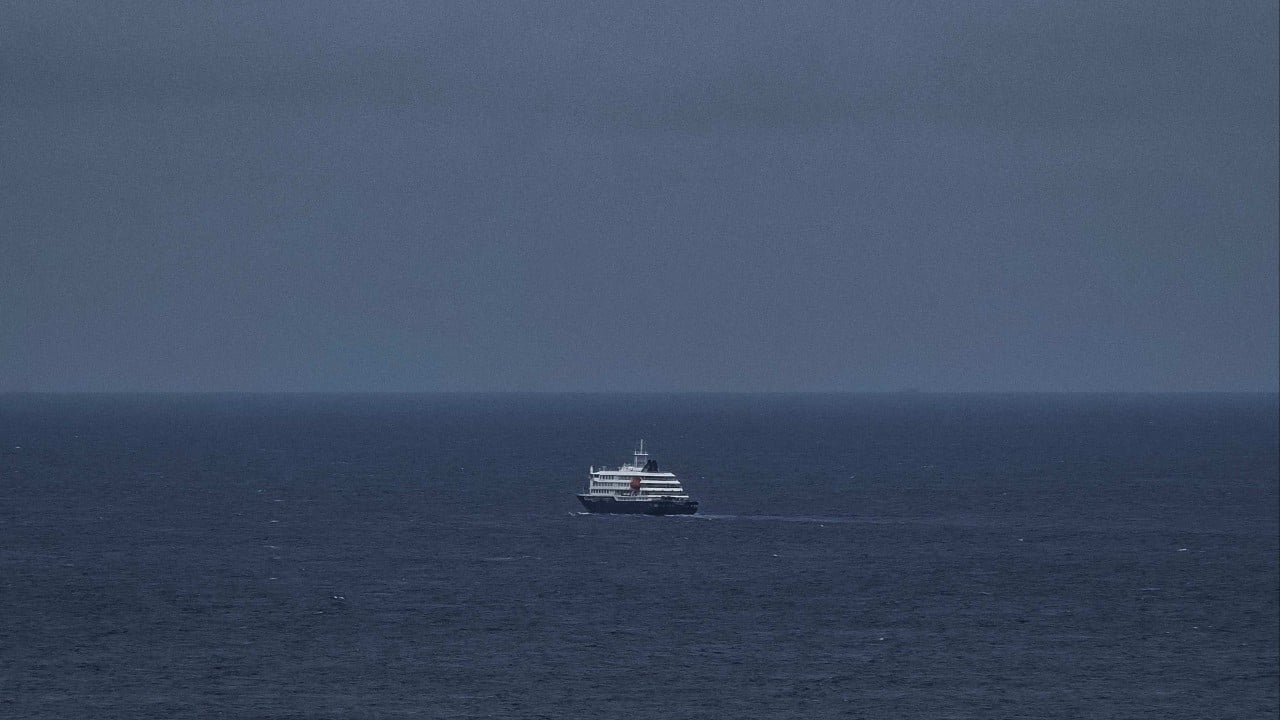
The World Health Organization insisted on Thursday that a deadly hantavirus outbreak on a cruise ship in the Atlantic did not mark the beginning of a Covid-like crisis.
“This is not the start of an epidemic. This is not the start of a pandemic,” WHO epidemic and pandemic preparedness and prevention director Maria Van Kerkhove told reporters, insisting: “This is not Covid.”
The WHO also said it expected the outbreak on the MV Hondius, currently sailing from Cabo Verde (formerly known as Cape Verde) to the Spanish island of Tenerife, to be limited, so long as public health measures were properly implemented.
“So far, eight cases have been reported, including three deaths. Five of the eight cases have been confirmed as hantavirus and the other three are suspected,” WHO chief Tedros Adhanom Ghebreyesus said.
“The species of hantavirus involved in this case is the Andes virus, which is found in Latin America,” he told journalists in Geneva.
“Given the incubation period of the Andes virus, which can be up to six weeks, it’s possible that more cases may be reported,” he added.
The Dutch-flagged ship left Ushuaia in Argentina on April 1 on its cruise north through the Atlantic Ocean to Cabo Verde. It set sail north towards Tenerife on Wednesday.
Tedros said he had been in regular contact with the ship’s captain.
“He told me morale has improved significantly since the ship started moving again. I thank him for everything he has done to protect those under his duty of care,” he said.
The WHO’s emergency alert and response director Abdi Rahman Mahamud added: “We believe this will be a limited outbreak if the public health measures are implemented and solidarity shown across all countries.”
The rare disease is usually spread from infected rodents, typically through urine, droppings and saliva.
The Andes virus is found in South America. It is the only strain of hantavirus with documented human-to-human transmission.
Tedros said Argentina would send 2,500 diagnostic kits to laboratories in five countries.
After leaving Ushuaia on its Atlantic voyage, the exploration vessel stopped at several remote islands along the way.
The WHO said it had informed 12 countries that its nationals had disembarked the MV Hondius on St Helena.
The ship called at the British territory from April 22 to 24. Its operator said that 30 guests had disembarked at that point, including the first fatality, a Dutchman who died on April 11.
The 12 countries were Britain, Canada, Denmark, Germany, the Netherlands, New Zealand, Saint Kitts and Nevis, Singapore, Sweden, Switzerland, Turkey and the United States, Tedros said.