
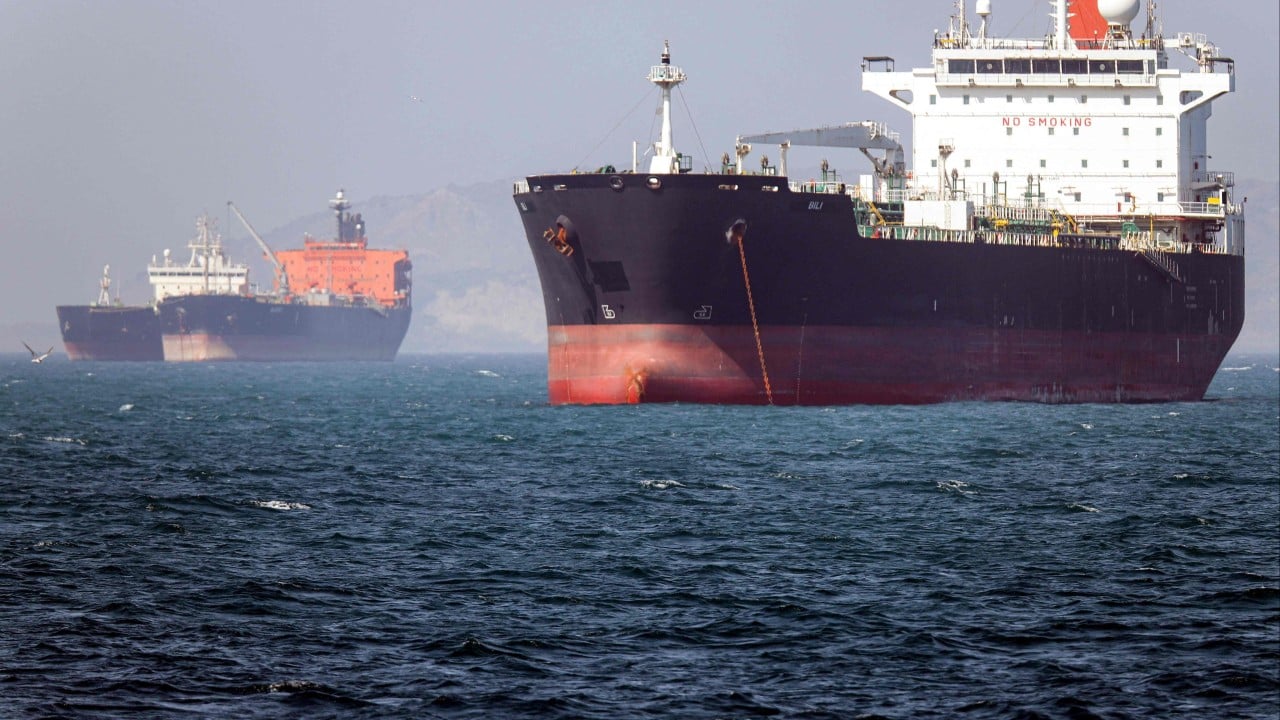
US forces struck an Iranian oil tanker in the Gulf of Oman on Wednesday, even as Washington and Tehran appeared to move closer to a tentative agreement to end their two-month war, with US President Donald Trump warning that renewed bombing could begin if Iran rejects the proposed deal.
A US fighter jet disabled the tanker by targeting its rudder as the vessel attempted to breach an American naval blockade of Iranian ports, US Central Command said in a social media post.
The strike highlighted the fragility of a ceasefire that has largely held since April 8, as both sides combined military pressure with diplomatic efforts to reopen critical energy shipping routes through the Gulf.
Trump said Iranian officials were eager to reach an agreement with Washington.
“We’re dealing with people that want to make a deal very much, and we’ll see whether or not they can make a deal that’s satisfactory to us,” he told reporters at the White House. “We’ve had very good talks in the last 24 hours, and it’s very possible we’ll make a deal.”
But the president also threatened a sharp escalation if talks collapse.
“If they don’t agree, the bombing starts,” Trump wrote on social media, adding that any renewed military campaign would be “at a much higher level and intensity than it was before”.
According to Axios, the White House believes it is close to securing a one-page memorandum with Tehran that could form the basis for ending the conflict, although no agreement has been finalised.
The reported framework includes a moratorium on Iranian uranium enrichment, the lifting of US sanctions, the release of frozen Iranian funds and the reopening of the Strait of Hormuz to commercial shipping.
The White House did not immediately respond to requests for comment on the reported proposal.
Iran signalled that negotiations remain ongoing but suggested the focus is currently on ending the fighting rather than reviving nuclear diplomacy.
Iranian Foreign Ministry spokesperson Esmail Baghaei told the ISNA news agency that the US proposal was still under review and that Tehran would communicate its response through Pakistani mediators once its assessment was complete.
Baghaei said Iran’s negotiating team was currently focused on the “termination of the war” and that the nuclear issue was not being addressed at this stage of the talks.
Earlier, Iran’s Foreign Ministry told state television that Tehran had “strongly rejected” elements of the US proposal described in the Axios report, while continuing to examine the latest draft agreement.
China also stepped into the diplomatic push on Wednesday, with Foreign Minister Wang Yi calling for the swift reopening of the Strait of Hormuz during a meeting in Beijing with his Iranian counterpart Abbas Araghchi.
“The international community shares a common concern for the restoration of normal and safe passage of the strait,” Wang told Araghchi, according to a Chinese government statement.
The meeting came as Iran evaluates the proposed memorandum that could gradually reopen the strait and lift the US blockade.
Beijing has strong economic incentives to push for de-escalation, with the Middle East accounting for roughly 40 per cent of China’s oil imports. Chinese officials also appear keen to stabilise the region before President Xi Jinping’s expected meeting with Trump next week.
Araghchi said Iran remained ready to defend itself while also pursuing diplomacy. The Iranian foreign minister later said discussions in Beijing included “how the war will end”, sanctions, the Strait of Hormuz and ongoing negotiations.
Pakistan hosted in-person talks between US and Iranian officials last month, though negotiations failed to produce a breakthrough.
The latest confrontation at sea came the day after the Trump administration suspended “Project Freedom”, a short-lived military effort aimed at escorting commercial vessels through the Strait of Hormuz after repeated attacks and disruptions linked to the conflict.
Oil markets reacted cautiously to Wednesday’s developments, with traders weighing the possibility of a negotiated settlement against the risk of renewed military escalation in one of the world’s most critical energy corridors.