
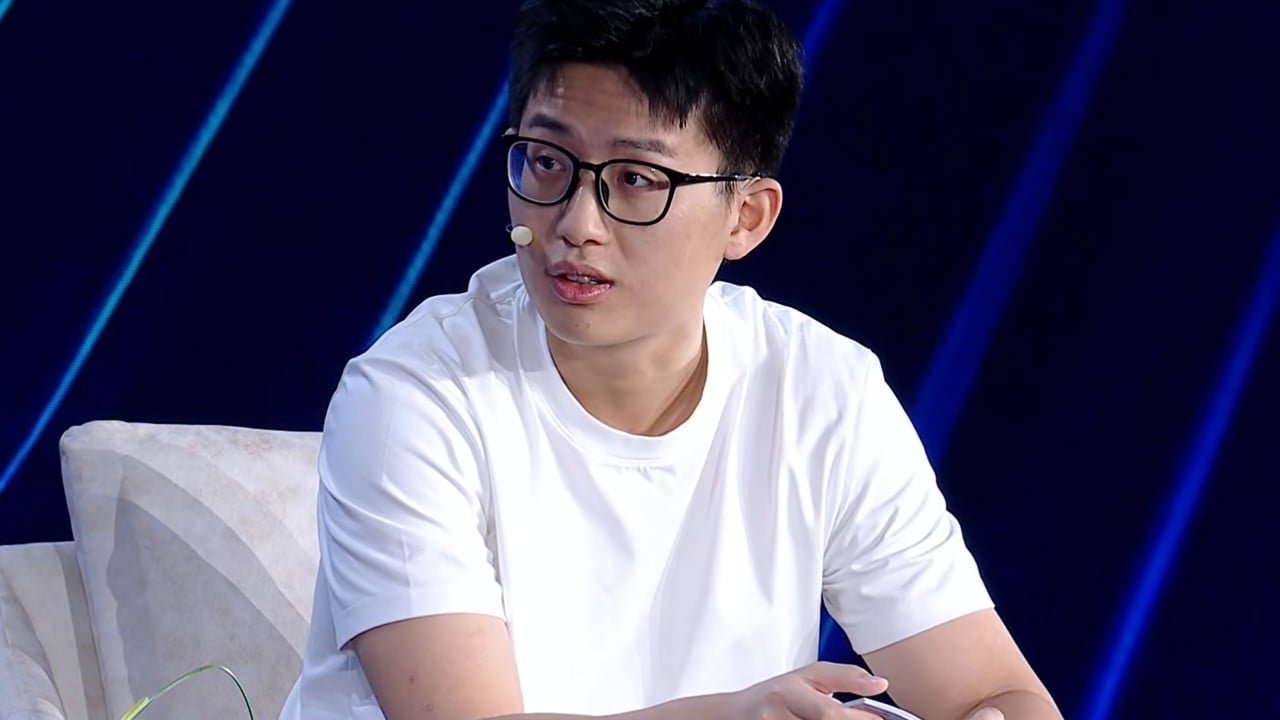
Yao Shunyu, the former OpenAI researcher now leading Tencent Holdings’ artificial intelligence model development, pushed back against concerns that the tech giant is slow in AI, arguing that the race is just beginning with massive untapped opportunities in coding agents and embodied intelligence.
“AI is a long-term game, with the second half of the race just starting,” said Yao, chief AI scientist at Tencent, comparing the current state to the development of personal computers in the 1970s.
Yao noted that he did not expect OpenAI’s ChatGPT and Anthropic’s Claude Code to be the only super apps. “That would be a very bleak world. Instead, a steady stream of new opportunities will inevitably emerge,” he said.
Yao, who is also head of Tencent’s Hunyuan large language model (LLM) and AI Infra, was speaking at the company’s Cloud AI Industry Applications Summit on Friday
“While coding agents and productivity will undoubtedly become more critical, there are trillion-dollar markets yet to be filled as we are witnessing the emergence of new things including multimodal AI and embodied intelligence,” he said.
Yao acknowledged that detours and setbacks were normal in the early exploration of LLMs and AI products, but stressed that the key to the second half of the AI race was being honest with shortcomings and patient when it came to making adjustments.
Yao said he aimed to establish an artificial general intelligence organisation to focus on foundational models, products and frontier exploration.
Yao’s remarks came as Tencent faces scrutiny over its AI efforts relative to domestic peers, including Alibaba Group Holding and ByteDance. Last month, Tencent co-founder and CEO Pony Ma Huateng offered a candid assessment of the firm’s AI progress: “A year ago we thought we were on the boat, then we found it was leaking.”
Alibaba owns the South China Morning Post.
Tencent has been revamping operations to sharpen its AI focus. In April, it launched “Hy3 preview”, its first flagship model since Yao joined Tencent to lead its foundational AI development efforts.
For Hy3 preview, Yao noted that the team rebuilt the infrastructure in pre-training and reinforcement learning, and changed data sets and model evaluation to enhance quality.
“Honestly, I don’t think there are any secrets,” Yao said at the conference. “What we really need to do is get the infrastructure and data right, and the algorithm is actually the easier part.”
The 28-year-old scientist, whose move from OpenAI to Tencent last year made headlines, said he joined the Chinese tech giant because its abundance of products across different environments provided both the “questions” for AI to address and the rich context for models to understand complex inputs.