
Government inspectors did not foresee engineering firms colluding to deceive authorities over the use of substandard renovation materials at a Hong Kong residential estate devastated in the city’s deadliest fire in decades, a public inquiry has heard.
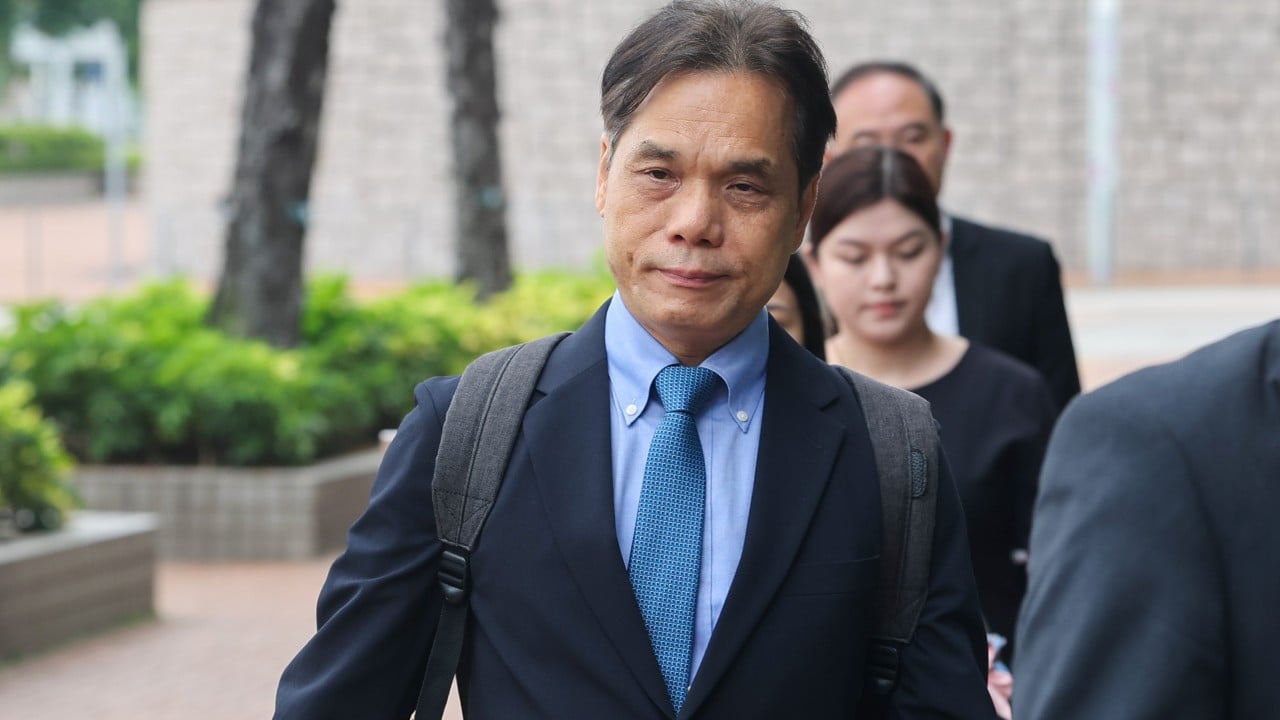
Andy Ku Siu-ping, a senior maintenance surveyor of the Housing Bureau’s Independent Checking Unit, on Wednesday blamed “systemic defects” for the body’s failure to rectify the use of flammable polyfoam boards and scaffolding mesh during a HK$336 million (US$42.9 million) renovation project at Wang Fuk Court.
He said the unit, which is responsible for overseeing construction works at subsidised housing complexes, had implemented remedial measures following the fire, such as conducting site checks every four months, requiring registered inspectors to file regular inspection reports and using a computerised system to randomly select project works for review.
Ku was the first of three witnesses from the unit to testify before an independent committee in the fourth round of evidential hearings into the disaster.
The fire at the Tai Po estate broke out on November 26 as the site was undergoing works required under the mandatory building inspection scheme, with various potential fire hazards uncovered in the aftermath of the inferno.
The blaze engulfed seven of the Tai Po estate’s eight blocks and raged for around 43 hours, killing 168 people and leaving nearly 5,000 people displaced.
Victor Dawes SC, the committee’s lead counsel, previously suggested that residents could have been misled into awarding the renovation contract to Prestige Construction and Engineering after a report prepared by Will Power Architects, the consultant engaged by the estate, falsely portrayed the contractor as having a clean criminal record for the preceding eight years.
Registered inspector Wilson Ng Yeuk, who approved the evaluation, reportedly admitted working for Will Power as a “freelancer” to endorse whatever documents were handed to him.
Ku said on Wednesday that the unit had relied heavily on the integrity of consultants engaged by residents to ensure contractors carried out projects in accordance with the law.
He conceded that consultants were effectively unmonitored under the previous regulatory framework, adding that the unit would only act on residents’ complaints or consultants’ reports of issues.
“The mandatory building inspection scheme was a self-regulatory regime … This was how the regime was designed,” the surveyor said.
Ku acknowledged the unit had been unaware of the death of former Will Power director William Shum Kui-chung, who was Wang Fuk Court’s registered inspector, in July 2022, until a resident’s complaint prompted building officials to attempt to contact the deceased director in September 2024.
He said the unit did not look into the matter because the renovation works at the estate did not start until July 2024.
After the unit’s repeated requests to submit information, Will Power replied in October 2024 that Ng had taken over Shum’s duties immediately after his passing, but company registry records showed that Ng only became a director that year.
Ku said he had never seen Ng in person or communicated with him directly via email, adding that the unit had no means to ascertain whether he was engaged by Will Power only to “rubber stamp” documents.
On the issue of polyfoam boards, Ku acknowledged the unit had been duped into believing the use of the flammable items to seal windows at the estate was temporary and safely divided up so that they would not contravene relevant regulations.
He said the unit did not pursue the matter because Prestige had reassured officials that it had taken “follow-up actions” and that no residents filed further complaints after October 2024.
While clarifying his incorrect view in his written statement that the materials were unregulated under existing legislation, Ku stressed that the use of polyfoam boards would only become unlawful if they were used in large quantities simultaneously.
Dawes grilled the witness over his inability to spot the widespread use of the boards at the estate in the 15 months up to the tragedy, while questioning his decision to place his trust in engineering firms even as corruption and malpractice were rife in the city.
“One cannot easily say others are being dishonest,” Ku replied.
The committee heard that the unit conducted 10 site inspections of Wang Fuk Court between September 2024 and October last year in response to various complaints.
Only two of them were surprise checks, including an unscheduled visit by Ku in November 2024, after a medical appointment at a hospital in the district.
Ku said the unit had informed Will Power in advance of the remaining eight inspections, but stressed it could not have expected the practice would allow Prestige an opportunity to replace combustible scaffolding nets with fire-resistant ones just before an audit on October 28, 2025.
The surveyor also argued that it would be “pointless” to compel Prestige to submit a new certificate showing the fire-resistance capabilities of the new nets, after a Will Power employee insisted that they were from the same supplier or manufacturer and thus shared the same authentication document.
Nick Yung Siu-lun, another senior maintenance surveyor of the unit, is expected to take the witness stand when the hearing resumes at City Gallery in Central on Thursday.