
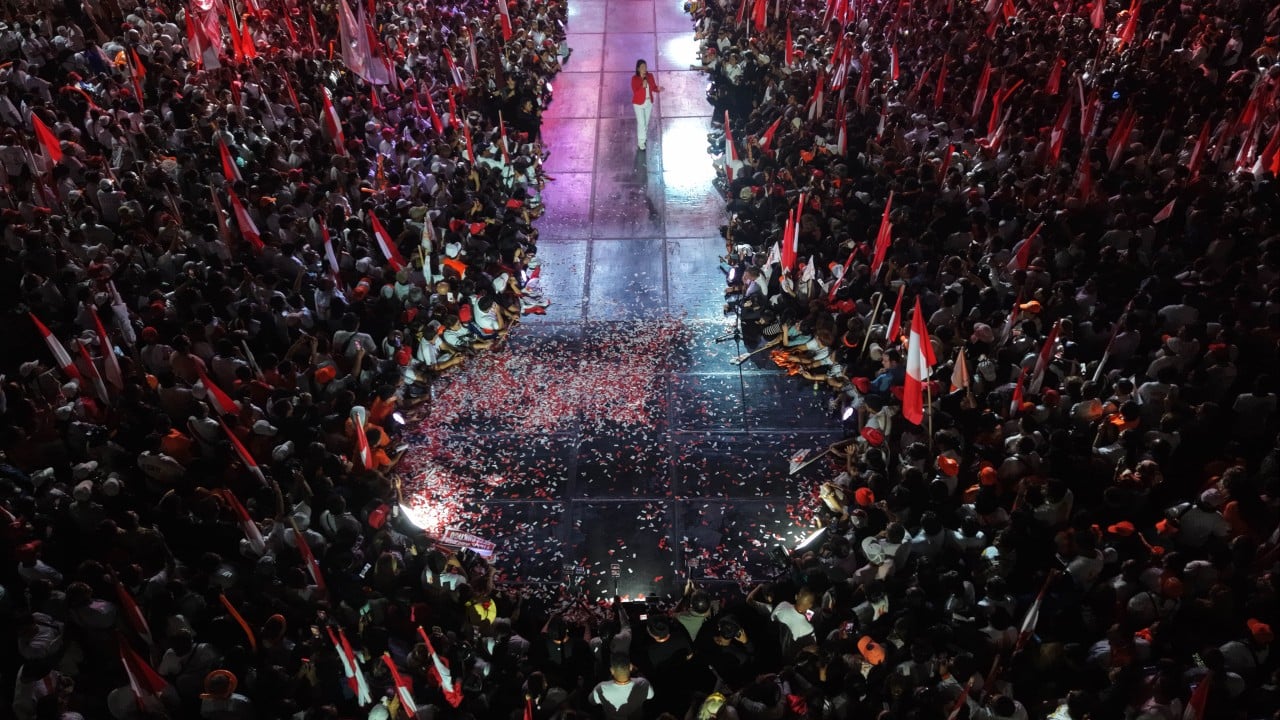
Peru’s duelling presidential hopefuls have made a final pitch to voters, capping a bruising and razor-tight race dominated by anger over rising crime and political instability.
Conservative Keiko Fujimori and leftist Roberto Sanchez staged rival events in Lima on Thursday ahead of Sunday’s vote, with ardent flag-waving supporters arguing their “communist” or “dictator” opponents would bring the country to ruin.
“We cannot let them win with communism and terrorism,” said bandana-wearing 65-year-old Merida Delgado Perez, a Fujimori supporter, expressing fears that the left could lead Peru down a path seen in Venezuela and Cuba.
Each candidate has framed the election as a turning point for a country that has burned through eight presidents in a decade.
Polls show them separated by only a few points, with roughly a fifth of voters still undecided in the last week of the campaign.
An inconclusive first round with dozens of candidates reflected widespread frustration with Peru’s political class.
Fujimori, seeking the presidency in her fourth attempt, has campaigned on a hardline security platform, promising military deployments and tougher prisons to confront rising extortion and violent crime.
At her closing rally, she urged voters to back her to “avoid chaos and regression”.
“We want a government that brings peace, that restores order. I will not let you down,” she said.
Fujimori has invoked the legacy of her father, Alberto Fujimori – who led Peru from 1990 to 2000 – portraying herself as the candidate capable of restoring order at a time when insecurity dominates daily life for many Peruvians.
Murder rates in the capital Lima have tripled in just five years, according to official data.
Alberto Fujimori’s legacy still defines his daughter’s political identity – and is both an asset and a liability.
He was hailed by supporters for defeating leftist insurgents and stabilising the economy but was later jailed for corruption and rights abuses before his death in 2024.
Left-wing candidate Sanchez has positioned himself as the voice of poorer and rural voters, pledging “radical change” and blaming entrenched elites and congressional gridlock for years of instability.
At his own rally, he promised a break with the past.
“This will be the end of chaos, the end of Mrs K, the end of killings, corruption and impunity,” he told cheering supporters.
“Our country needs real change, not more of the same,” he added.
Sanchez supporters blame Fujimori for weakening institutions and allowing criminal networks to expand amid repeated presidential crises.
“Keiko represents the continuation of dictatorship inherited from her father,” said 63-year-old Cristina Sotomayor.
“I lived during her father’s era, which was marked by total corruption,” she said.
In Lima’s crime-hit areas, voters say safety is their main concern, with extortion and violence shaping daily routines and amplifying demands for decisive leadership.
Despite the turmoil, Peru’s economy has remained relatively stable, leaving the next president to navigate a divided Congress and deep public distrust in government.
Around 27 million Peruvians are eligible to vote in Sunday’s run-off.