
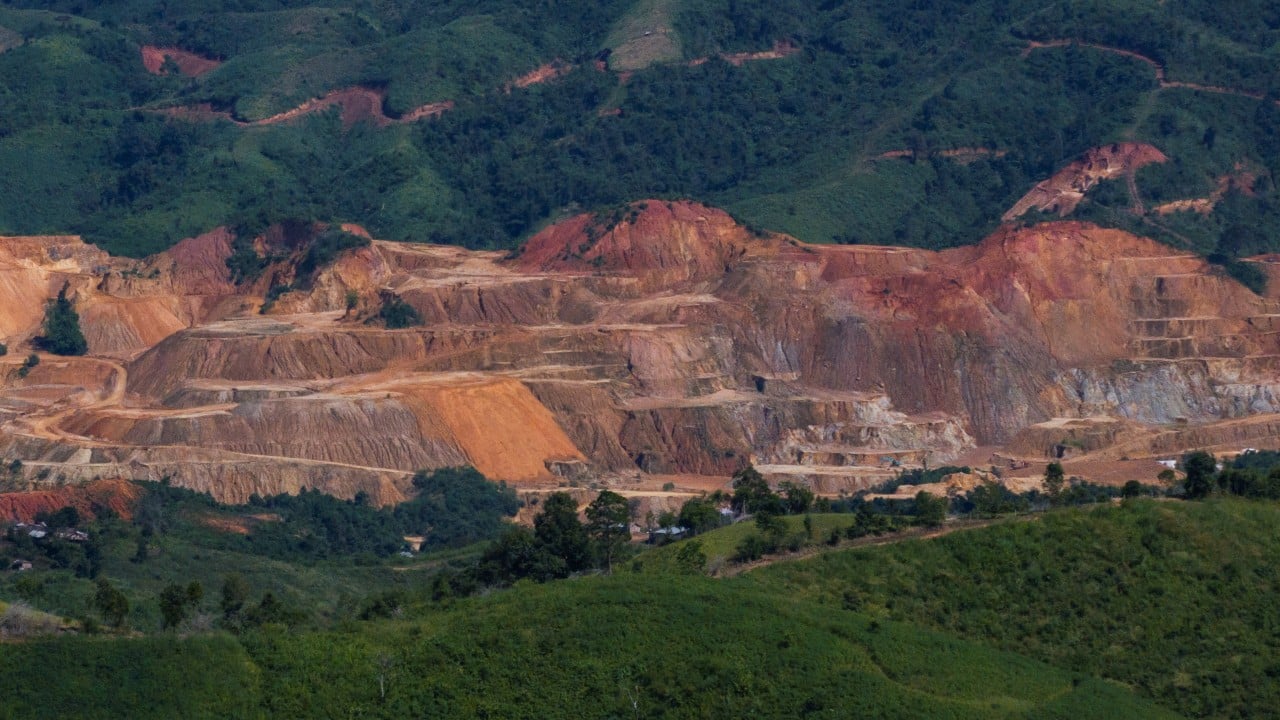
A race to dig rare earths and metals in the mineral-rich mountains of eastern Myanmar is polluting waterways that millions of people living downstream depend on after a new tungsten mine reportedly began operations near the Thai border, according to environmental groups.
Myanmar is among the top three producing nations of rare earths and other critical minerals used to make magnets and other components that power products ranging from smartphones to electric vehicles, with most of its output exported to neighbouring China, where it is refined.
Rare earths and metals such as tin, copper and tungsten are buried in remote hills of Shan state, an area where control is split between Myanmar’s junta, powerful ethnic armed groups and warlords who dominate the so-called Golden Triangle, where the country’s borders are shared with China, Laos and Thailand.
A report from the Stimson Centre, a US think tank, released last year found that 75 mines had appeared in Myanmar and Laos between 2015 and 2025, principally for rare earth mining, which often creates vast volumes of toxic waste.
Such mines are believed to use ‘in-situ leaching’, a process that pumps chemicals into the ground to dissolve minerals for extraction, requiring less digging but creating a toxic run-off that pollutes waterways with heavy metals.
Environmental groups in Myanmar and Thailand say the last two years have seen a surge in toxic pollution near the headwaters of the Salween River in Myanmar, running downstream into the Sai River and Kok River in Thailand.
Those are in turn tributaries to the Mekong, the longest river in Southeast Asia, which is vital for tens of millions of people.
Thailand’s pollution department has repeatedly detected above safe levels of heavy metals – including arsenic – in the Kok River, Chiang Rai province, which borders Myanmar.
Illegal mines are getting bigger and reportedly more profitable as prices of rare earths surge.
“The source of unregulated mines is expanding very fast in Shan state. They are pouring toxins into our rivers, and the situation is getting worse,’’ said Pianporn Deetes, executive director at the Rivers and Rights global movement.
Slowing mining activities or regulating them were a “complicated challenge”, given the opaque networks of business interests operating across the border area, Pianporn said.
“We don’t know exactly who the groups of people are who own the mines, but we do know the main importer of rare earths is China, so we urge Beijing to ensure that the import of all rare minerals and ores is verified to not be from conflict zones.’’
On World Environment Day on Friday, Pianporn led dozens of civil society groups on a river walk, along with people from communities who say they are worried about their health after finding deformed fish in waters polluted with toxins.
The Chinese embassy in Bangkok issued a statement in Thai on Friday in response to fears over the mines, saying it was “aware of reports on this matter’’, and believed Thailand and Myanmar were working together to address it.
“The Chinese government has long given significant importance to protecting the [Mekong] river ecosystem,’’ it said. “Chinese state-backed enterprises which want to operate in the global market must pay great attention towards the protection of the environment and follow the law.’’
Any Chinese state-backed businesses that “jeopardise the local environment in exchange for economic benefits ... will face the full consequences of the law.’’
In addition to rare earths, Myanmar is the world’s second-largest tin producer, and it has also found new deposits of tungsten, a durable and hard-to-melt metal used in the medical product and defence industries.
The resource rush has recently pitted Chinese and Russian companies in a race against each other to get to an underground bounty of tungsten on the Loi Khi Lek mountain in Mong Ton township.
A large new Chinese tungsten mine in the Mong Jawd tract began operations in February after years of road and infrastructure building, in partnership with the United Wa State Army, Myanmar’s powerful ethnic armed group, which has control of the area, according to the Shan Human Rights Foundation.
“Chinese are managing the operation, most of the miners and engineers speak Chinese, while local people do the transport, digging,’’ said a spokesperson from the NGO, citing sources working at the mine and satellite data showing large gouges in the forested hillside.
The mine had started to create waste run-off that villagers were worried about, the SHRF said in a report published on Thursday.
A Russian joint venture with the Myanmar junta is further complicating the situation, according to the report.
“It is about to start tungsten excavation on the northern slopes of the same mountain, which lies about 20km (12 miles) from the Thai border.”