
The Philippines’ landslide defeat to Kyrgyzstan for a UN Security Council seat has dealt a blow to Manila’s long-running campaign to raise its international diplomatic profile through the prestigious body, prompting questions about President Ferdinand Marcos Jnr’s foreign policy legacy.
Analysts said the loss reflected the appeal of having under-represented Central Asia play a role in the council, Kyrgyzstan’s perceived neutrality and the geopolitical baggage attached to the Philippines as a close treaty ally of the United States.
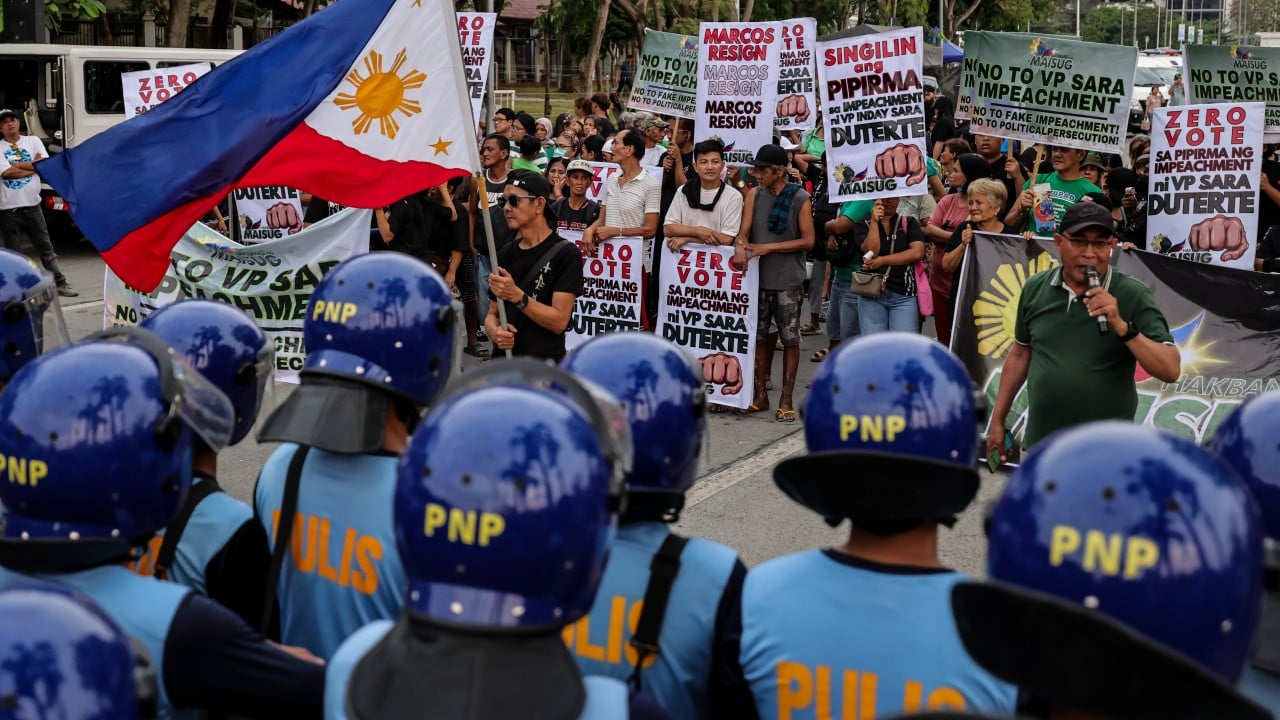
Manila’s political turmoil might also have weighed on perceptions of its candidacy, they said, with a bitter power struggle flaring between the Marcos and Duterte camps.
On Wednesday, the Philippines received 49 out of 191 votes after four rounds of voting, while Kyrgyzstan won 142 votes and secured the Asia-Pacific seat at the Security Council for the 2027-2028 term.
Under its set-up, the council has five permanent veto-wielding members – the US, China, Russia, the UK and France – and 10 elected members, with the latter group serving two-year terms.
Kyrgyzstan’s coming term will be its first on the council and only the second time a Central Asian country has held a seat, after Kazakhstan in 2017–2018.
The General Assembly also elected Austria, Portugal, Trinidad and Tobago, and Zimbabwe, with Germany stunningly defeated in its latest bid to rejoin the council.
“The Philippines respects the decision of the member states of the United Nations and extends its congratulations to the Kyrgyz Republic following today’s election for the nonpermanent seat in the United Nations Security Council,” Department of Foreign Affairs Secretary Maria Theresa Lazaro said in a statement on Thursday.
The defeat followed years of concerted efforts by Manila to return to the council, where it has served four terms as a member since the country was first elected in 1957.
In March, Marcos campaigned for the Philippines’ inclusion on the council during a visit to the UN headquarters, where he delivered a speech before the UN General Assembly and met with Secretary General Antonio Guterres.
Marcos said the Philippines would serve as a “representative voice” for developing countries, middle-income nations, and climate-vulnerable states, cited its history of peacekeeping efforts such as the Korean war, and reiterated its stature as a “responsible state party” abiding by the UN Convention on the Law of the Sea.
Analysts called the Philippines’ loss a blow to Marcos’ foreign policy legacy.
Chester Cabalza, founder and president of the Manila-based think tank International Development and Security Cooperation, said the failure to win the seat had deprived Manila of stronger leverage in pushing for an international maritime rules-based order in the South China Sea, 10 years after the country won the arbitral award against China over contested maritime boundaries.
Kyrgyzstan’s landslide win had “exposed a profound lack of baseline commitments from countries supporting the Philippines”, Cabalza added.
Enrico Gloria, an assistant professor of political science at the University of the Philippines and a doctoral student at Tsinghua University in Beijing, said the result was a major diplomatic victory for Kyrgyzstan but “not necessarily a defeat for the Philippines”.
He said the outcome reflected a familiar pattern in UN elections, where member states often valued rotation and wider representation, and giving less-represented countries a voice.
Domestic turmoil
Palace press officer Claire Castro said on Thursday that the country’s turbulent domestic politics might have hurt its failed bid to rejoin the council.
“All political noise and political tensions can affect us, and these are what the nation and the world see as their impression of the Philippines,” Castro told local media.
In recent weeks, the Senate has been consumed by Vice-President Sara Duterte-Carpio’s looming impeachment trial, leadership fights, high-profile arrests and questions over the loyalties of some senators.
Among the incidents are the surprise election of senator and an ally of the Duterte clan Alan Peter Cayetano as Senate president, repeated failures to convene sessions after members of Cayetano’s majority bloc stayed away, and a shoot-out that culminated from Senator Ronald dela Rosa’s hiding in the leguslative building amid fears of being served an International Criminal Court warrant for his role as then-police chief during the Rodrigo Duterte administration’s war on drugs.
Charmaine Misalucha-Willoughby, a professor of international relations at De La Salle University-Manila, said the Philippines’ domestic troubles might have hurt its credibility as it sought a Security Council seat while preparing to chair the Association of Southeast Asian Nations summit in Cebu last month.
“It’s really quite embarrassing that we are airing out our dirty laundry for the world to see at a time that we’re supposed to be leading the region through Asean,” Willoughby said.
“What does it show the world – if we can’t handle our domestic affairs, can we handle international ones?” she added.
Cabalza said Kyrgyzstan’s image as a “neutral, landlocked Central Asian” state amid the US-China rivalry had strengthened its candidacy. In contrast, Manila’s “domestic political circus”, including billion-peso flood corruption scandals and ongoing ICC probes, might have damaged its standing, he added.
Gloria disagreed that domestic troubles were decisive, saying Kyrgyzstan had made a stronger case as a first-time candidate from an under-represented region.
Kyrgyzstan presented itself as a voice for “under-represented states, smaller states, landlocked states, and countries that have long waited for a turn at the Council table”, Gloria said.
China factor?
Analysts also said the Philippines’ close association with the US and China’s role as a permanent member of the council might have worked against Manila, with Kyrgyzstan seen as less likely to be drawn into geopolitical disputes.
“Manila’s close security alignment with Washington may have made its candidacy more complicated,” Gloria said.
He added that the Philippines’ status as a US treaty ally compared less favourably with Kyrgyzstan’s careful projection of neutrality, especially amid “an international order increasingly shaped by major power rivalry”.
Willoughby said China’s influence could not be discounted, even if there was no public evidence that Beijing directly campaigned against Manila.
“China may not have strong-armed other countries to vote against the Philippines, but it certainly has a lot of informal ways of swaying votes,” she said.
The vote might also reflect Manila’s failure to frame the South China Sea dispute as an international concern, Willoughby added.
“The 2026 Asean chairmanship should have been our chance to prove that we can lobby for ourselves and the region,” she said.
Gloria said there was no “clear public indication” that China had directly caused the Philippines’ loss, but added that “China did not have to play a direct role for the China factor to matter”.
He said Manila’s foreign policy image had become closely linked to its maritime dispute with China and its growing security cooperation with the US and other partners, making Kyrgyzstan appear the less politically complex candidate.
“Unfortunately, under Marcos Jnr, Manila bears the tag of the first loser in our UNSC campaign,” Cabalza said.
He said the Philippines “must recalibrate and assess its future foreign policy to gain worldwide respect for its diplomacy” after what he described as possible global fatigue over Manila’s “noisy tell-all strategy” in the South China Sea.