
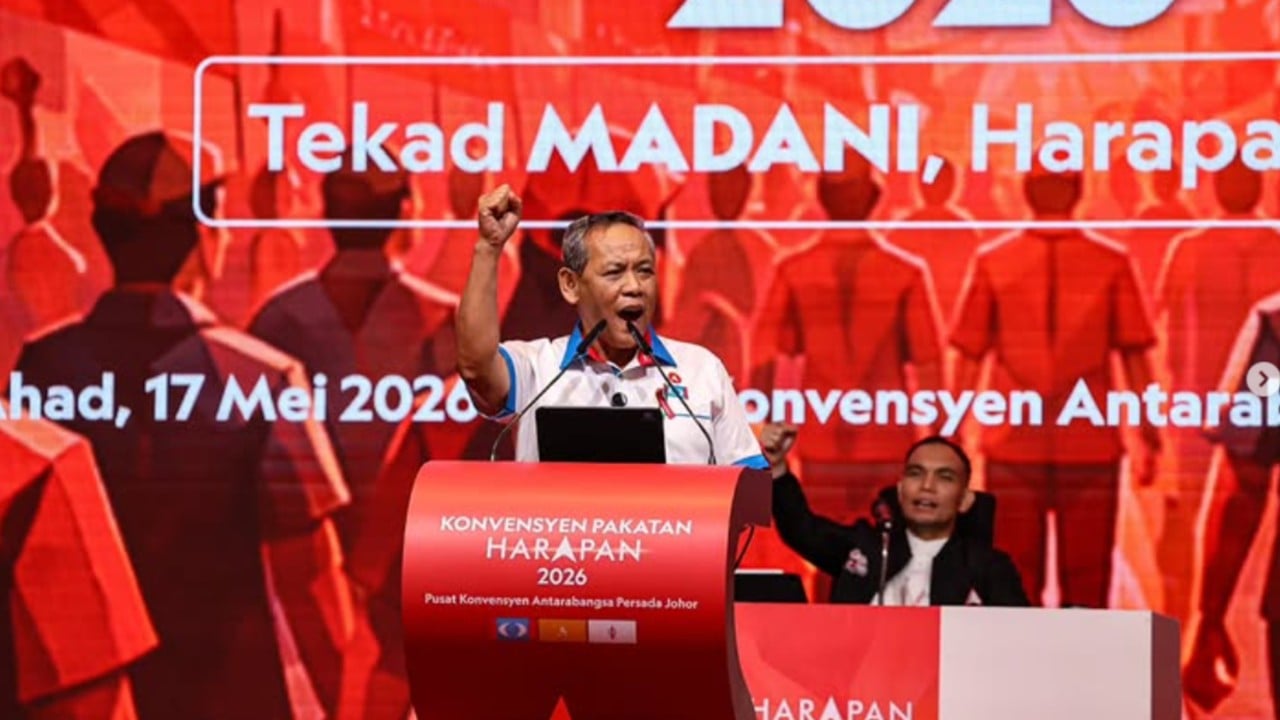
Malaysia is heading into a run of state elections, including two triggered by early assembly dissolutions, after Negeri Sembilan became the latest state to call a snap poll amid fraying ties inside Prime Minister Anwar Ibrahim’s ruling alliance.
While the polls will not directly affect Anwar’s parliamentary majority, they will test whether his federal partners can keep their coalition functioning at the state level or whether local disputes will deepen the fractures between them.
On Friday, Negeri Sembilan dissolved its 36-seat assembly after a political crisis in which 14 assemblymen from Umno, the dominant party in the Barisan Nasional (BN) coalition, withdrew support for Chief Minister Aminuddin Harun, claiming he had mishandled a dispute involving the state palace.
The state must now hold an election within 60 days. It follows a similar move in the southern state of Johor, which dissolved its assembly on Monday.
The two states sit on opposite sides of Anwar’s federal power-sharing arrangement: Negeri Sembilan is led by his Pakatan Harapan (PH) coalition, while Johor is controlled by BN, the former rival now governing with him in Putrajaya.
Aminuddin called reporters to his official residence late on Thursday, barely half an hour before midnight, to announce that Tuanku Muhriz Tuanku Munawir, whom the state government recognises as Negeri Sembilan’s ruler, had consented to dissolve the assembly.
The dissolution came amid a continuing dispute over the state’s royal institution, after Negeri Sembilan’s traditional ruling chiefs sought in April to depose Tuanku Muhriz and name Tunku Nadzaruddin Tuanku Ja’afar as his successor, a move Aminuddin’s government has rejected as invalid.
Local media reported that Aminuddin had met Tuanku Muhriz at Istana Hinggap earlier on Thursday, amid speculation over whether the PH-led government would seek a fresh mandate following the breakdown in cooperation with Umno assemblymen.
“I can say we have almost finalised that. We will be contesting all 36 seats,” Aminuddin told reporters, referring to seat negotiations among PH members the People’s Justice Party (PKR), the Democratic Action Party (DAP) and Amanah.
He said the allocation would be finalised next week, with reports suggesting the People’s Justice Party would contest 16 seats, the Democratic Action Party 11 and Amanah nine.
Mazlan Ali, a political analyst with the University of Technology Malaysia, said the recent dissolutions in Johor and Negeri Sembilan reflected different political calculations: one a pre-emptive move by BN to protect its hold on a friendly state, the other a response to a breakdown in support for a PH-led government.
“Johor is a state under the Barisan Nasional government. Umno decided to dissolve the state assembly based on their prerogative powers and had obtained the consent of the Johor regent. This dissolution may have something to do with Umno’s strategy to defend the government,” Mazlan said.
“In Negeri Sembilan, the [State Legislative Assembly] was dissolved because the state was facing a political crisis when 14 Umno assemblymen withdrew their support for the Menteri Besar,” he added, using the Malay term for chief minister.
“This caused political uncertainty in the state and the dissolution of the [assembly] was a step towards resolving the crisis by returning the mandate to the people.”
In Johor, Barisan Nasional enters the election with a clear numerical advantage, giving the coalition a strong chance of defending the state. Before dissolution, BN controlled 40 of the assembly’s 56 seats, including 33 held by Umno, while Pakatan Harapan held 12. The opposition Perikatan Nasional (PN) bloc held three and youth-led party Muda one.
BN has said it will contest the Johor polls independently, without PH’s support.
In Negeri Sembilan’s 2023 state election, PH won 17 seats, BN 14 and PN five, giving Anwar’s allies a combined majority before relations between the two blocs broke down.
Adib Zalkapli, managing director of advisory firm Viewfinder Global Affairs, said the contests would indicate whether Pakatan Harapan could still mobilise its voters outside a national election setting.
“It’s a good warm-up before the next general election,” Adib said. “The real challenge for Anwar and PH is to get their supporters out to vote. A low turnout would be a major blow to Anwar and PH.”
Anwar’s federal coalition, formed after Malaysia’s 2022 general election produced a hung parliament, brought together PH, its former rival BN and smaller regional parties.
Two other states, Melaka and Sarawak, are also due to hold elections in the coming months, adding to speculation over whether a strong run of state results could encourage Anwar to call an early general election before the 2028 deadline.