
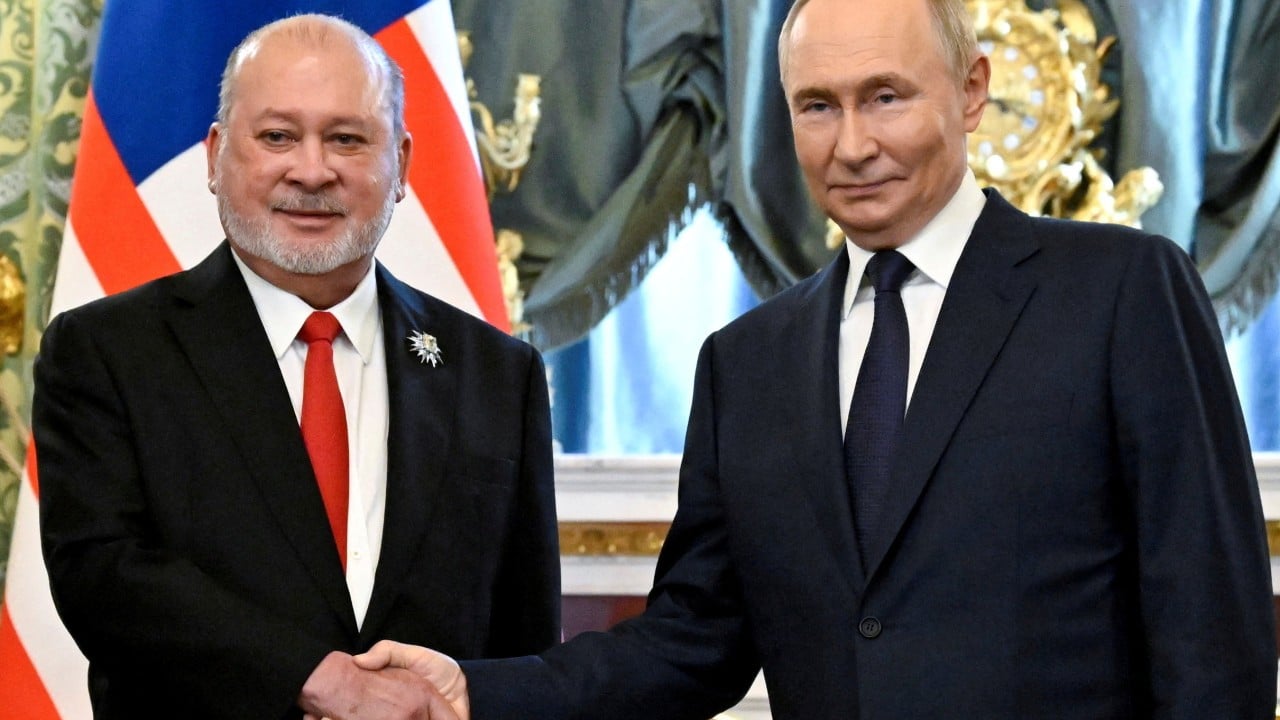
Malaysian King Sultan Ibrahim Iskandar arrived in Moscow on Thursday for a high-profile visit that comes as Kuala Lumpur looks for alternative oil sources amid the Iran war-linked fuel crisis.
Sultan Ibrahim landed at Vnukovo-2 International Airport at 4.20pm local time on Thursday, according to Malaysian reports, and was received by Russian Deputy Foreign Minister Andrey Rudenko, senior protocol officials and Malaysia’s ambassador to Russia, Cheong Loon Lai.
The king is attending Russia’s May 9 Victory Day events as a guest of honour at the invitation of President Vladimir Putin, the latest in a series of royal engagements that have put Malaysia-Russia ties back in the spotlight.
Though the visit is officially ceremonial, the timing coincides with the energy squeeze now plaguing Malaysia and much of Asia. The Iran war has disrupted shipments through the Strait of Hormuz, the narrow Gulf artery that remains critical to global oil and gas trade, forcing governments across the region to hunt for alternative supplies while trying to keep fuel prices from feeding into inflation.
Prime Minister Anwar Ibrahim said last month that national oil company Petronas would negotiate with Russia to buy crude as Malaysia sought to secure domestic supplies.
“Fortunately, our relations with Russia remain good. Therefore, the Petronas team can negotiate with them,” Anwar told local daily Sinar Harian on April 18, adding that many countries that had previously sanctioned Russia were now also seeking its oil.
Petronas said in March that nearly 40 per cent of the country’s crude oil requirements pass through the Strait of Hormuz, while national demand for petrol and diesel continued to exceed domestic supply.
The company said higher crude prices, shipping costs, insurance premiums and logistics charges had all hit Malaysia’s fuel supply security.
Strain on coffers
Anwar’s administration has kept subsidised RON95 petrol at 1.99 ringgit (50 US cents) a litre (0.3 gallons), among the lowest prices in the region, even as global crude prices have risen sharply.
But policy think tank Khazanah Research Institute warned on Tuesday that a sustained oil shock could push Malaysia’s annual fuel subsidy bill to about 48 billion ringgit, almost exhausting the government’s total allocation for subsidies and social aid.
Anwar in early April said Malaysian diplomatic engagement with Iran had helped one Petronas tanker clear the Strait of Hormuz and reach the Pengerang Integrated Complex in the southern state of Johor, where refining operations are concentrated.
He pushed back again this week against claims that Malaysian oil shipments did not rely on Hormuz, saying the route remained critical.
“This is a route that must be used, but now there are disruptions. Prices have increased because freight costs and insurance premiums have risen,” Anwar told reporters on Monday.
Kuala Lumpur joins a growing number of Southeast Asian governments – including Indonesia, the Philippines and Thailand – looking to Russia for energy supplies.
The US imposed sanctions on Russian energy after Moscow’s invasion of Ukraine, but Donald Trump’s administration renewed a temporary waiver last month allowing countries to buy sanctioned Russian oil at sea.
European officials have warned Southeast Asian countries against turning to Moscow, arguing that Russian energy purchases risk helping fund the Ukraine war.
Sultan Ibrahim made a landmark state visit to Russia in August last year, the first by a Malaysian head of state since diplomatic relations were established in 1967. He was also welcomed by Putin in St Petersburg in January during a special visit to the Hermitage Museum.
Analysts Francis Hutchinson and Isabelle Chua of the ISEAS-Yusof Ishak Institute wrote last year that the king’s Russia outreach made sense through the lenses of “military procurement, foreign policy and domestic sentiments”.
Anwar has also made repeated overtures to Moscow, seeking cooperation in trade, energy, agriculture, aerospace, halal products and Islamic finance.