
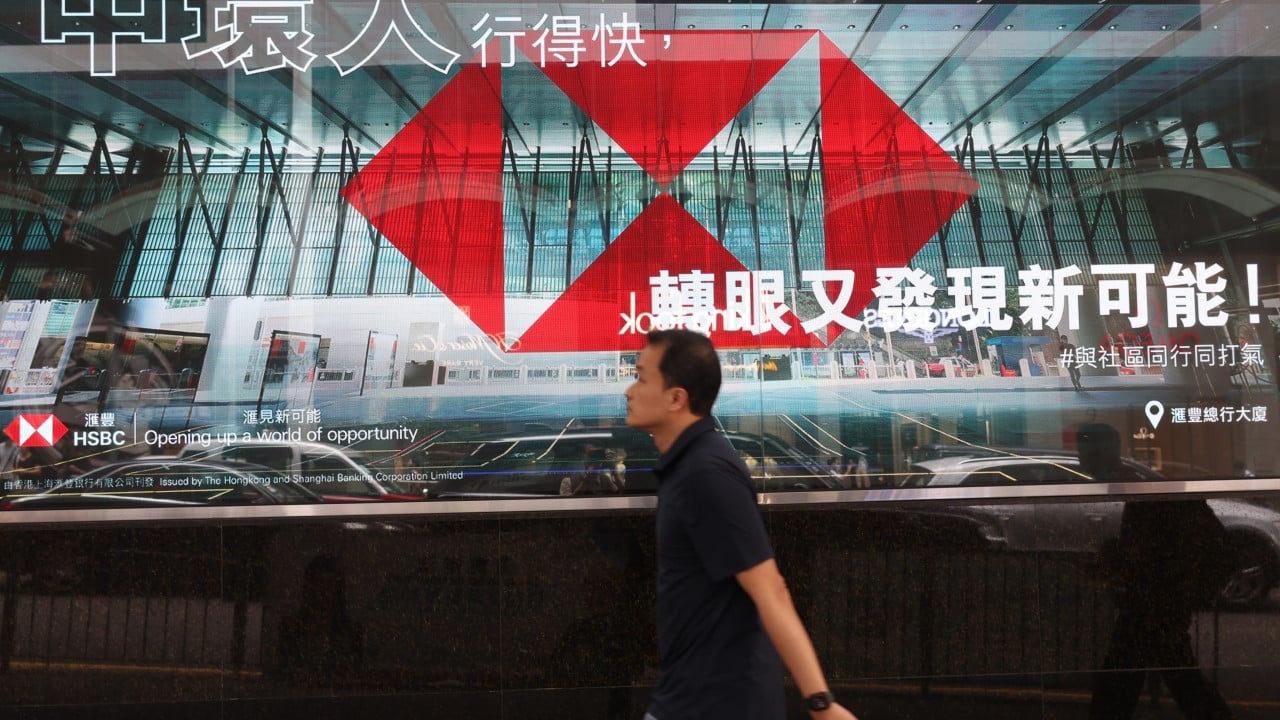
Mainland customers can still open bank accounts in Hong Kong, but banks must adopt stringent new checks to ensure their processes are “compliant and orderly”, the Hong Kong Monetary Authority (HKMA) said in a statement on Saturday.
“The banking industry has implemented the new regulatory requirements set out in the HKMA circular to ensure the account opening process is compliant and orderly,” the statement said. “Chinese mainland customers continue to apply for opening accounts, and in general, the account opening process has been operating smoothly.”
The HKMA statement followed reports that some mainland residents had seen applications to open Hong Kong bank accounts rejected, as financial institutions in the city tighten policies amid China’s broader push to clamp down on illicit cross-border investment.
Last month, the China Securities Regulatory Commission fined three brokerage firms – Tiger Brokers, Futu Securities International and Longbridge Securities – over US$330 million for offering mainland Chinese investors access to overseas stocks without a licence.
Hong Kong’s regulators quickly responded by launching their own push to tighten controls.
The Securities and Futures Commission (SFC) required licensed brokerages to conduct internal checks to ensure no falsified documents or materials were being used to open accounts. The HKMA, meanwhile, instructed banks to require mainland customers opening investment accounts to declare their funds originated outside mainland China.
Daniel Guo, who lives in southern China’s Guangdong province and holds only a mainland identity card, said he applied to open an account with Bank of China (Hong Kong) (BOCHK) last week, but the bank rejected his application within hours.
Similar complaints have emerged on the Chinese social platform RedNote in recent days, with users reporting having their online applications to open accounts rejected, especially when disclosing investment purposes. BOCHK did not immediately respond to requests for comment.
After his rejection by BOCHK, Guo said he successfully opened an account with HSBC. As part of the process, he was required to sign a declaration stating that his investment funds originated from legitimate sources outside mainland China and that no previous accounts had been suspended or closed by licensed institutions because of suspicious or fraudulent activities.
HSBC and the Bank of East Asia (BEA) told the South China Morning Post that they had followed the HKMA’s new requirements.
“HSBC complies with all applicable laws and regulations when opening and managing investment client relationships. Our bank account opening and investment services continue to operate normally, in line with the relevant requirements,” a spokesman from HSBC said.
BEA’s Shanghai branch stopped opening Hong Kong accounts allowing overseas investments for mainland customers from June 1.
“BEA has been providing account opening services to both local and non-local customers in accordance with regulatory requirements and internal guidelines,” a BEA spokesman said. “We are following the latest guidelines from relevant regulators to ensure that the account opening process is both compliant and efficient.”
The HKMA said its regulatory requirements were in line with those of its mainland and Hong Kong counterparts, with the authority requiring banks to adopt similarly high business standards to the ones the SFC had applied to brokers.
“Hong Kong’s regulatory authorities have all along been maintaining close and ongoing communication with their counterparts on the Chinese mainland,” the HKMA statement said.
“The enhancement measures this time help reinforce the advantages of Hong Kong as an international financial centre.”
The regulators’ latest actions would make it harder for mainland investors to invest outside the country, said Christopher Marquis, Sinyi professor of Chinese management at Cambridge Judge Business School.
But the HKMA stressed that mainland investors could still use the many legitimate cross-border investment channels to invest in overseas markets, such as the Stock Connect scheme, which links up the stock markets in Hong Kong, Shanghai and Shenzhen. Investors in the Greater Bay Area can also use the Wealth Management Connect scheme to invest in fund products in the city.