
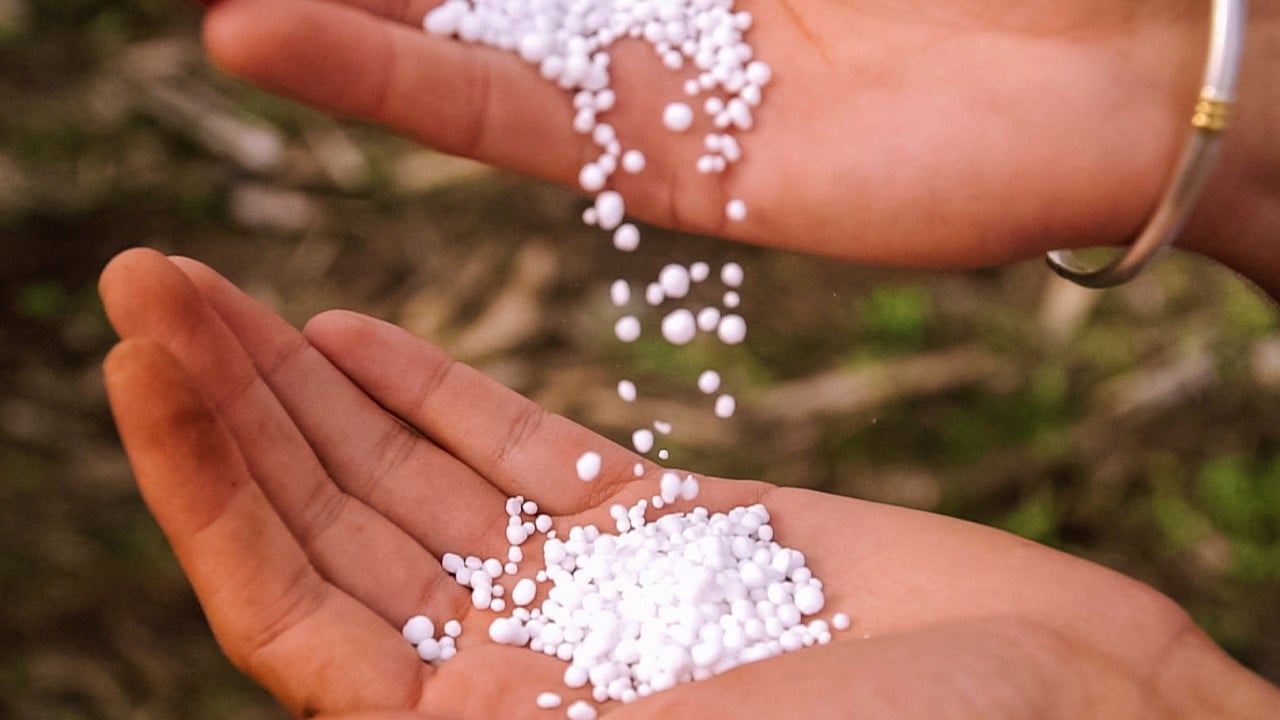
Conflict in the Middle East is threatening the coming planting season, a UN official has warned, as countries already reeling from fertiliser shortages and surging costs face shocks to food security.
The Strait of Hormuz, a major global chokepoint for fertilisers and other agricultural inputs as well as oil, has been under blockade since the start of joint US-Israeli strikes on Iran in February.
Despite rising concerns over the impact of the conflict on global food production, China – supported by an advanced crop forecast system – recently said its domestic yield of grains and oilseed would increase this year.
Viorel Gutu, an assistant director general of the UN Food and Agriculture Organization (FAO) and a regional representative for Europe and Central Asia, said many countries were already “experiencing the shock”, including high input costs and low availability.
“The Strait of Hormuz is the key global route accounting for 20 to 45 per cent of the global traffic of essential agricultural inputs,” Gutu said in an interview with the South China Morning Post on the sidelines of the Regional Ecological Summit in Kazakhstan last month.
With the coming planting season in the region and the rising costs of energy and fertilisers, Gutu said: “We can expect low yield and obviously growing prices in the coming months for food.”
During an FAO briefing held at the end of April, director general Qu Dongyu said the price of urea – a widely used nitrogen-based fertiliser – had risen by 52 per cent in the United States and 60 per cent in Brazil by mid-April.
He said countries reliant on imports, such as Bangladesh – which gets 53 per cent of its fertilisers from the Gulf – as well as countries reliant on imported crops, were at high risk of economic and food insecurity.
Gutu said member countries in the Middle East had taken part in an FAO briefing on the situation, an initiative that was “very much welcomed by member states”.
He added that the specialised United Nations agency was trying to share information to encourage anticipatory action, including speaking about “keeping the trade open, and ensuring timely access to inputs”.
“Otherwise, we will get into even more serious food crises,” he cautioned.
The FAO leads the UN’s efforts in tackling challenges related to food and agriculture, including defeating hunger. Its work includes coordinating actions and responses to “present and future threats to global food security”.
Gutu said issues such as land degradation, water use, biodiversity, climate change and transboundary diseases were “issues which do not have political borders”. This made both regional and international cooperation in these areas “extremely important”.
The FAO is trying to bring technical solutions to its member states.
“China for us is a very important partner in bringing the agenda of food security, of climate change [in the region],” Gutu said.
Beijing has been involved in the FAO’s South-South Cooperation (SSC) Programme – a sharing and transfer platform for countries in the Global South – since its inception in 1996, according to the agency.
In 2006, China was the first country to establish a strategic alliance with the FAO under the programme, and has contributed more than US$130 million to date through a trust fund.
Gutu said Beijing’s efforts to move the agency’s agenda forward and support other countries were “commendable”, with China not only contributing resources, but also expertise and investments “which are a solution for many countries”.
China has deployed more than 1,000 experts across Asia, Africa, the South Pacific, Latin America and the Caribbean to contribute technical expertise in areas such as agriculture, irrigation, agroforestry, and agricultural mechanisation and machinery manufacturing, according to the FAO.
Gutu said that while China was not the only country in the region in a partnership programme with the FAO, it served as a “good example of initiative”. The organisation was working to develop new projects with the Chinese government through the SSC Programme, he said.
The summit in Kazakhstan’s capital of Astana, held in partnership with the UN, brought together the heads of Central Asian countries and representatives from countries around the world to discuss solutions to global environmental challenges.
Gutu said that for decades, agriculture had not expanded much in land use but rather had focused on technology to increase yields, which might have its limits.
He said that if the global population reached almost 10 billion by 2050, the world would need to produce 50 per cent more food and animal feed.
China has invested heavily in agricultural advancement, such as smart farms, as well as in the plant sciences, including developing high-yield and drought- and saline-resistant rice and wheat varieties.
An agricultural outlook report released by the agriculture and rural affairs ministry last month indicated that China’s grain yield per unit area was expected to increase in 2026.
The outlook is supported by an advanced forecast system that can predict grain outputs more than six months in advance, allowing Beijing to act early to secure imports or release reserves ahead of anticipated rising global prices.
Gutu said that several years ago, more than 780 million people were going hungry every day, and about 3 billion people could not afford a healthy, nutritious diet.
He noted that while there was currently “a bit of a positive trend” in reducing hunger and increasing access to healthy food, it no longer appeared possible to reach all hunger elimination objectives by 2030.
“We can have targets. We should probably have targets. But we also have to find ways to achieve that,” Gutu said.
He said it was unfortunate that “cataclysms” affecting the pathway to these goals were slowing progress – and even sometimes reversing it.