
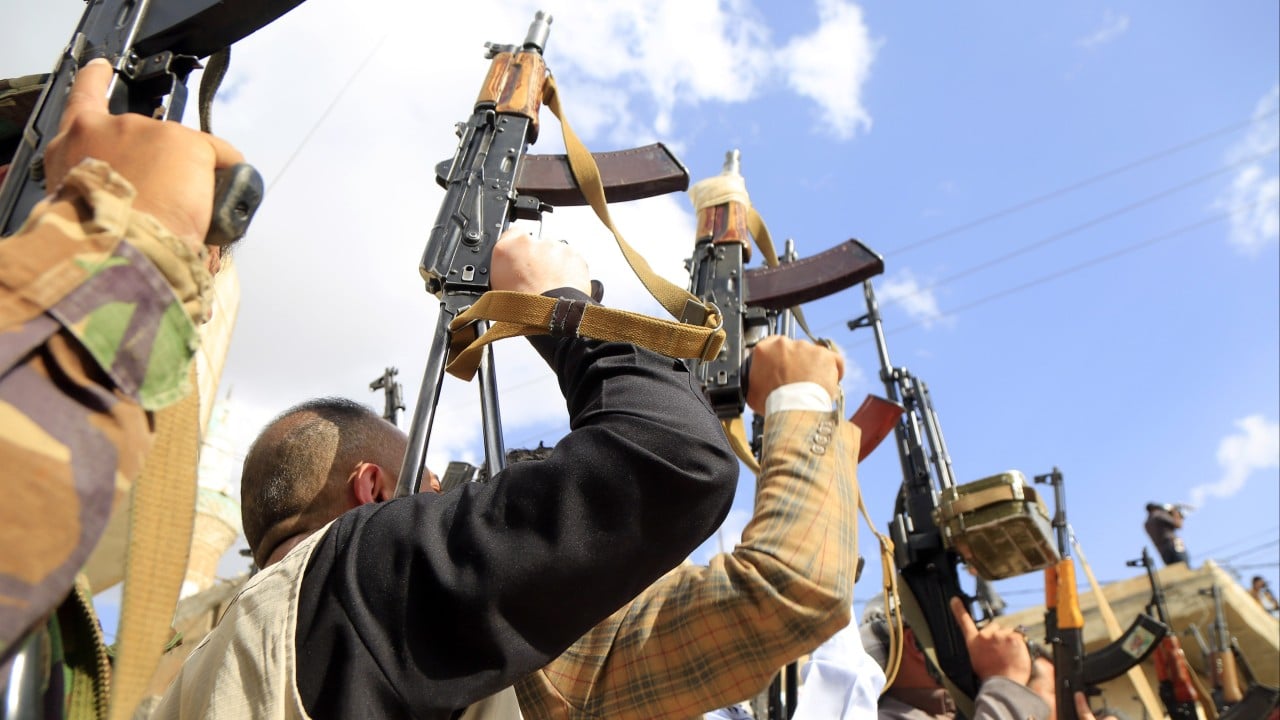
Yemen’s Tehran-aligned Houthi movement has threatened to besiege a second key Middle East waterway as Iran launched drone attacks against US Navy vessels in the Strait of Hormuz over the weekend after a diplomatic effort to end the war appeared to collapse.
A closure of the Bab el-Mandeb Strait, which connects the Red Sea to the Indian Ocean, would effectively sever Saudi Arabia’s only remaining oil export route.
The kingdom has been shipping up to 7 million barrels of crude per day through the Red Sea port of Yanbu since its main Gulf export terminal at Ras Tanura – the world’s largest – was shut down by the Iran conflict.
The threats and clashes marked a dramatic deterioration in the war that the United States and Israel launched on February 28. They also raised the prospect of simultaneous closures of two of the world’s most critical maritime chokepoints.
It came on the heels of a frenetic weekend of updates. Late on Friday, Iran’s Foreign Minister Abbas Araghchi had declared that the Strait of Hormuz was open to commercial shipping, in what appeared to be a gesture towards renewed diplomacy.
The move drew immediate condemnation from hardliners inside Iran, who accused Araghchi of being deceived – pointing to a US pattern of using negotiations as cover for military action, including before the opening salvoes of the war and before the US and Israel launched a two-week campaign of air strikes in June last year.
Less than a day later, Iran’s armed forces announced the strait was closed again, with Iranian fast-patrol boats opening fire on two Indian ships that had previously been granted permission to leave the Gulf, even as a Pakistani oil tanker and a cruise vessel were allowed to exit. India’s foreign ministry summoned Iran’s chargé d’affaires in protest.
Pakistan’s Prime Minister Shehbaz Sharif spoke by phone with Iranian President Masoud Pezeshkian on Sunday in what appeared to be a last-ditch effort to prevent further escalation.
But hours later, US forces fired on and seized an Iranian cargo ship that had attempted to run the naval blockade of Iranian ports Washington imposed last Monday.
US President Donald Trump characterised the incident as an Iranian ceasefire violation.
Araghchi later called Pakistan’s Deputy Prime Minister and Foreign Minister Ishaq Dar to warn that Tehran would “use all its capabilities to safeguard its security”, according to Iranian state media.
Shortly after, Tehran announced drone attacks on US Navy vessels in the strait.
Reports from Syria and Iraq described a large fleet of Israeli warplanes, supported by US aerial refuelling tankers, conducting overflights towards Iran.
Iran’s state-run Tasnim news agency, affiliated with the Islamic Revolutionary Guard Corps, reported that Tehran’s target list now included the pipeline carrying Saudi oil to Yanbu, the United Arab Emirates’ oil export terminal at Fujairah – located outside the Gulf – and a full closure of the Bab el-Mandeb Strait.
The escalation unfolded as diplomatic efforts appeared to grind to a halt.
Four US C-17 Globemaster transport planes had arrived in Islamabad on Sunday ahead of what Trump said would be talks led by US Vice-President J.D. Vance and envoys Steve Witkoff and Jared Kushner.
A deal with Iran “will happen one way or another”, Trump told ABC News on Sunday. Tehran denied it had agreed to a second round of talks in the Pakistani capital and accused Washington of negotiating “in bad faith” by maintaining its naval blockade of Iran-bound ships.