
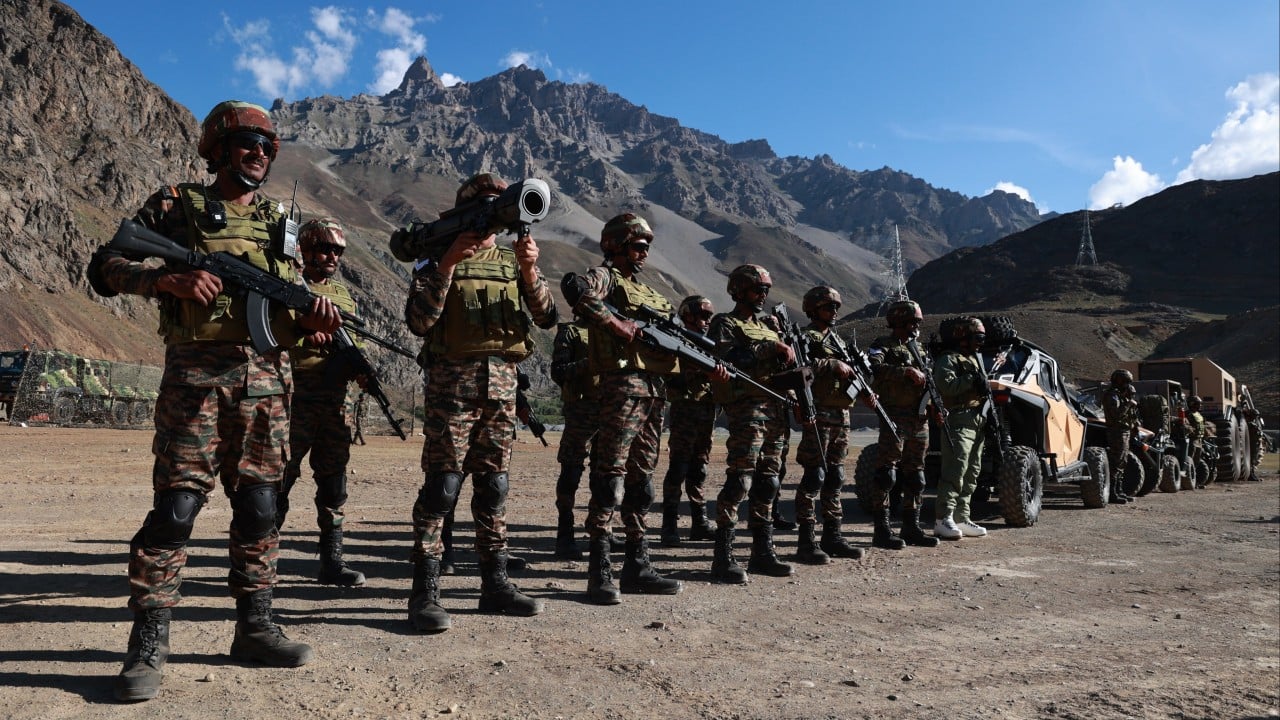
India’s military is exploring alternative energy sources amid surging oil and gas prices caused by supply disruption from the Iran war, a trend that analysts say is set to accelerate among Asian countries heavily dependent on energy imports.
According to local media reports, the Indian army plans to get biogas stoves to replace natural gas-fired appliances for cooking. It is also exploring the use of green fuels for army vehicles and administrative work, as well as solar and wind power for military installations.
“The Indian Armed Forces’ proactive strategy to explore alternative energy solutions like biogas, solar, and wind is a direct response to the global energy crunch and market volatility linked to ongoing tensions in West Asia,” said Harjeet Singh, climate activist and founding director of Satat Sampada Climate Foundation.
Oil prices have eased to below US$100 in recent days on expectations of a pact to end the Middle East conflict. Washington presented a proposal to Iran this week, and analysts expect Tehran to respond in the coming days.
On Thursday evening in Asian trading, Brent crude oil was trading at US$98.31 per barrel, compared with US$70 just before the outbreak of the Iran war.
The benchmark briefly hit a four-year high of US$126.41 a barrel on April 30 amid fears of an escalation in the war, which has choked energy supplies through the strategic Strait of Hormuz.
“For Asian countries that rely heavily on imported oil and gas, conventional fuel dependency creates a significant strategic and economic vulnerability. By transitioning to clean, locally sourced energy, the Indian military is aiming to build energy resilience and ensure operational readiness,” Singh said.
“This priority resonates across the region as nations seek to insulate their critical sectors from geopolitical supply chain shocks.”
The ongoing Iran conflict has sharpened energy security vulnerabilities for countries like India, China, Japan, South Korea and much of Asean, where the Middle East accounts for 60 per cent of the bloc’s oil imports.
Analysts say traders’ expectations that the Strait of Hormuz would reopen soon seem overly optimistic.
While a peace deal could lead to a further drop in oil prices immediately, it would take time for maritime traffic to rebound, said Paola Rodriguez-Masiu, chief oil analyst at Rystad Energy.
“Even under an optimistic scenario involving a 30-day phased reopening of the Strait of Hormuz, meaningful volume recovery would happen in June at the earliest,” she said, highlighting that an additional four to six weeks would be needed to process deliveries at ports.
Insurance markets would also need time to price in the development, while shippers would need sustained access through the passage before business confidence could be rebuilt, she added.
“Global markets should not mistake a ceasefire headline for a supply [easing] headline,” said Rodriguez-Masiu.
The energy shock due to the Iran war has accelerated efforts across Asia to explore clean energy options, according to analysts.
“Clean energy options can currently support military bases, cookhouses, surveillance systems, and remote posts, but they are not yet capable of fully replacing conventional fuels for combat operations. Their role is mainly supplementary rather than complete substitution,” said Vaibhav Gupta, a defence industry expert.
There are challenges to increasing renewable energy use, including high set-up costs, technological limitations, as well as the intermittent nature of sources, such as wind and solar, which makes them unsuitable to power heavy military platforms during intense operations, according to Gupta.
Nonetheless, Singh said the adoption of renewables by the Indian army could bring about long-term benefits to offset emissions from fossil fuels.
Srinivaasan Balakrishnan, director of strategic engagements and partnerships, at Delhi-based Indic Researchers Forum, said the Indian army had successfully used renewables for its systems previously, citing the solar-hydrogen microgrids in the remote mountainous region of Ladakh.
“India’s armed forces’ move towards biogas and solar reflects a broader, pragmatic trend across oil-import dependent Asian nations,” he said. Such a transition would enhance the region’s energy security and economic resilience, he added.
The rising adoption by India and other countries in Asia also reflects lower costs of green energy storage and their increasing manufacturing capacity to build renewable infrastructure, according to Balakrishnan.
“The pros of this shift for armed forces far outweigh the cons, delivering strategic, economic, and environmental wins that bolster Asia’s self-reliance. On-site solar or biogas reduces vulnerability to supply shocks and logistics risks,” he said.
“This supports India and Asia’s clean energy momentum, reduces emissions and aligns with global best practices where renewables enhance military sustainability without sacrificing capability.”