
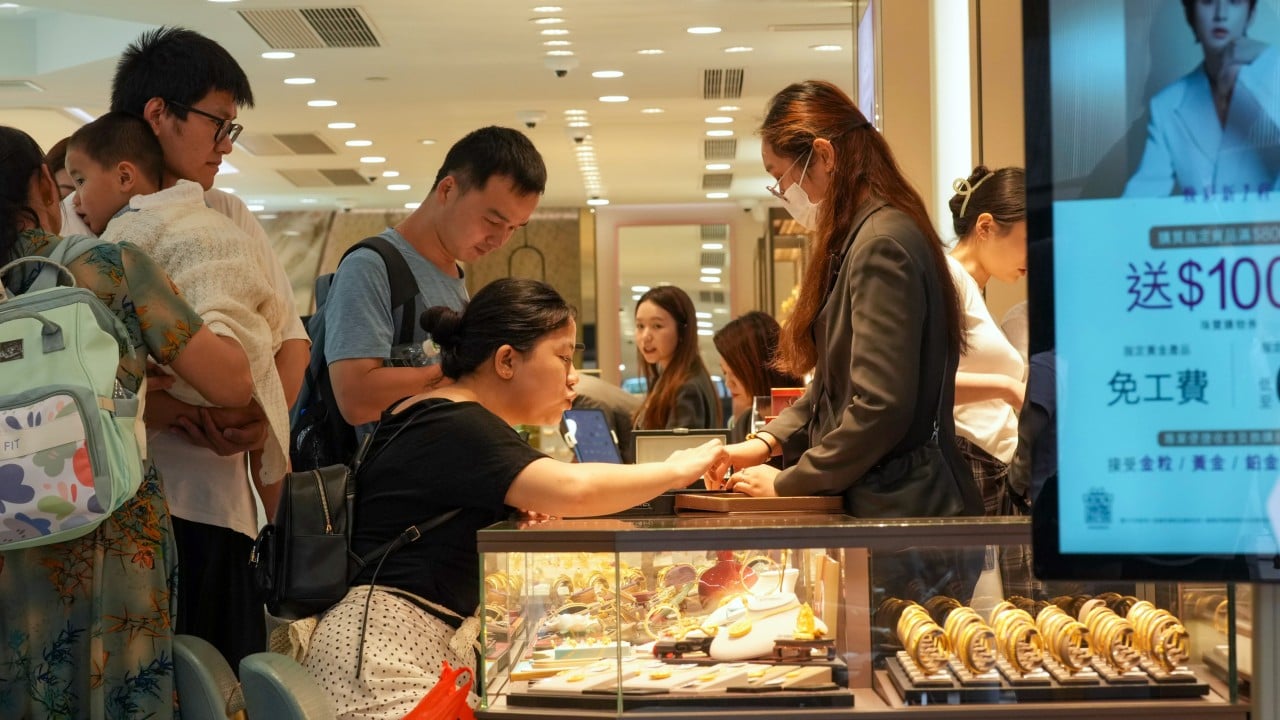
Hong Kong received more than 1 million mainland Chinese visitors during the five-day Labour Day “golden week” holiday, a 10 per cent rise from a year ago, exceeding government expectations, but industry leaders said their spending was inconsistent.
Immigration Department data showed the city recorded 1.01 million mainland visitor arrivals between May 1 and 5, surpassing the forecast of 980,000.
Chief Secretary Eric Chan Kwok-ki said on Wednesday some shopping centre operators had reported year-on-year double-digit increases, while the catering sector noted that business in tourist areas rose about 20 per cent compared with the same period last year.
He added that authorities issued advisories and warnings along Sections 1 and 2 of the MacLehose Trail and at designated campsites nearby in Sai Kung, resulting in 19 enforcement cases against offences such as littering and illegal camping outside designated campsites.
The overall hotel occupancy rate reached 90 per cent, slightly higher than last year, but hotel room rates were up by 10 per cent compared with previous long holidays, he said.
Annie Tse Yau On-yee, chairwoman of the Hong Kong Retail Management Association, said on Wednesday that tourist consumption only benefited certain industries in traditional tourism districts, such as Tsim Sha Tsui, Mong Kok and Causeway Bay.
While some sectors, including luxury retail, reported double-digit sales growth, restaurant operators said high-end dining had not benefited as much from the increase in foot traffic.
Other industries, including jewellery, cosmetics and personal wellness, also saw huge increases, Tse said.
“We saw more long-distance and overnight travellers this time, and they spent more than ‘in-depth’ visitors,” Tse said, referring to tourists who prefer experiences over the usual shopping.
She added that the war in the Middle East pushed the airfares, which made more mainland visitors choose Hong Kong as their destination.
Immigration data also showed total visitor arrivals, including overseas travellers, reached 1.43 million during the holiday period, nearly 30 per cent higher than a year earlier.
Hongkongers, meanwhile, made 1.51 million trips out of the city, about 10 per cent less than last year’s 1.68 million.
K11 Musea said tourist spending at the Tsim Sha Tsui shopping centre rose 1.25 times year-on-year during the first four days of the Labour Day “golden week” holiday, with sales at international luxury brands nearly doubling and watches and jewellery sales increasing by almost 90 per cent.
The shopping centre operator also said its largest single transaction during the period was close to HK$2 million (US$255,230).
Economist Simon Lee Siu-po said the mismatch between visitor growth and weaker spending had become “structural” because of the mainland’s broader economic slowdown.
“The government often just uses the number of visitors in its measurement, though spending per visitor is available but it is often not used as one of the important [key performance indicators],” he said.
Lee cited official figures showing overnight mainland visitors spent an average of HK$4,958 per person in 2024, lower than the overall overnight visitor average of HK$5,490 and down from HK$6,495 in 2023.
He also said the benefits of tourism were becoming increasingly uneven, with “top retailers” and businesses in certain districts benefiting more than other sectors.
“Only when we use … multiple measurements, including number of visitors, spending, [against] number of international visitors et cetera, can we address it better,” he said.
Lee added that Hong Kong should place greater emphasis on attracting higher-spending international travellers rather than focusing discussions almost entirely on mainland visitors.
The higher-than-expected influx came after officials stepped up preparations ahead of the holiday period, including crowd-control measures at border checkpoints, increased transport capacity and enhanced enforcement against illegal tourism practices.