
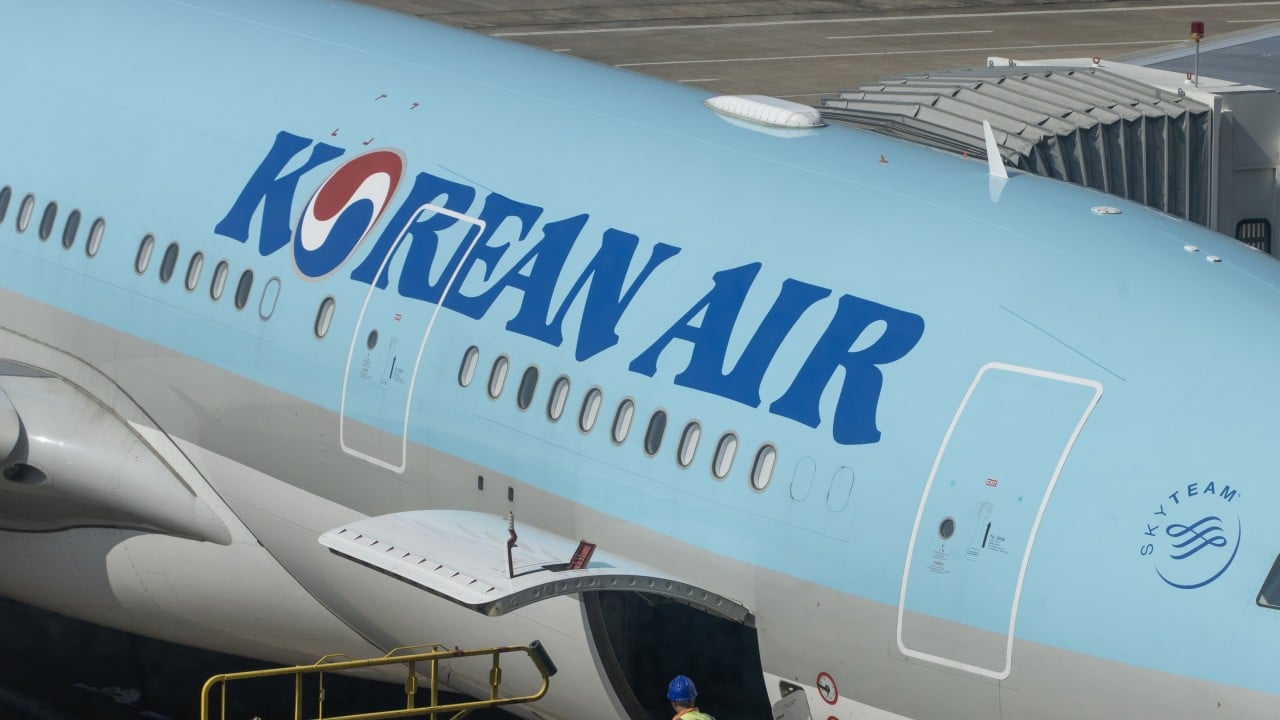
China and South Korea will allow 70 more flights per week between the two countries in view of fast-growing, two-way tourism and a drop in Chinese group travel to Japan.
The Ministry of Land, Infrastructure and Transport in Seoul said in a statement Thursday that passenger flight capacity would grow from 608 to 664 per week and that maximum air freight flights would expand from 54 to 68 per week.
These expansions, the first since before the Covid pandemic, reflect a surge in two-way tourism, analysts said.
In the first quarter of 2026, China led inbound travel to Korea with 1.4 million visitors, ahead of pre-pandemic numbers, the Korean travel research institute Yanolja found.
Some 2.66 million South Koreans visited China in the same quarter, up 24.1 per cent year on year, according to Chinese media reports.
This year Seoul eased its rules for 10-year visas for Chinese nationals, while Koreans may visit China visa-free.
The Seoul ministry said that after talks with China last month, it decided to expand flights on “high-demand” routes between South Korea and Chinese cities, such as Shanghai and Guangzhou.
“[We’re] establishing a foundation for increasing international routes between the two nations, in line with the recent expansion of human and material exchanges between Korea and China,” the ministry’s statement on Thursday read.
South Korean tourists often choose China as a travel destination due to relatively low prices and short flight times to Chinese cities. The growing popularity of K-pop, K-dramas and Korean fashion, as well as the short flight distance, are selling points for Chinese tourists travelling to Korean destinations.
Over the past seven months, South Korea has emerged as an alternative to Japan for Chinese tourists following the political tiff between Beijing and Tokyo, analysts said.
Mass China-Japan flight cancellations began in November, after Japanese Prime Minister Sanae Takaichi suggested that Japan could deploy military forces in the event of a conflict in the Taiwan Strait. China then instructed its major travel agencies to stop or cut back group tours to Japan.
“Those who visited Japan before [now] turn to Korea,” said independent aviation analyst Li Hanming. “The China-Korea friendship hinges on Japan.”
A projected increase in Korean inbound tourism “incorporates in advance a key variable in northeast Asian geopolitics: intensified China-Japan tensions and the resulting de facto ‘limit-Japan’ effect”, the report from Yanolja said.