
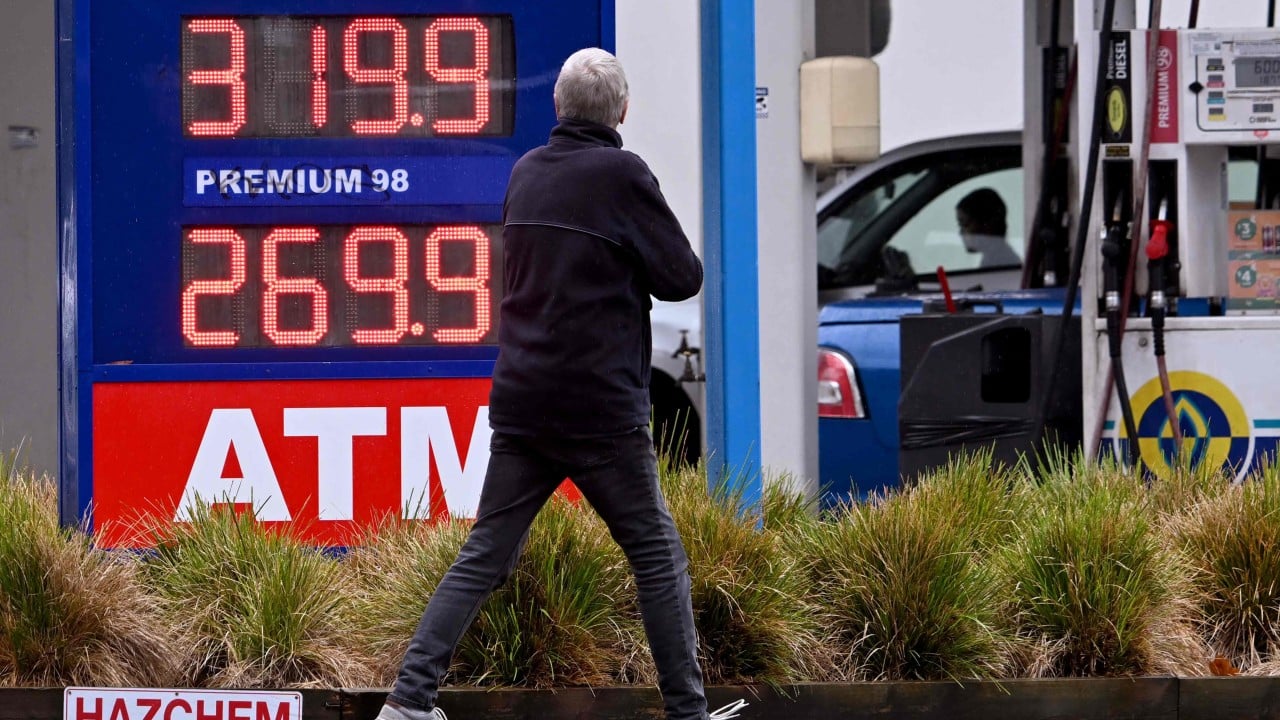
For an indication of how much the energy crisis is shaping the path of monetary policy, look no further than Australia. On May 5, the country’s central bank raised interest rates for the third consecutive time, unwinding last year’s monetary easing.
The Reserve Bank of Australia (RBA) said “higher fuel prices are adding to inflation and there are indications that this is likely to have second-round effects on prices for goods and services more broadly”.
The RBA’s decision to keep tightening policy in response to the energy shock – the conventional wisdom is that central banks should look past adverse supply shocks given that interest rates have little direct impact on supply – has reinforced the perception that it is an outlier among the world’s leading central banks.
The US Federal Reserve, the European Central Bank and the Bank of England (BOE) have all taken a wait-and-see approach as they weigh the benefits of suppressing inflation with the costs of dampening growth. RBC Capital Markets said “the RBA is swimming against the tide of most developed market central banks.”
While Bank of America expected the outcome of the RBA’s meeting to be “a line ball decision”, eight members of the central bank’s nine-strong monetary policy board voted to raise interest rates.
The case for tightening was strong. Even before the war in Iran erupted, inflation was above the central bank’s 2-3 per cent target. Unemployment was at a historical low. Credit growth was expanding rapidly.
The energy supply disruptions have caused prices to rise more sharply. Headline inflation surged to 4.6 per cent in March, while the so-called trimmed mean rate, which strips out volatile items, increased to 3.5 per cent last quarter.
However, the RBA stressed that uncertainty over the severity and duration of the energy crisis meant that the outlook was highly unpredictable. “If uncertainty becomes particularly high, households and businesses could cut their spending by much more, which would mitigate some of the increase in inflation but lead to a higher unemployment rate,” the RBA said.
The RBA’s willingness to continue raising interest rates despite forecasting growth of just 1.3 per cent this year – down from 2.6 per cent in 2025 – makes it appear far more hawkish than its main peers. The “gap in tone” compared with other major central banks is “historically wide”, said JPMorgan.
Yet on closer inspection, the RBA is less of an outlier than is commonly assumed. First, the hawkish camp in Asia is growing. In the Philippines, which imports much of its oil from the Middle East, inflation has surged to 7.2 per cent, triggering what is likely to be a cycle of interest rate increases.
Singapore’s central bank has also tightened policy, while the Bank of Korea signalled it may start increasing borrowing costs due to mounting inflationary pressures. With the Bank of Japan expected to raise interest rates, the RBA’s hawkish response is part of a regional trend that is more exposed to the energy crisis.
Second, it is becoming harder for the world’s leading central banks to downplay the inflationary impact of the energy shock. Australia shows that even countries that are net energy exporters are vulnerable. Although it has large coal and gas reserves, it is heavily reliant on imports of refined fuels. This partly explains why gas, diesel and jet fuel prices have soared. The impact of supply disruptions, moreover, is amplified by Australia’s deregulated energy market.
In the United States, another big energy exporter, average petrol prices have surpassed US$4.50 a gallon, approaching the record high of US$5 in June 2022. This is fuelling inflation and sapping consumer confidence. Bond traders are ramping up bets that the Fed will be forced to raise interest rates in the coming year.
Markets are more hawkish when it comes to Europe. Bond investors are pricing in three interest rate increases in the euro zone this year. In the United Kingdom, which is heavily reliant on imported gas, markets expect the BOE to raise borrowing costs two or three times this year. The yield on 30-year gilts has risen to its highest level since 1998.
Third, and most importantly, Australia has emerged as a test case for how to manage the threat of a stagflationary shock. While there are concerns about the damage monetary tightening will inflict on the economy – especially on the housing market where a slowdown was already under way before interest rates began to rise – the RBA is front-loading its tightening cycle in the hope that it will be in a better position to respond to the twin threats of higher inflation and weaker growth.
RBA governor Michele Bullock said, “We feel we’re now in a position where we’ve got space, to be alert now to both sides of the risks to inflation – upside and downside.” The strategy carries risks. Interest rates are a demand management tool that have little influence over supply. Central banks “can’t print molecules”, as Carlyle said in a report in March. If the energy shock intensifies, tightening policy in the face of a growth outlook Bullock already describes as “pretty anaemic” could prove costly.
Yet at least the RBA has a strategy and is trying to get ahead of the curve. The message from bond markets is that most central banks need to tighten policy despite the risks to growth. A wait-and-see approach is no longer credible.