
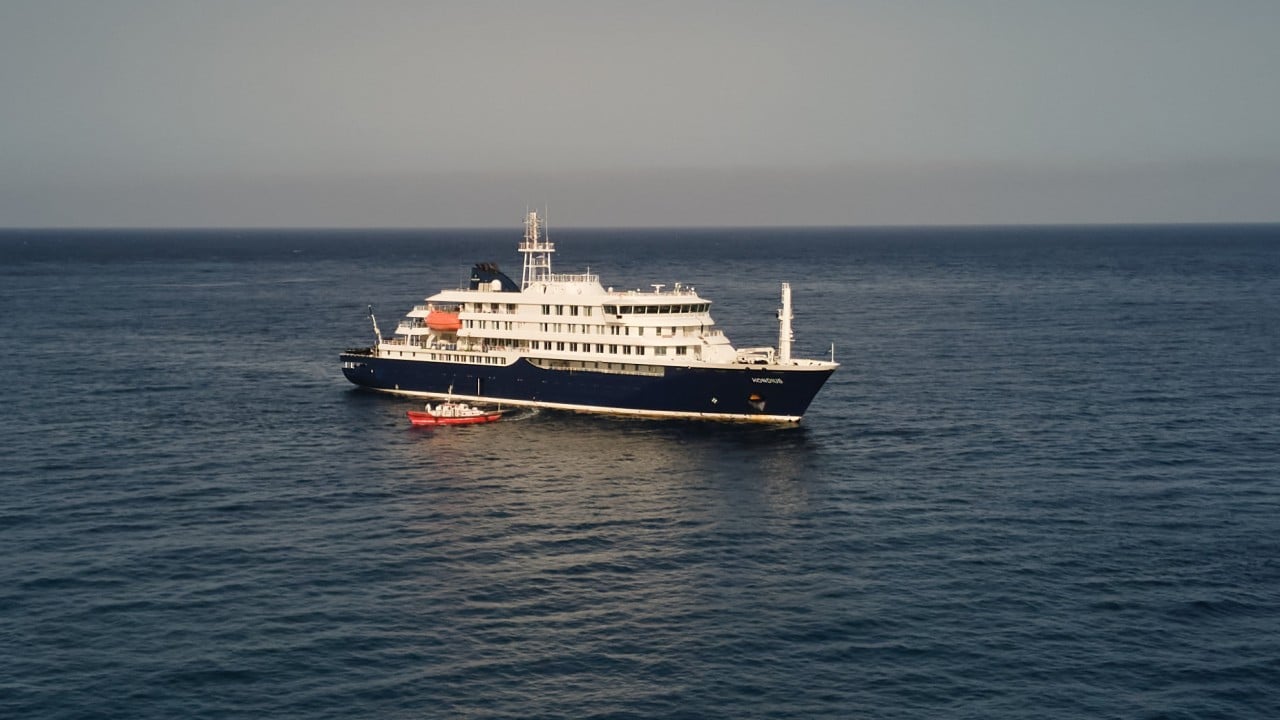
Spain has allowed a cruise ship hit by hantavirus cases and three deaths to dock in the Canary Islands, as health authorities investigate whether human-to-human transmission occurred on board.
The decision was taken in coordination with the World Health Organization (WHO) and the European Union, in line with international law and humanitarian principles, the Spanish Health Ministry said late on Tuesday.
The Hondius cruise ship, with about 150 passengers and crew on board, had set off from southern Argentina and has been anchored off Cabo Verde, formerly known as Cape Verde.
The European Centre for Disease Prevention and Control (ECDC) was assessing the ship to determine which people need to be urgently evacuated from Cabo Verde, the Spanish ministry said.
The remaining passengers and crew were to travel on the cruise ship to the Canary Islands, where they were expected to arrive within three to four days.
The WHO had said Cabo Verde, a small island state off West Africa, was unable to carry out the operation itself, according to the Spanish ministry.
The Canary Islands were therefore the nearest location with the necessary capacity to provide assistance, the ministry said, adding that Spain had a moral and legal obligation to help those on board, including Spanish citizens.
Passengers and staff from 23 different countries were isolating on board, according to the ship’s Dutch operator. On this trip, it carried 19 passengers and four crew members from the UK, 17 passengers from the US, 13 from Spain, eight from the Netherlands and seven from Germany, including the deceased. A majority of crew members hail from the Philippines.
Madrid had also agreed for the Hondius’ doctor, who was in critical condition, to be flown to the Canary Islands by air on Tuesday, the ministry said.
The exact port in the Canary Islands, off the west coast of Africa, has not yet been decided.
Once there, the crew and passengers were to be examined, given medical care if necessary and repatriated to their home countries, according to the ministry.
The WHO believes human-to-human transmission of the hantavirus has occurred on board, WHO epidemiologist Maria Van Kerkhove told a press conference in Geneva earlier on Tuesday.
Three passengers of the Dutch-flagged Hondius cruise ship have died in the suspected outbreak.
The victims were an elderly Dutch couple and a German national. The WHO suspects a total of seven infections with the virus, with laboratory tests ongoing.
Earlier, the WHO posted on X: “Hantavirus infections are typically linked to environmental exposure (exposure to infected rodents’ urine or faeces)”.
But Van Kerkhove said transmission between people was possible with the Andes variant suspected in the cases.
The WHO believes that the chain of infection began with the Dutch couple who could have become infected before boarding.
Van Kerkhove pointed out that many passengers on the liner had taken trips to watch wild animals and similar activities.
She suggested further infections could have taken place in confined spaces aboard the Hondius, but did not rule out infection from rodents on islands visited during the cruise.
Dutch operator Oceanwide Expeditions insisted there were no rats aboard the ship, which was sailing from Argentina to Cabo Verde when passengers were taken ill.
The Dutch Foreign Ministry said earlier that three people who had fallen ill, including a Dutch national, were to be evacuated from the Hondius and flown to the Netherlands “as soon as possible”.
According to the tour operator, two crew members require urgent medical assistance. Apart from the cases already reported, there were no new suspected cases.
Footage obtained by Associated Press shows deserted decks and gathering areas, as well as medical teams in protective gear.
“Our days have been close to normal, just waiting for authorities to find a solution,” passenger Qasem Elhato, 31 – who sent AP the video footage – said via WhatsApp. “But morale on the ship is high and we’re keeping ourselves busy with reading, watching movies, having hot drinks and that kind of thing.”
Helene Goessaert, another passenger, told Belgian broadcaster VRT that everyone on board is “in the same boat, literally”.
“You don’t embark on a trip with the idea that one of your fellow passengers won’t make it,” she said.
“We receive information at regular intervals. It is accurate. For the rest, it is a waiting game,” she added. “Today we received fresh fruit and fresh vegetables. That was very important to us.”
Hantavirus can cause fever and severe respiratory illness in humans. Infection typically occurs through exposure to the urine, droppings or saliva of infected rodents. Human-to-human transmission was rare, according to the WHO.
People are usually infected by inhaling disturbed dust, for example when cleaning a dusty shed or attic, or through bites. An outbreak on a ship was unusual.
Additional reporting by Associated Press and Bloomberg