
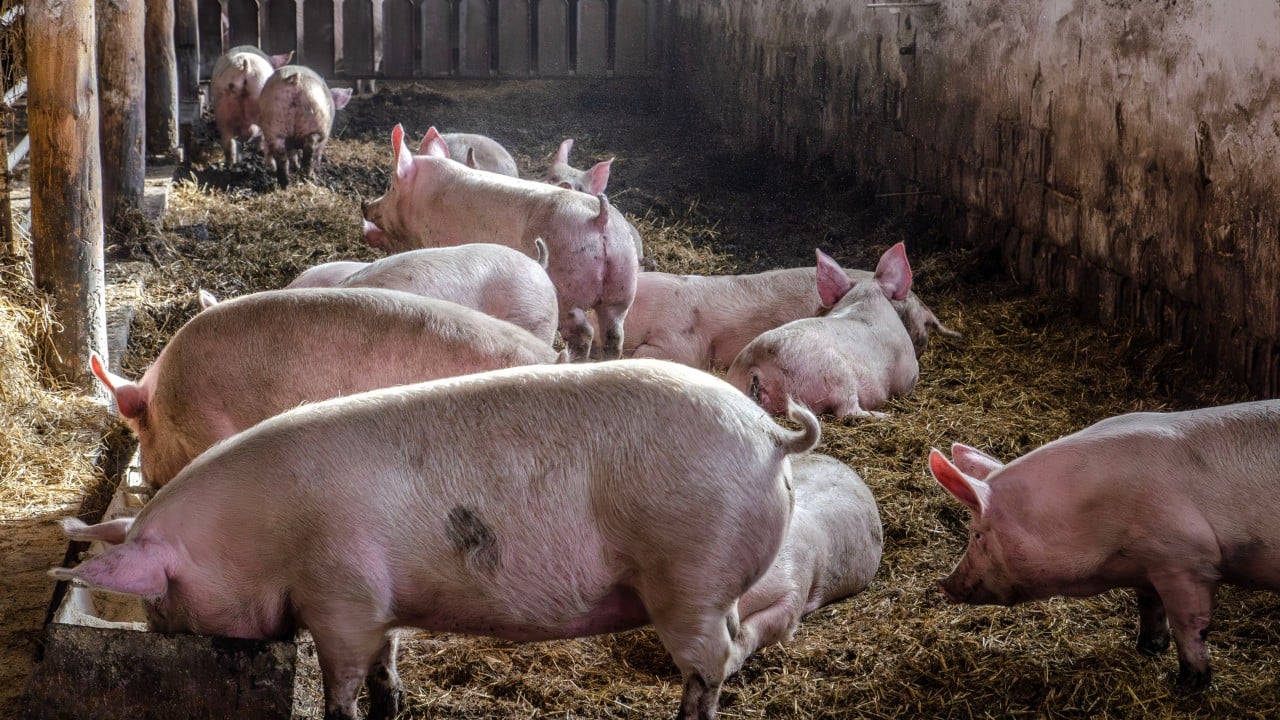
Pig farmers in the central state of Selangor have spent years trying to keep their business out of Malaysia’s culture wars. A royal decree has dragged them straight into one.
The state’s decision to shut down pig farms, prompted by Sultan Sharafuddin Idris Shah, Selangor’s hereditary ruler, has transformed a long-standing local dispute over pollution and odour into a flashpoint touching on royal influence, the livelihoods of a minority community and the delicate balancing act facing Malaysia’s multiracial government.
The row began last year as a local environmental complaint, with residents raising concerns over waste, smell, flies and river pollution from pig farms.
It escalated in January, when the Selangor palace objected to a state plan allowing pig farms in Tanjong Sepat, a coastal town in Kuala Langat district, to operate temporarily before moving to a centralised modern site in Bukit Tagar.
The palace said problems linked to pig farming in Kuala Langat had not been resolved since 2010 and later made clear that Sultan Sharafuddin did not consent to pig farming anywhere in Selangor.
Following the decree, the Selangor government stopped issuing new pig-farming licences and said existing farms would be closed in stages, with the state moving towards full imports of pork, local media reported.
Selangor, Malaysia’s richest state and the industrial belt around Kuala Lumpur, is governed by Prime Minister Anwar Ibrahim’s Pakatan Harapan coalition. Its multiracial image rests heavily on the Democratic Action Party (DAP), a Chinese-majority party often targeted by Malay-Muslim opponents.
Local media reported that former DAP assemblyman Ronnie Liu questioned why authorities were not looking at modern pig-farming systems and better waste treatment instead of closure.
That intervention ignited a political backlash. Critics accused Liu of derhaka, or disloyalty to the ruler, a loaded term in Malaysia, where criticism of the Malay rulers can quickly become a test of political loyalty rather than a debate over public policy.
Azmil Tayeb, a political scientist at Universiti Sains Malaysia, said the dispute was easily turned into a communal issue because pigs carried a religious and cultural stigma among Muslims.
“The issue is easily exploited because it evokes the image of dirtiness and unholiness among Muslims,” Azmil told This Week in Asia. “It means the issue is driven by sentiment, not by rational and clear-headed thinking.”
Royal weight
Malaysia is a parliamentary democracy, but its nine hereditary Malay rulers retain influence that goes far beyond ceremony, especially when an issue touches religion, Malay rights or public morality.
Former Malaysian Bar president Salim Bashir said it would be wrong to treat the sultan’s position as interference, especially with public welfare involved.
“When a ruler provides advice on pig farming, floods or any other issues affecting the interest of the public, which later crystallises into a state policy, the decree is not to be treated as executive intrusion,” Salim said. “It is a reflection of His Majesty’s responsibilities to the state and people.”
But the episode is especially damaging to DAP, both in Selangor and nationally, according to James Chin, professor of Asian studies at the University of Tasmania.
“You can see the reaction when Liu tried to raise the issue in the Selangor [state assembly]. They accused him of derhaka,” Chin said.
Pig politics
The backlash leaves DAP with little room to move.
According to Chin, Malay voters can be angered by any defence of pig farms, while their Chinese counterparts may see silence as another sign that the party will not defend minority livelihoods when the pressure becomes too intense.
The issue also gives Perikatan Nasional (PN), the Malay-Muslim opposition bloc led by Bersatu and the Islamist party PAS, an opening to attack Anwar’s government. PN has repeatedly accused Anwar of being too dependent on DAP, a line that resonates with conservative Malay voters even when the policy issue itself is narrow.
Chin said the opposition could focus its attacks on DAP rather than the whole government, partly because PAS itself had a long record of disputes with Malay rulers.
The latest plan, announced in January, was to move scattered farms around Tanjong Sepat to a 202-hectare (500-acre) centralised site in Bukit Tagar by 2030, using closed farming and a zero-emission concept. Existing farms were initially given three years to relocate.
By late May, local media reported that Tanjong Sepat’s closures were in the final phase, with about 30 farms and 11,000 pigs still involved. A meeting has been scheduled for Tuesday to discuss aid for 87 affected operators.
Yet modern pig farming is not theoretical in Malaysia. In Sarawak, the Pasir Puteh Pig Farming Area in Simunjan uses closed houses, treated and recycled effluent, and a buffer zone separating the farm from residential areas.
State figures show Simunjan exported about 120,000 live pigs to Singapore in 2024, generating 197.6 million ringgit (US$49.3 million).
Sarawak is also trying to expand its pig population from about 350,000 in 2025 to 860,000 by 2030, with the industry projected to generate 1.29 billion ringgit annually.
Bridget Welsh, honorary research associate at the University of Nottingham’s Asia Research Institute Malaysia, said the decision showed how quickly technical policy could become binary once faith and identity took over.
“The pig farming decision-making prioritised religious sensitivities of the majority community and did not seek to bring in technological solutions. In matters of faith, these issues often come down to binary decisions without a search for a middle ground,” Welsh said.
“There is always room to find solutions that provide greater balance … Durable political solutions in Malaysia’s complex multi-ethnic society rest on assuring inclusion of all communities.”