
Behind China’s landmark crackdown on the e-commerce and food-delivery sectors lies a darker narrative of resistance, secrecy and violence, after regulators uncovered a vast network of “ghost” bakeries and imposed a record fine on seven major platforms.
The State Administration for Market Regulation (SAMR) levied a 3.6 billion yuan (US$528 million) fine on seven platforms run by PDD Holdings, Meituan, JD.com, Alibaba Group Holding and ByteDance, with the probe revealing a hidden office, violent clashes and an employee swallowing notes during questioning as firms desperately tried to shield data from investigators.
During an on-site probe in December, investigators struggled until late at night when they discovered a hidden office area as many employees were leaving for the day, according to a Monday report by China Quality Daily, a newspaper supervised by SAMR. As they tried to enter, one official, Guo Hui, had his hand crushed against a door by company staff, resulting in a fracture, the report said, without naming the company.
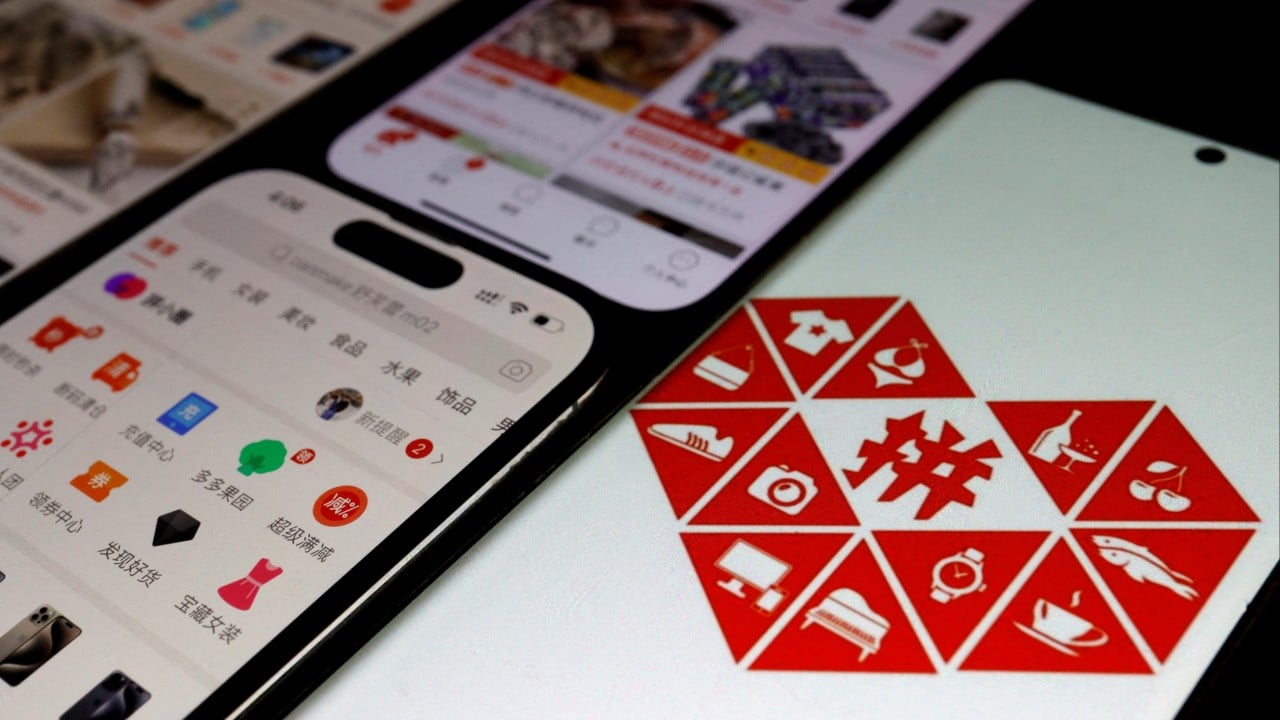
Xinhua News Agency on Saturday reported that the incident took place at Pinduoduo, the budget shopping site owned by PDD. The company did not immediately respond to requests for comment on Tuesday.
The following night, investigators said PDD’s security head led a group that stormed the investigation site, shoving officers and knocking Guo to the ground, China Quality Daily said, adding that he was hospitalised with a head injury.
During a formal inquiry involving investigators, local police and market regulators, a PDD employee was caught passing secret notes with instructions – such as “silence” and “don’t speak” – to a colleague under questioning. When discovered, the worker crumpled the paper and swallowed it in front of the entire assembly of officials, the newspaper said.
SAMR concluded the case on Friday, imposing the heaviest fine of 1.51 billion yuan on PDD and suspending it from adding new bakery merchants for nine months. Regulators found 9,463 outlets operating without licences or beyond their permitted scope.
PDD said on Friday it “sincerely” accepted the penalty and would improve internal operations.
Other companies were fined a combined 2.1 billion yuan and suspended from enlisting new bakeries for between three and nine months. SAMR said the penalties were based on the number of unlicensed stores on each platform, making it the most severe case since China adopted its food safety law in 2009.
Besides PDD’s violent measures, some of the other platforms resorted to “tai chi tactics” of ignoring and delaying, frequently citing “system upgrades”, “lack of data access” or “slow connections” to avoid handing over cloud-based data, according to the report.
Investigators, often receiving only fragments of information, spent two weeks using dozens of personal phone numbers to check thousands of stores listed on those platforms and compile their own database.
The case began with a consumer complaint in Beijing last July about a birthday cake decorated with inedible roses. It later exposed more than 67,000 unlicensed bakeries across the seven platforms – Pinduoduo, Meituan, JD.com, Alibaba’s Taobao Shangou, Taobao and Tmall, and ByteDance’s Douyin. Alibaba owns the South China Morning Post.
These shops were linked to two “order-transferring” platforms – intermediaries that took orders from major shopping apps and auctioned them off to the lowest bidder among unvetted kitchens. While lacking proper store or catering licences, they operated online through partnerships with listed stores.
In one transaction, a cake ordered by an investigator cost 252.40 yuan, but the actual producer – the unlicensed one – received only 76.80 yuan after fees were extracted by the shopping site, intermediary platform and the listed store, according to SAMR.
All seven platforms had signed partnerships with the intermediaries and tolerated the practice. “If we’re too strict with our store reviews, the stores will just move to other platforms,” one company worker was quoted as saying by the regulator. The shopping site earned 50.40 yuan as commission, the intermediary 3.20 yuan, and the listed shop 122 yuan, according to SAMR.