
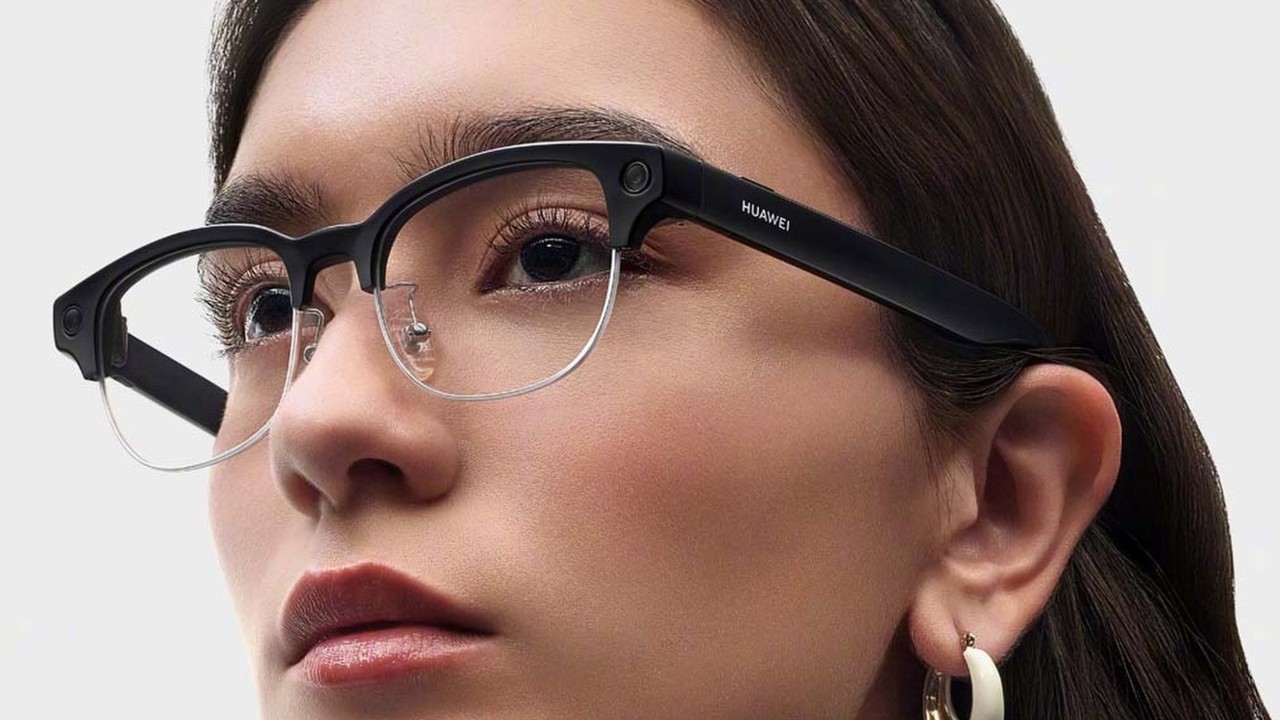
Huawei Technologies has launched its first artificial intelligence glasses, as the Shenzhen-based tech giant joins an intensifying battle with US leader Meta and domestic peers including Alibaba Group Holding and Rokid in smart eyewear.
Priced from 2,499 yuan (US$367), the new eyewear weighed just 35.5 grams and featured various AI functions ranging from voice interaction to payments, according to a launch event on Monday.
Powered by Huawei’s self-developed chip designed for eyewear, the glasses enable users to live stream and make video calls in first-person view. With multimodal AI capabilities, they could also estimate and track food calories, and allow payments by scanning a QR code, among other functions, according to He Gang, CEO of Huawei’s consumer business.
The release marks a renewed push in Huawei’s smart eyewear product line-up, which previously offered more basic functions such as translation.
Huawei joins a growing list of tech giants doubling down on AI glasses, challenging Meta’s smart eyewear – Ray-Ban Meta and Oakley Meta – as well as offerings by Chinese peers Alibaba, Xiaomi and Rokid.
Meta dominated the AI smart glasses market with an 85 per cent share in 2025, shipping 7.4 million units, according to the latest data from Omdia last month. Its Oakley and Ray-Ban-branded glasses pushed its shipments up threefold in 2025, Omdia data showed.
Chinese smart glasses maker Rokid and smartphone manufacturer Xiaomi followed with 3.9 per cent and 3.5 per cent market shares, respectively, according to Omdia.
In mainland China, where Meta eyewear is not available, shipments of AI glasses soared 35-fold in 2025 to 950,000 units, led by Xiaomi and Rokid with 32 per cent and 29 per cent shares, respectively. Alibaba, which owns the South China Morning Post, ranked third with 16 per cent.
Omdia forecast that global shipments of AI glasses would surpass 15 million units in 2026.
In February, Alibaba unveiled new smart glasses powered by its own AI assistant Qwen, with the S1 model officially going on sale last week starting from 4,299 yuan. They followed Alibaba’s Quark AI Glasses, priced from 1,899 yuan, launched in November 2025 in mainland China.
Last June, Xiaomi introduced smart glasses priced at 1,999 yuan, while Baidu’s Xiaodu AI Glasses Pro went on sale in November, priced at 2,299 yuan.
At Monday’s launch, Huawei also unveiled new handsets under its mid-range flagship Pura 90 series, starting from 4,699 yuan, the same as its predecessor launched last June.
Yu Chengdong, chairman of Huawei’s consumer business group, said memory shortages had driven up costs by as much as 1,500 yuan. “We are under a lot of pressure for this pricing strategy,” Yu said. “We may need to raise prices in future when we can’t contain rising costs any longer.”
Huawei is one of the few domestic smartphone players that has not yet resorted to price increases, while Oppo, Vivo and Xiaomi have all announced adjustments to absorb rising memory costs.
Huawei also unveiled its book-style foldable model Pura X Max, starting from 10,999 yuan. The model has drawn industry attention for its wider horizontal-fold design, resembling Apple’s rumoured foldable iPhone.