
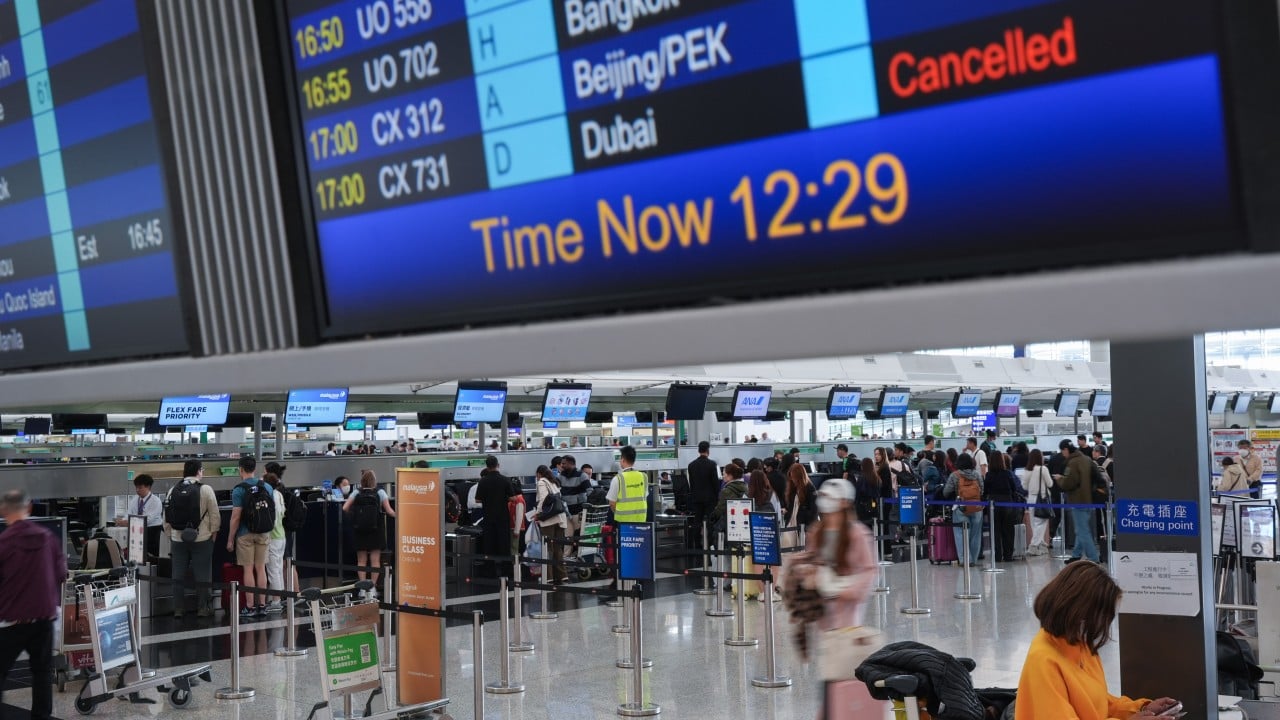
Fewer than 5 per cent of Hong Kong flights have been cancelled in May and June combined, and about 1 per cent during the peak July travel period, the Airport Authority has said, despite a global fuel crisis triggered by the Middle East war, adding it would review charges to ease the industry’s burden.
Responding to a lawmaker’s questions, Secretary for Transport and Logistics Mable Chan said on Wednesday that the figures were compiled by the authority, which operates Hong Kong International Airport.
Despite the cancellations, the number of flights rose by 5 per cent and passenger throughput increased by 8 per cent year on year in April, she said.
Chan said local carriers mitigated flight cuts by redirecting capacity to underserved markets. For example, one airline added three return flights to Paris and another three to Zurich, while increasing seat capacity on its 13 existing London return services in April.
Responding to lawmaker Chan Hak-kan’s question on easing the aviation industry’s financial burden, Chan said the Airport Authority “has long set airport charges according to commercial principles” and would “continue to closely monitor market conditions and review charge levels as appropriate.”
Fuel price indices across the Asia-Pacific have more than doubled since the war in the Middle East broke out on 28 February, forcing airlines worldwide to trim schedules.
According to the International Air Transport Association, an airline trade group, the global average price of jet fuel rose to US$181.22 per barrel in the week ending May 1, up from US$99 at the end of February.
About 20 per cent of the world’s oil and gas typically passes through the Strait of Hormuz, but shipping in the strategic waterway came to a near standstill after the US-Israel war on Iran began on 28 February, triggering a global energy shortage.
Hong Kong flag carrier Cathay Pacific Airways cancelled about 2 per cent of its total flight frequencies between May 16 and June 30, while its budget arm, HK Express, cut about 6 per cent of flights from May 11 to June 30. It later pledged to restore flights the end of June.
The Hong Kong Tourism Board said it would closely monitor the situation and adjust marketing resources according to market priorities, noting that changes in travel patterns could create new opportunities for the city.
Chan added that higher airfares had not significantly reduced non-local attendance, and said Hong Kong’s appeal as a tourism destination continued to grow.
Last month, the Hong Kong Sevens rugby tournament drew more than 113,000 spectators, up 2.24 per cent year on year. More than 14.3 million tourists visited Hong Kong in the first quarter, a 17 per cent increase from a year earlier, according to Chan.