
In March 2000, LeBron James played what was to that point the biggest game of his life: the state championship game at Ohio State.
The lanky freshman made 10 of 12 shots, had nine rebounds and scored 25 points, more than hinting that he might be headed for some big things. However, the defining player of the game was a fellow freshman named Dru Joyce, who made seven 3-pointers. His shooting display broke the opposition's zone defense, the first of many ideas in trying to stop James.
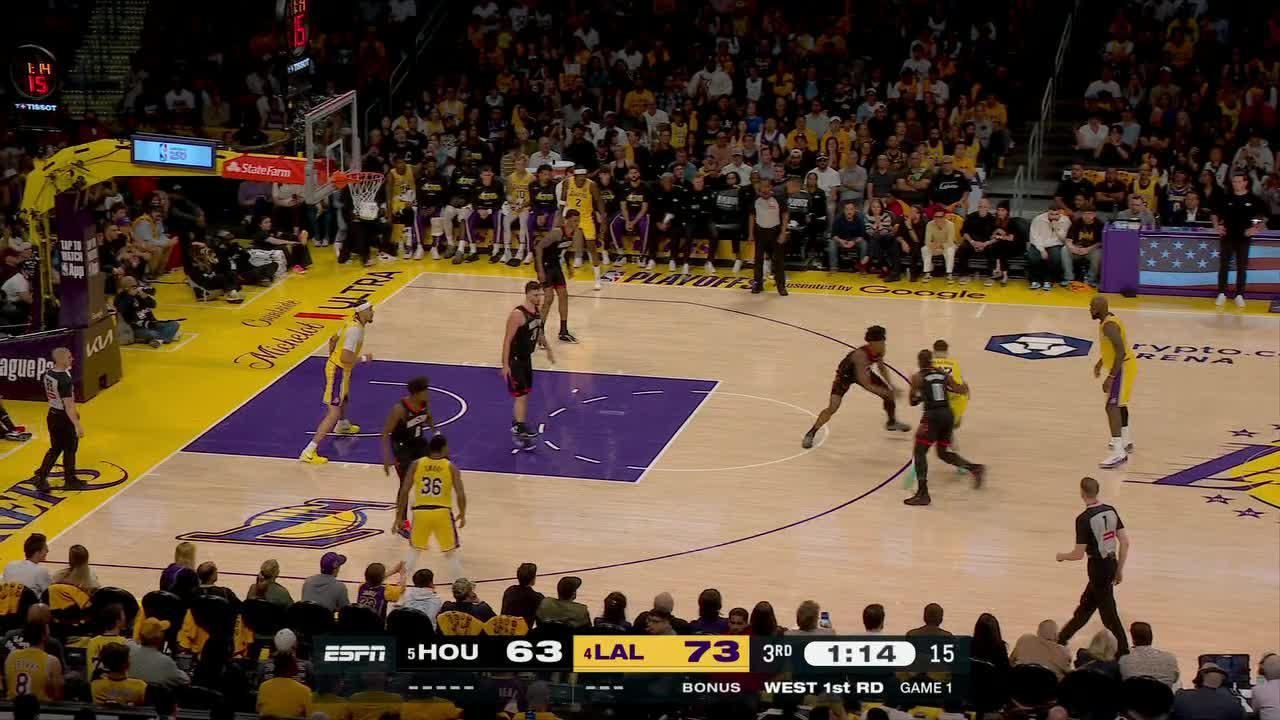
Luke Kennard was 3 years old then. Fifteen years later, he broke James' Ohio high school career scoring mark. Kennard nailing five 3-pointers and scoring 27 points in the Lakers' Game 1 victory over the Houston Rockets on Saturday was a reminder that 26 years later, the story hasn't changed much.
Over the decades, the faces have changed, but the devastating strategy still can work wonders. When the stakes are high, give James the ball, spread the floor and win with James directing the offense and sharpshooters cutting around him.
It's a playoff lesson that has spanned nearly two decades of James' illustrious career.
The list of players who changed playoff games with barrages of 3-pointers playing off James is lengthy: Damon Jones, Daniel Gibson, Wally Szczerbiak, Shane Battier, Mike Miller, Matthew Dellavedova, JR Smith, Kyle Korver, Danny Green, Kentavious Caldwell-Pope.
Look at the box scores and highlights -- even that 2000 game is on YouTube. Most of these shots were generated by James' assists, or his hockey assists, or screens or the mere attention of drawing multiple defenders.
play1:33Houston Rockets vs. Los Angeles Lakers: Game Highlights
Houston Rockets vs. Los Angeles Lakers: Game Highlights
It's similar to what happened in Game 1 on Saturday, when James once again became the ultimate facilitator, handing out eight of his 13 assists in the first quarter.
"He displayed great leadership throughout," Lakers coach JJ Redick said of James. "We talked all week about being connected offensively and trusting the pass. He led us."
One of the biggest lessons of the NBA's opening playoff weekend is a quarter of a century old. Give James a shooter (or three) and the ball, and his team can still win big games the old-fashioned way.
Here's a look at a few other lessons we learned as the eight playoff series began:
play1:14Toronto Raptors vs. Cleveland Cavaliers: Game Highlights
Toronto Raptors vs. Cleveland Cavaliers: Game Highlights
The Cleveland Cavaliers struggled on defense for much of the second half of the season. In addition to their injuries, which prevented them from building rhythm -- coach Kenny Atkinson used 24 different players and 41 starting lineups -- their 15th-ranked defense was a concern as they entered the playoffs.
In their Game 1 victory against the Toronto Raptors, though, the Cavs unveiled a disciplined and sound game plan that targeted the Raptors' leading scorer, Brandon Ingram.
During the regular season, Ingram averaged 20 shots per game against the Cavs, his third most against any East team, as he was clearly the Raptors' preferred option when they played Cleveland.
• Bracket, schedule, news and highlights
• Eastern Conference takeaways
• Western Conference takeaways
• Previewing every team still vying for the title
• Playoff intel: What NBA insiders are watching
• 'Hoop Collective': Windhorst & Co. talk playoffs
• NBA Playoff Challenge: Predict the postseason!
On Saturday, the Cavs, starting with his primary defender Dean Wade, shadowed Ingram from the start of possessions. He finished with just nine shots and one in the second half. He got to the free throw line 10 times, but the Cavaliers not only prevented him from scoring, but they made it tough for him to even get it.
It didn't help Toronto that starting point guard Immanuel Quickley was out because of a right hamstring injury, and the Cavs lightly covered replacement Jamal Shead, who made five 3s. But the Cavs were delighted that he took two more shots than Ingram.
"They tried to deny me the ball every time that I went down the floor," Ingram said. "Obviously, they knew most of the stuff that we've been running all year. ... We got to figure out how to make the adjustment next game, and let that not be too effective."
The Cavs also slowed the tempo, something that will be part of their game plan throughout their playoff run. Cleveland is already one of the slowest teams in the league -- James Harden is a big factor -- and Toronto managed just three fast-break points.
play2:00Thunder ease past the Suns in Game 1
Thunder take a 1-0 series lead after a dominant win over the Suns.
The Thunder had to win two Game 7s last year on their way to the title, but that obscures just how dominant they were at home last spring.
Their average home margin of victory during the Western Conference playoffs last year was 29 points. Including the playoffs and NBA Cup, they are 149-40 over the past two seasons, despite significant injuries.
And after beating the Suns by 35 points in Sunday's Game 1, the Thunder's average margin of victory in first-round home games over the past two years is ... 35 points.