
WorldEuropeFeaturesGerman expert says failure to win UN Security Council seat linked to double standards in foreign policySecurity Council loss reflects declining diplomatic influence, German political scientist saysErbil Basay05 June 2026•Update: 05 June 2026BERLIN
Germany’s failure to secure a non-permanent seat on the UN Security Council for the 2027-2028 term is linked to perceived double standards in Berlin’s foreign policy, according to German political scientist Prof. Hajo Funke.
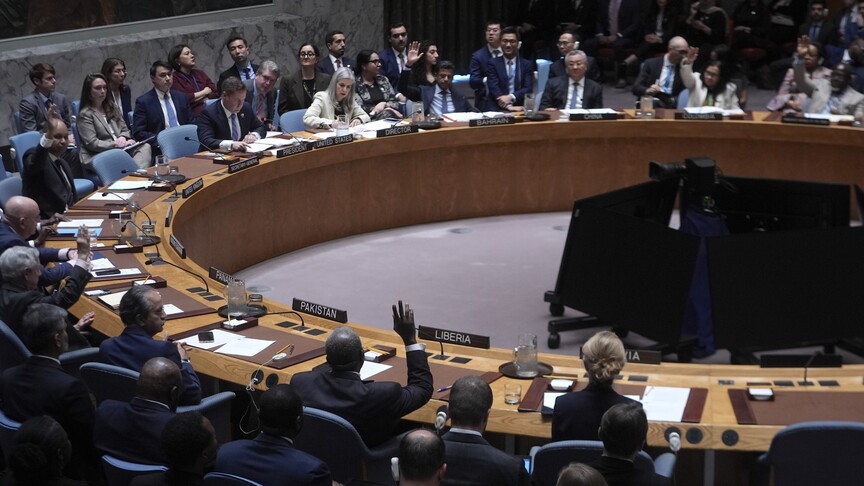
Germany failed to win one of the two seats allocated to the Western European and Others Group in the UN General Assembly elections on June 3, finishing behind Portugal and Austria.
Portugal secured 134 votes and Austria 131, while Germany received 104 votes, leaving it without a seat on the 15-member council.
German media described the outcome as a “debacle” and a “heavy defeat” for the country’s diplomacy.
Speaking to Anadolu, Funke, a political scientist at Berlin’s Free University, said he had anticipated Germany’s failure.
Funke argued that the result reflected dissatisfaction with Berlin’s approach to international conflicts.
“In my view, this has to do with the double standards pursued by German foreign policy,” he said.
“There has been virtually no criticism of wars involving alleged war crimes, particularly those carried out by Israeli Prime Minister Benjamin Netanyahu in Gaza, now in southern Lebanon, and against Iran in violation of international law.”
At the same time, Germany has consistently and correctly criticized Russia’s war against Ukraine as a violation of international law, he noted.
Funke said Germany should pursue a more active diplomatic approach based on the principles of international law and engage all parties in conflicts, including Israel, Russia, and Ukraine, in efforts to de-escalate.
“During some of the worst crises and wars since 1945, we are witnessing a lack of diplomacy and political will,” he said.
Asked what lessons Germany should draw from the result, Funke said Berlin should reassess its close military and political cooperation with Israel and view the continuation of conflict under Netanyahu’s leadership as “very dangerous.”
Germany could continue supporting Israel’s security while also urging restraint and compromise, he added.
“End the wars and seek compromise,” Funke said. “Now is the time for compromise if we want to prevent this catastrophe from spreading further or even turning into a world war.”
Funke also said the election outcome undermined Germany’s claims of growing international influence.
According to Funke, the vote demonstrated a decline in Germany’s diplomatic standing.
He contrasted Berlin’s approach with that of Austria, whose foreign minister has advocated compromise on Ukraine despite broader trends within the European Union.
“That is smart policy. That is smart diplomacy. We have heard nothing like that from the German foreign minister,” he said.
Funke also expressed skepticism that Germany’s policy would change under Chancellor Friedrich Merz, saying there are currently few signs of a shift.
He argued that foreign policy should be guided by realism and political courage, citing the examples of former Chancellor Angela Merkel and former US Secretary of State Henry Kissinger’s approach toward China.
Commenting on calls by some German politicians to reduce the country’s financial contributions to the United Nations following the vote, Funke warned against such a move.
“Reducing contributions to the UN would weaken international diplomacy, which Germany itself also needs,” he said.